Dopamine enhances expectation of pleasure in humans
November 12, 2009 Dopamine enhances expectation of pleasure in humans

Enlarge

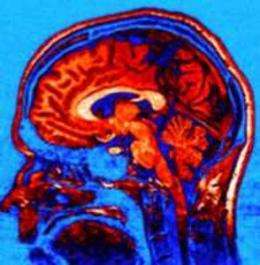
(PhysOrg.com) -- Enhancing the effects of the brain chemical dopamine influences how people make life choices by affecting expectations of pleasure, according to new research from the UCL Institute of Neurology.

The study, published today in , confirms an important role for dopamine in how human expectations are formed and how people make complex decisions. It also contributes to an understanding of how pleasure expectation can go awry, for example in .

Dopamine is a neurotransmitter produced in several areas of the brain that is found in a wide variety of animals. Its role in reward learning and reward-seeking behaviour is well established by animal studies - however, in humans its role is much less understood.

Lead author Dr Tali Sharot, Wellcome Trust Centre for at UCL, said: "Humans make much more complex decisions than other animals - such as which job to take, where to go on holiday, whether to start a family - and we wanted to understand the role of dopamine in making these types of decisions. Our results indicate that when we consider alternative options when making real-life decisions, dopamine has a role in signalling the expected pleasure from those possible future events. We then use that signal to make our choices."

The research team, which included Dr Tamara Shiner and Professor Ray Dolan, examined estimated pleasure of future events before and after the administration of a drug called L-DOPA which is known to enhance dopamine function in the brain and is commonly used to treat patients with Parkinson's disease. The 61 study participants were asked to rate their expectations of happiness if they were to holiday at each of 80 destinations, from Thailand to Greece. They were then given L-DOPA or a placebo and asked to imagine holidaying in those destinations.

The following day participants had to pick between a series of paired destinations that they had initially assigned with equal ratings, one member of the pair was imagined under L-DOPA the day before and the other under placebo. Finally, they rated the full set of 80 destinations again.

Ratings for particular destinations increased after they were imagined under L-DOPA's influence. That increase also affected the participants' selections the following day. Dr Sharot added: "We had reason to believe that dopamine would enhance expectations of pleasure in humans, but were surprised at the strength of this effect. The enhancement lasted at least 24 hours and was evident in almost 80 per cent of the subjects."

The study builds on earlier work by Dr Sharot and colleagues, which used brain imaging as participants imagined holiday destinations. An area of the called the straitum tracked expectations and the scientists found that they could take that signal and predict what the participants would choose. The authors believed this was at work and set-up this study to further explore its role.

More information: The paper 'Dopamine enhances expectation of pleasure in humans' is published online ahead of print in Current Biology.

Source: University College London (news : web)


print this article email this article download pdf blog this article bookmark this article     Stumble it Digg this share on Facebook retweet share on Reddit add to delicious
Rate this story - 4.2 /5 (10 votes)


November 12, 2009 all stories

Comments: 0

4.2 /5 (10 votes)
  • Stumble this up

  • Digg this

  • share this

  • hide
  • Related Stories

  • Dopamine-related drugs affect reward-seeking behavior
    created Apr 26, 2007 | popularity not rated yet | comments 0
  • Gene therapy reduces cocaine use in rats
    created Apr 16, 2008 | popularity not rated yet | comments 0
  • Researchers find 'switch' for brain's pleasure pathway
    created Mar 22, 2006 | popularity not rated yet | comments 0
  • New dopamine brain target discovered
    created Jan 23, 2007 | popularity not rated yet | comments 0
  • Brain activity predicts people's choices
    created Mar 24, 2009 | popularity not rated yet | comments 0


  • hide
  • Relevant PhysicsForums posts

  • Has the H1N1 vaccine been scientifically proven to work?
    created 7 hours ago
  • nesfatin
    created Nov 22, 2009
  • Obsessive Compulsive Disorder
    created Nov 20, 2009
  • West's zone 2 starling resistor respiratory physiology
    created Nov 18, 2009
  • More from Physics Forums - Medical Sciences

Other News

Discovery leads to effective treatment of painful skin condition

Medicine & Health / Diseases

created 39 minutes ago | popularity not rated yet | comments 0

Researchers at Huntsman Cancer Institute, in collaboration with a worldwide group of physicians and scientists, have discovered a remarkable treatment for a rare, yet debilitating, skin condition.


Involving family in medical rounds benefits both family and medical team

Medicine & Health / Health

created 1hour ago | popularity not rated yet | comments 0

Involving family members of pediatric cancer and hematology patients in medical rounds benefits both the family and the medical team, according to a new Indiana University School of Medicine study.


Organizational psychologists use Rock Band to study how people achieve flow while at work

Medicine & Health / Psychology & Psychiatry

created 1hour ago | popularity not rated yet | comments 0

By playing the video game Rock Band for an hour, Kansas State University students were able to help a pair of psychology professors with their research to understand how people can achieve flow while at work or while performing ...


Clinical trials of spray-on skin to start in US

Medicine & Health / Research

created 2 hours ago | popularity 5 / 5 (1) | comments 1

(PhysOrg.com) -- Clinical trials comparing a spray-on skin product with skin grafts will start in the US in December. The trials, which are partly funded by a US army grant of $1.4 million, will last about a year and will ...


High unexpressed anger in MS patients linked to nervous system damage, not disease severity

Medicine & Health / Neuroscience

created 1hour ago | popularity not rated yet | comments 0

People with Multiple Sclerosis (MS) feel more than twice as much withheld anger as the general population and this could have an adverse effect on their relationships and health, according to a study published in the December ...