Genome Engineering Could Provide New Method of Creating Diesel
November 16, 2009 by Miranda Marquit Diesel fuel

Enlarge

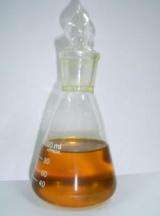
Diesel fuel. Image credit: Shizhao via Wikimedia Commons

When we think of genetic engineering, our minds often jump to giant tomatoes and animal cloning. However, this is not always the case.

Joule Biotechnologies, Inc. has announced that it has used a process of genome engineering to create organisms that can turn carbon dioxide into hydrocarbons that can be used as fuel. The process will be powered by the sun. Joule is planning to create a viable diesel production process using light and air. In a press release from Joule, the basics of the process are explained:

Joule is advancing a new, photosynthesis-driven approach to producing renewable fuels, avoiding the economic and environmental burden of multi-step, cellulosic or algal biomass-derived methods. The company employs a novel SolarConverter system, together with proprietary, product-specific organisms and state-of-the-art process design, to harness the power of sunlight while consuming waste CO2. Its pioneering technology platform has already been proven out with the conversion of CO2 into ethanol at high productivities, a process that enters pilot development in early 2010. With this latest feat of genome engineering, Joule is now capable of directly producing hydrocarbons - setting the stage for delivery of infrastructure-compatible diesel fuel without the need for raw material feedstocks or complex refining.

The breakthrough was made possible by the discovery of unique genes coding for enzymatic mechanisms that enable the direct synthesis of both alkane and olefin molecules - the chemical composition of diesel. Production was achieved at lab scale, with pilot development slated for early 2011.

Joule is hoping that its process will help reduce dependence on other sources of diesel, fostering better energy independence. The organisms that Joule is engineering are capable of directly secreting hyrdocoarbon molecules. Joule points out that it will be using non-arable land, as the process will not need to grow crops. No fresh water will be needed, either.

The idea of creating diesel using light and air (and a few other components) is an interesting concept if Joule can make it work, and one that could help reduce reliance on oil for diesel fuel, as well as reducing overall carbon emissions present in the diesel fuel production process.

© 2009 PhysOrg.com


print this article email this article download pdf blog this article bookmark this article     Stumble it Digg this share on Facebook retweet share on Reddit add to delicious
Rate this story - 3.3 /5 (6 votes)

Rank Filter

Move the slider to adjust rank threshold, so that you can hide some of the comments.


Display comments: newest first

  • theken101 - Nov 20, 2009
    • Rank: not rated yet
    Or he could just use Amyris renewable-diesel-producing yeast...just a thought!

November 16, 2009 all stories

Comments: 1

3.3 /5 (6 votes)
  • Stumble this up

  • Digg this

  • share this

  • hide
  • Related Stories

  • New biofuel from trees developed at UGA
    created May 18, 2007 | popularity not rated yet | comments 0
  • Engineering algae to make fuel instead of sugar
    created Dec 17, 2008 | popularity not rated yet | comments 0
  • Rainforest fungus makes diesel
    created Nov 03, 2008 | popularity not rated yet | comments 0
  • Researchers Investigate Supercritical Method of Converting Chicken Fat and Tall Oil into Biodiesel
    created Dec 19, 2007 | popularity not rated yet | comments 0
  • Waste coffee grounds offer new source of biodiesel fuel
    created Dec 10, 2008 | popularity not rated yet | comments 0


  • hide
  • Relevant PhysicsForums posts

  • Goddard
    created 4 hours ago
  • Rate Laws
    created 6 hours ago
  • why oxygen, cannot act as a pi-donor while NO can?
    created 23 hours ago
  • Aspirin
    created Nov 19, 2009
  • More from Physics Forums - Chemistry

Other News

Accidental discovery produces durable new blue pigment for multiple applications

Accidental discovery produces durable new blue pigment for multiple applications

Chemistry / Biochemistry

created Nov 16, 2009 | popularity 4.5 / 5 (30) | comments 6

An accidental discovery in a laboratory at Oregon State University has apparently solved a quest that over thousands of years has absorbed the energies of ancient Egyptians, the Han dynasty in China, Mayan ...


One word: bioplastics

One word: bioplastics

Chemistry / Materials Science

created Nov 17, 2009 | popularity 4.5 / 5 (11) | comments 4

(PhysOrg.com) -- Every year, more than 250 billion pounds of plastic are produced worldwide. Much of it ends up in the world's oceans, a fact that troubles MIT biology professor Anthony Sinskey.


New on-off 'switch' triggers and reverses paralysis in animals with a beam of light

New on-off 'switch' triggers and reverses paralysis in animals with a beam of light (w/ Video)

Chemistry / Biochemistry

created Nov 18, 2009 | popularity 4.8 / 5 (5) | comments 3

In an advance with overtones of Star Trek phasers and other sci-fi ray guns, scientists in Canada are reporting development of an internal on-off "switch" that paralyzes animals when exposed to a beam of ultraviolet ...


New research provides blueprint for molecular basis of global warming

New research provides blueprint for molecular basis of global warming

Chemistry / Materials Science

created Nov 17, 2009 | popularity 4 / 5 (4) | comments 3

A new study indicates that major chemicals most often cited as leading causes of climate change, such as carbon dioxide and methane, are outclassed in their warming potential by compounds receiving less attention.


Ethanol

Microbes to Take Over Ethanol Production?

Chemistry / Biochemistry

created Nov 20, 2009 | popularity 3.8 / 5 (5) | comments 0

(PhysOrg.com) -- Not too long ago, it seemed that ethanol production was the wave of the future. The use of trash, wood chips or different types of plants -- usually grass or corn -- to make ethanol was considered ...