Systems biology approach provides insulin resistance insights
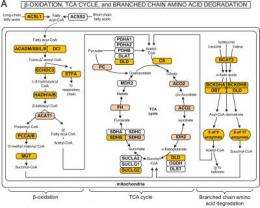
Researchers from the University of California, San Diego recently offered the sharpest-yet picture of how core biochemical pathways in skeletal muscle cells and fat cells are altered in people who suffer from insulin resistance -- a primary defect in type 2 diabetes and obesity. Taking a systems biology approach, the bioengineers and medical researchers also determined how a common class of drugs for treating insulin resistance -- TZDs -- alter these same core pathways. This led the team to uncover previously unknown effects of TZDs and insights that could lead to improved drug therapies for insulin resistance.
The team—led by investigators from the UC San Diego Jacobs School of Engineering and School of Medicine—recently published their findings in the journal Proceedings of the National Academy of Sciences (PNAS).
"When you are insulin resistant, your metabolism suffers. If you take a TZD for your insulin resistance, will the drug fix the dysfunction in muscle and fat tissues? Will these changes be functionally related to drug efficacy? These are some of the questions we addressed in our new study," say UC San Diego faculty members Dr. Shankar Subramaniam and Dr. Dorothy Sears, co-corresponding authors of the new paper. The collaborative project involved Dr. Subramaniam's Bioinformatics and Systems Biology laboratory in the Department of Bioengineering at the Jacobs School of Engineering, Dr. Sears and her colleagues in the Department of Medicine, and Pfizer, Inc.
By combining human subject clinical information with multi-tissue, genome-wide gene expression analyses, the researchers determined that TZDs do in fact alter expression of metabolic pathways, as expected, in insulin resistant subjects.
Further, they discovered distinct pathway alterations that correlated with improved insulin sensitivity after TZD treatment. In fat tissue, for example, the TZDs reduced inflammation and enhanced branched chain amino acid metabolism pathways in subjects who responded to drug treatment, i.e., became more insulin sensitive.
"Our analyses have uncovered what is happening in both muscle and fat tissues--from a biochemical pathway perspective--in patients who are insulin resistant. We have also discovered specific functional pathway alterations in the subjects who responded favorably to insulin-sensitizing drugs. These findings present new targets for the development of improved drug therapies," said Dr. Sears, Assistant Professor of Medicine in the Division of Endocrinology and Metabolism at the UCSD School of Medicine.
"One surprise of the study was that insulin resistant subjects whose insulin sensitivity improved after TZD treatment showed increased fat markers in their skeletal muscle. The insulin resistant subjects exhibited elevated muscle fat at baseline which was further increased with TZD-induced insulin sensitization. This finding is an example of the kind of drug effects that we can uncover with our systems biology approach," said Subramaniam, holder of the Joan and Irwin Jacobs Endowed Chair in Bioengineering and Systems Biology at UC San Diego.
The U.S. Food and Drug Administration (FDA) and pharmaceutical companies are very interested in system-wide drug effects, explained Subramaniam. "In the coming decade, researchers, drug developers and clinicians will use systems biology to discover exactly which drug-induced functional changes are related to therapeutic efficacy and which are unrelated to efficacy," said Subramaniam.
The side effects of statins—a class of cholesterol-lowering drugs—provide an example of the kinds of non-therapeutic effects that researchers hope to uncover during the drug development process. "These are the kinds of problems we believe we can identify early on, by taking a system-wide approach," said Subramaniam.
The team's systems biology approach could also help doctors quickly determine if a specific patient is likely to respond to a drug, based on their personal gene expression profile and basic phenotypic information. In the new study, the researchers uncovered markers for identifying which patients will respond to TZD treatment with improved insulin sensitivity—and which patients will not respond.
Methodologies developed in Subramaniam's lab make it possible to say what is and is not significant from mountains of gene expression data.
"This study is built on our variance modeling approach. Gene expression gives you thousands of transcription data points, and we devised a way to tease out what is significant and what is not significant. We are looking at gene expression profiles and their relevance to function," said Gene Hsiao, a Ph.D. candidate in bioengineering at UCSD and an author on the PNAS paper.
"I think this is one of the first successful examples of 'systems medicine'—which is the application of systems biology to medicine," said Subramaniam, who explained that this systems approach can be applied to many other diseases and drugs. His team is currently investigating both cell death and stem cell differentiation using similar strategies.
More information: "Mechanisms of human insulin resistance and thiazolidinedione-mediated insulin sensitization," by D. D. Sears, et at., Proceedings of the National Academy of Sciences. www.pnas.org/content/106/44/18745.abstract
Source: University of California - San Diego (news : web)


