Tech and teens
November 30, 2009 by Laura Rico
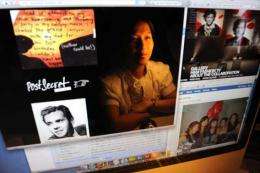
Scientists in UCI's Digital Media & Learning Research Hub explore the societal and recreation use of the Internet and digital media by young people. Photo: Daniel A. Anderson
(PhysOrg.com) -- Digital media use is transforming the way young people learn, UCI researcher Mizuko "Mimi" Ito has found, and schools should take note.
There's a learning revolution under way in the U.S., but it's not inside the classroom. Technology is changing how young people acquire knowledge, play and participate in community life, says UC Irvine's Mizuko "Mimi" Ito.
A researcher in humanities and information & computer sciences, she's studying kids' use of the Internet, digital media and social networking sites - supported by $2.97 million from the John D. & Catherine T. MacArthur Foundation.
The grant funds the new digital media & learning research hub in the Irvine campus's UC Humanities Research Institute. Findings are expected to help schools, libraries and museums plan programs to better prepare students for the workforce.
"Kids today are learning outside the boundaries of formal education," Ito says. "Technology is allowing them to access information and craft their own identities in unprecedented ways, without interference from parents or teachers."
In a recent study, Ito and 28 other researchers interviewed more than 800 teens and spent thousands of hours observing them on social networking sites over a three-year period. Their research forms the basis of a new book, Hanging Out, Messing Around, and Geeking Out: Kids Living and Learning with New Media, which examines the intricate dynamics of youth culture in a digital age.
Ito's team found that - contrary to what adults may think - adolescents develop important life skills when using the Internet or such gadgets as iPods and cell phones to play games, socialize with friends or search for information.
They're able to grapple with social norms, explore interests, hone technical abilities and experiment with self-expression. And teens have embraced the digital world, Ito says, because it facilitates self-directed learning and independence.
Her work has inspired an outreach project called YouMedia at the Chicago Public Library. Free to kids with library cards, the 5,000-square-foot center makes online resources and digital media available to urban teens from largely working-class backgrounds who might not otherwise have access to this new world. Separated into "hanging out," "messing around" and "geeking out" sections, the center also offers workshops in digital photography, graphic design, and video and music production.
Further integrating digital media into the classroom could help schools maintain their relevance, Ito says. Because the process of learning is changing, the role of educational institutions must also change.
"Kids learn on the Internet in an autonomous way, by looking around for information they're interested in or connecting with peers who can help them," she says. "This is a big departure from how they're asked to learn in most schools, where the teacher is the expert and there's a fixed set of content to master."
Provided by UC Irvine
-
UC Berkeley-USC project to study 'digital kids'
Apr 15, 2005 |
not rated yet |
0
-
Digital revolution is happening outside the classroom
Sep 23, 2009 |
not rated yet |
0
-
Experts discuss MySpace issues
May 26, 2006 |
not rated yet |
0
-
iTeacher: Program Brings Web 2.0 to the Classroom
Mar 12, 2009 |
not rated yet |
0
-
University of Minnesota study uncovers the educational benefits of social networking sites
Jun 20, 2008 |
not rated yet |
0
-
Engineers build first sub-10-nm carbon nanotube transistor
Feb 01, 2012 |
4.9 / 5 (30) |
30
-
Something old, something new: Evolution and the structural divergence of duplicate genes
Jan 31, 2012 |
4.6 / 5 (7) |
1
-
The hidden nanoworld of ice crystals: Revealing the dynamic behavior of quasi-liquid layers
Jan 30, 2012 |
5 / 5 (3) |
1
-
Stock market network reveals investor clustering
Jan 27, 2012 |
3.9 / 5 (23) |
8
-
Of microchemistry and molecules: Electronic microfluidic device synthesizes biocompatible probes
Jan 26, 2012 |
5 / 5 (1) |
0
-
The Biggest Lie Ever
16 hours ago
-
What are the limits of learning?
Feb 06, 2012
-
Isn't that grammatically wrong?
Feb 06, 2012
-
What does it mean when traders are indifferent?
Feb 04, 2012
-
Peak of Our Civilization
Feb 04, 2012
-
bonds and YTM
Feb 03, 2012
- More from Physics Forums - Social Sciences
More news stories
US workers are 'giving away the store,' costing firms billions
Nearly 70 percent of the nation's service employees give away free goods and services from hamburgers to cable TV costing companies billions of dollars a year, according to a groundbreaking study.
Other Sciences / Economics & Business
16 hours ago |
5 / 5 (1) |
8
Storm warning: Financial tsunami heading this way
In today's global village, national coffers are more interconnected than ever before. And as the current economic crisis has proven, a downturn in one country can travel in a wave across the globe, like a financial tsunami. ...
Other Sciences / Economics & Business
17 hours ago |
3 / 5 (2) |
7
Kids show cultural gender bias
(PhysOrg.com) -- Talk about gender confusion! A recent study by University of Alberta researchers Elena Nicoladis and Cassandra Foursha-Stevenson in the Journal of Cross-Cultural Psychology into whether speaki ...
Other Sciences / Social Sciences
22 hours ago |
1.5 / 5 (2) |
2
Prague gets hold of modern genetics founder Mendel's papers
Germany has handed to the Czech Republic a manuscript of Johann Gregor Mendel, founder of modern genetics, on his plant hybridization experiments, the Czech foreign minister said Thursday.
13 hours ago |
5 / 5 (1) |
1
'Flipped classroom' teaching model gains an online community
Researchers at Harvard University have launched the Peer Instruction (PI) Network, a new global social network for users of interactive teaching methods.
Other Sciences / Social Sciences
17 hours ago |
5 / 5 (2) |
0
Humans may have helped the decline of African rainforests 3000 years ago
(PhysOrg.com) -- Large areas of rainforests in Central Africa mysteriously disappeared over three thousand years ago, to be replaced by savannas. The prevailing theory has been that the cause was a change ...
Protein libraries in a snap
(PhysOrg.com) -- A Rice University undergraduate will depart with not only a degree but also a possible patent for his invention of an efficient way to create protein libraries, an important component of biomolecular ...
Sleep breathing machine shows clear benefits in children with sleep apnea
Children and adolescents with obstructive sleep apnea had substantial improvements in attention, anxiety and quality of life after treatment with positive airway pressure (PAP)a nighttime therapy in which a machine ...
Neurologic improvement detected in rats receiving stem cell transplant
In a study to be presented today at the Society for Maternal-Fetal Medicine's annual meeting, The Pregnancy Meeting, in Dallas, Texas, researchers will report that early transplantation of human placenta-derived mesenchymal ...
Miami battling invasion of giant African snails
No one knows how they got there. But an invasion of African giant snails has southern Florida in a panic over potential crop damage, disease and general yuckiness surrounding the slimy gastropods.
NASA budget will axe Mars deal with Europe: scientists
US President Barack Obama's budget proposal to be submitted next week for 2013 will cut NASA's budget by 20 percent and eliminate a major partnership with Europe on Mars exploration, scientists said Thursday.