Women researchers less likely to receive major career funding grants, study shows
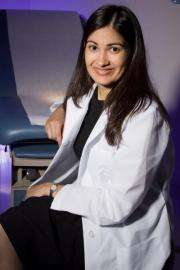
Women were less likely than men to receive major funding for scientific research, according to a study from the University of Michigan Health System. The study also found that only a quarter of all researchers, both men and women, who received a major early career award went on to get further federal funding within five years.
The study looked at 2,783 researchers who received the highly competitive early career awards called K08 or K23. These awards provide funding that protects a researcher's time and include a mentoring component to help nurture a young clinician-scientist's career. The funding is typically for three to five years.
The researchers then matched the K award recipients to those who were awarded an R01, a prestigious federal grant that is a milestone in a researcher's career.
They found that within five years of a K08 or K23 award, only 23 percent of all researchers had attained an R01. But while 25 percent of men had been awarded an R01, only 19 percent of women had. After 10 years, fewer than half of all K awardees had an R01: 36 percent of women and 46 percent of men.
Results appear in the Dec. 1 issue of Annals of Internal Medicine.
"It's concerning that the whole group is not succeeding at a higher rate, and it is especially concerning that the women are doing even worse than the men," says lead study author Reshma Jagsi, M.D., D.Phil., assistant professor of radiation oncology at the U-M Medical School.
"The K08 and K23 grants are highly competitive, prestigious awards that are supposed to help young scientists become independent investigators. People who get these awards are expected to be the best and the brightest, and they are expected to succeed. They not only have the aptitude for and commitment to research, but the grant is supposed to give them the resources they need - protected time and mentorship," Jagsi adds.
The authors suggest that family demands, including childbirth, could pull some women scientists from their careers. Women may also be more likely to feel pressures to contribute to the clinical workload and be less successful at negotiating with their department chairs for adequate time to devote to research.
The authors also say some of the fall-off between a K award and an R01 may occur as researchers choose other career paths, such as leadership or administrative roles. They believe further research is necessary to understand how to retain promising young physicians in research careers.
"We in academic medicine need to work harder to help promising young researchers succeed," says senior study author Peter Ubel, M.D., professor of internal medicine and director of the Center for Behavioral and Decision Sciences in Medicine at the U-M Medical School.
"Research takes time and energy, and when young researchers are trying to balance work and family, the major breakthroughs might have to wait a few extra years. New researchers not only need time, they need mentorship. And they need department chairs who understand that scientific success does not require researchers committing every aspect of their lives to their science," Ubel adds.
The study authors urge strengthening the mentoring component of the K awards and considering an increase to the award amounts.
"We as a society have invested critical resources in these individuals. Our findings suggest dysfunction in the pipeline of physician-scientists," Jagsi says. "This is not an easy career path for anyone, and it may be particularly hard for women. We need to figure out how to make this a more tenable career path, and right now both men and women seem to need additional support."
More information: Annals of Internal Medicine, Vol. 151, No. 11; Dec. 1, 2009
Source: University of Michigan Health System (news : web)


