Biology of emergent Salmonella exposed
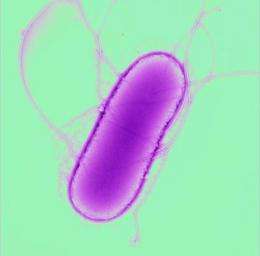
Researchers have characterised a new multi drug resistant strain of Salmonella Typhimurium that is causing life-threatening disease in Africa.
This type of Salmonella bug normally causes diarrhoea and is rarely fatal. The new strain infects vulnerable children and adults in many regions of sub-Saharan Africa leading to death in up to one in four cases.
The new genome work, a collaboration between the Wellcome Trust Sanger Institute, the Malawi-Liverpool-Wellcome Trust Clinical Research Programme and the Kemri-Wellcome Trust Programme, shows how genetic changes transformed this infection into a new antibiotic-resistant form of the disease. The new strain, called ST313, appears to be better adapted to affect humans, is resistant to several commonly used antibiotics and may spread from person to person.
The severe effects of ST313 - invasive disease and high mortality rates - are seen predominantly in individuals with the immune compromising conditions, HIV, malaria, malnutrition or anaemia. Until today, it had been widely assumed that this wasn't a new deadly form of the organism but, rather, that the existing diarrhoea-causing strain of the pathogen was taking advantage of the weakened immune system of patients with underlying health problems to cause a more severe disease.
Today's results paint a truer picture
"Multi-drug resistant forms of this deadly type of S. Typhimurium emerged only in the last decade," explains Dr Robert Kingsley from the Sanger Institute and lead author on the paper. "It seems to have evolved to acquire a unique armoury that allows it to efficiently infect vulnerable children and adults in some African regions. The results highlight the power of in-depth genome sequence analysis to challenge basic medical assumptions and distinguish closely related pathogens.
"This is a new form of pathogen."
The team studied approximately 50 samples of the bacterial DNA, extracted from blood samples of African patients with severe symptoms of infection and also suffering HIV, malaria, malnutrition or anaemia. They used these samples to produce a high-quality reference genome sequence. Based on this sequence, the team were able to look in fine detail at the genetic differences between ST313 and strains associated with milder disease symptoms across the globe.
"This work was entirely dependent on close collaboration that brings important samples collected over years together with genomic technology that can pick apart the important changes," says Professor Rob Heyderman, Director of the Malawi-Liverpool-Wellcome Trust, Clinical Research Programme. "This work is a great example of such cooperation: now we must build the capacity to expand this kind of research in affected countries."
"When we started looking in detail at our newly completed reference genome sequence, we saw the genetic signatures that suggested it may be adapting to humans," explains Dr Robert Kingsley. "For example, this deadly strain has lost around one in 50 of the genes found in the 'typical' S. Typhimurium - a classic sign that it may be becoming more closely adapted to one host, in this case, humans.
"We also found similar patterns of genome degradation in ST313 compared S. Typhi - a bacterium which is known to be well adapted to its human host."
Six out of ten of the regions that showed degradation in the invasive ST313 are also degraded in S. Typhi, suggesting that the genomes have converged in their ability to thrive in the human host. This theory is bolstered by the finding that eroded areas of the genome tend to play important roles in the intimate interaction with cells of the human host.
The team's findings suggest that ST313 may be spreading by a new method, not seen before in S. Typhimurium. This pathogen normally circulates among animals and is introduced to humans through food poisoning. It spends much of its time in the animal hosts. However, ST313 may be passing predominantly from person to person and so can adapt more rapidly to its human hosts: it doesn't spend time acquiring mutations to help it thrive in the animal host, but on the contrary may be losing them. This is likely to have helped seal its success and helped it to become the dominant strain among humans.
Multi drug resistant ST313 has swept through humans in remarkable fashion: in an 18-month period beginning in 2002, it came to represent 95 per cent of S. Typhimurium isolates identified in Africa. However, antibiotic-sensitive versions of the same strain may have been evolving in regions of Africa for many decades.
"This new strain of S. Typhimurium has rapidly gained resistance to many of the commonly used antibiotics in the field," explains Dr Chisomo Msefula from the Malawi-Liverpool-Wellcome Trust Clinical Research Programme. "Our findings show that ST313 has acquired a block of genes that make it resistant to the common antibiotics. The genes jumped into ST313 on a mobile genetic element called a transposon, bringing with it additional genes that make the strain more deadly."
"Even when treated using drugs against which the bacterium has not gained resistance, the mortality rate remains staggeringly high, at 25 per cent."
The team hope that the new sequence will open the door for future studies of disease important to populations in Africa
"There are more than 2500 different strains of Salmonella," explains Professor Gordon Dougan from the Sanger Institute and senior author on the paper. "The emergence and rise to dominance of ST313 in Africa is associated with uniquely susceptible host populations: we must be on our guard against the emergence of new pathogens in a rapidly changing world. This isn't simply a story about HIV infection: There is little evidence that this type of disease is a problem in other areas of the world where HIV and malaria infection rates are high, such as southeast Asia.
"If we can understand what's special about the types of Typhimurium that emerge and susceptible populations, we might be able to predict in future where new pathogens will emerge. We may also be able to design vaccines against those pathogens."
Two ST313 isolates in available databases come from outside Africa - one from India and one from the UK. Strikingly, both were from severe invasive disease. Invasive cases are very, very rare outside certain regions of Africa. The researchers don't know whether the additional cases were from travellers to Africa or know the immune status of the patients.
Tracking the transmission pathways and the emergence of new strains can most effectively be done using new sequencing technologies to spot the tiny differences - single letter changes - in the genetic code. The completion of this new high-quality S. Typhimurium reference genome for the emergent ST313 strain opens the door for such investigations in the future.
More information: Kingsley RA et al. (2009) Epidemic multiple drug resistant Salmonella Typhimurium causing invasive disease in sub-Saharan Africa have a distinct genotype. Genome Research.
Source: Wellcome Trust Sanger Institute (news : web)


