Comcast-NBC deal shows future is in content
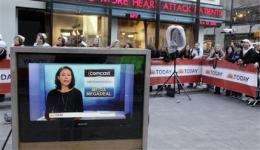
(AP) -- Comcast Corp. is buying control of NBC Universal from GE largely because Comcast wants to own more movies and TV shows. The point is to give it a position of strength if fewer people sign up for its cable TV services and watch more video online.
It's understandable why the strategy might seem dubious: Another media company, Time Warner Inc., just gave up on that and spun off its cable TV division.
Yet while Comcast seems to be taking a different approach - marrying entertainment content with the largest cable TV system in the nation - it and Time Warner have arrived at the same conclusion: The future is in content, and the pipes that carry it matter less.
That's why Time Warner could jettison the business of selling subscription TV service and focus on the Warner Bros. movie studio, cable channels such as CNN and HBO and magazines such as People and Sports Illustrated.
Comcast's hard-wired delivery system serves a quarter of the nation's pay TV households and isn't about to be thrown overboard. But Comcast has decided it must be much more than a cable TV provider. That's why CEO Brian Roberts tried - unsuccessfully - to buy Walt Disney Co. for $54 billion in 2004.
Even after acquiring or developing cable TV channels including E! and Golf Channel and sources of programming such as the Philadelphia Flyers and 76ers, cable TV and other services running through Comcast's pipes make up 95 percent of its revenue. That would drop to 65 percent if the NBC Universal deal goes through, giving Comcast control of the Peacock network, cable channels such as USA, Bravo and Syfy and the Universal Pictures studio.
And over time cable TV figures to matter even less, as people watch more video on PCs and cell phones or through video game consoles connected to the Internet.
Content companies such as Time Warner and NBC Universal are already trying to serve consumers in multiple ways, including online, and are less tied to one format over another.
"Cable is under the most threat and is the most motivated to take this new relationship and make it work for consumers," said James McQuivey, a media and technology analyst for Forrester Research. "If NBC were to own Comcast, I would not be nearly as optimistic about this."
While the reasoning for its NBC Universal deal might be sound, it still would take years to show the bet was worthwhile. Comcast is spending $13.75 billion in cash and assets to get a controlling stake in NBC Universal from General Electric Co. It is creating a large - and potentially hard to manage - conglomerate that also includes theme parks.
"Bigger is just plain not better," said Stephen Farnsworth, an assistant professor of communication at George Mason University.
The deal announced Thursday is expected to close in nine months to a year if regulators and shareholders approve. GE would first buy Vivendi SA's 20 percent stake in NBC Universal for $5.8 billion. GE and Comcast would then form a NBC Universal joint venture, with Comcast owning a 51 percent stake.
Comcast, which is based in Philadelphia, would pay $6.5 billion in cash to GE and contribute $7.25 billion worth of cable channels it owns.
GE would retain a 49 percent stake, with the option of unloading half its stake in 3 1/2 years and all of it in seven years. The new NBC Universal would borrow $9.1 billion and pay that amount to GE.
Consumer groups already are worried that Comcast would wield too much power over entertainment. Congressional hearings are being planned. Although the government probably won't block a deal outright, regulators could prohibit Comcast from, for instance, denying rival subscription-TV services such as DirecTV access to NBC channels and other popular programming.
One reason for Comcast to pounce now is that NBC Universal is suffering through hard times. Advertising revenue has slowed, NBC is the fourth-ranked network, theme park attendance is weak and Universal Pictures has suffered box-office bombs.
But the larger motivation is that Comcast wants more programming - particularly from NBC Universal's cable channels - to deliver to its subscribers and to sell to other distributors.
It's likely hoping for parallels with a successful media deal: Disney's $19 billion purchase of Cap Cities/ABC in 1995.
That deal showed that the right content can be key: It gave ESPN to Disney, and the sports network has kept Disney solidly profitable even as ABC, its theme parks and movie studio faltered.
There are also lessons in AOL's purchase of Time Warner Inc. in 2001 for $147 billion in stock. It is considered one of the worst deals of all time and is being undone for good next week. At the time, Time Warner thought its movie, TV and magazine content would benefit from ties to two forms of distribution - AOL's Internet access business and Time Warner's cable services. Ultimately, among other problems, neither distribution channel significantly enhanced the value of the content.
This is not to say cable companies are necessarily successful at broadening the content they own. Cablevision Systems Corp. owns the AMC cable channel and Newsday newspaper, plus the New York Rangers and the New York Knicks and their arena, Madison Square Garden. And yet it's spinning off the Madison Square Garden assets to make it easier for investors to buy a more focused business.
Comcast's own development as an owner of content in recent years hasn't even proven itself yet. Comcast's shares now trade for about half of this decade's high of $29.65, adjusted for splits, hit in January 2007. On Thursday, however, Comcast shares rose by 6.5 percent to $15.91, as investors applauded a 40 percent dividend increase the company announced along with the NBC Universal plans.
Because the services that require its own cable pipes account for virtually all of Comcast's revenue, Comcast decided it had no choice but to accelerate its drive for content that could be delivered in many forms.
In 2006, Comcast acquired thePlatform, a delivery system for online video. It also launched Fancast, a site that lets viewers watch full episodes of TV shows and movies online with advertisements, much like Hulu, the joint venture between NBC Universal, News Corp.'s Fox and Disney.
Comcast says the combination of content from NBC channels and Universal Pictures with its cable and Internet distribution network gives it dozens of ideas about how to make money from new methods of delivery and promotion. Already it's about to launch a test in which paying subscribers can access cable channel shows online.
"With this transaction, our company is strategically complete," Comcast's Roberts said Thursday.
But given that content is king, Comcast might not be done yet.
©2009 The Associated Press. All rights reserved. This material may not be published, broadcast, rewritten or redistributed.


