Study finds new relationship between gene duplication and alternative splicing in plants
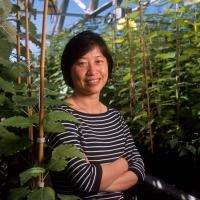
University of Georgia scientists looking to understand the genetic mechanisms of plant defense and growth have found for the first time in plants an inverse relationship between gene duplication and alternative splicing. The finding has implications for diversity not only in plants, but in animals and humans.
The research will be published online in this week's Proceedings of the National Academy of Sciences.
"This inverse relationship has been previously reported in animals," said University of Georgia professor and senior author Chung-Jui Tsai. "And in animal genes, when there's a single copy, more often than not you see a higher degree of alternative splicing."
Alternative splicing is the molecular process that allows a single gene to produce many gene products or proteins with potentially different functions. It is an important regulatory mechanism for determining diversity in all plants and animals.
Tsai is W.N. Haynes Professor and Georgia Research Alliance Eminent Scholar, Warnell School of Forestry and Natural Resources, and professor of genetics, Franklin College of Arts and Sciences, at UGA.
Tsai's team set out to investigate the role of a gene that encodes for the enzyme isochorismate synthase (ICS), which has two distinct functions: synthesis of vitamin K for photosynthesis, the conversion of light to energy, and synthesis of salicylic acid, an aspirin-like compound found naturally in most plants that is important for their resistance to diseases. In Arabidopsis, a tiny flowering annual plant that is widely used as a model organism for studying plants, salicylic acid is derived primarily from ICS. The investigators wanted to know the role of the ICS gene in fast-growing and economically important Populus tree species.
The PNAS authors took their cues from Arabidopsis. In this tiny weed, there are two copies of the ICS gene, while there is only one copy of the gene in Populus.
When subjected to stresses, the tiny Arabidopsis plant did what was expected: It produced normal stress-fighting proteins, but from only one of the ICS duplicates. However, the single copy ICS gene in Populus spontaneously produced a mixture of the normal and alternative forms of gene product in equal proportions, and it did not respond to stresses.
Tsai said, "We asked, 'Does the ICS gene behave differently by chance? Or does it reflect something about how disease resistance is controlled in different kinds of plants?'"
Following the discovery of extensive alternative splicing in the Populus ICS gene, the researchers inserted the Populus ICS gene into an Arabidopsis mutant that lacked the stress-fighting ICS copy. The UGA-led research team found that the Populus ICS gene could not be correctly spliced at all in the foreign Arabidopsis host and could not restore the weed's ability to produce salicylic acid.
Tsai explained, "When the correctly spliced Populus ICS gene was inserted, it worked as expected in Arabidopsis. This suggested that some of the signal recognition for splicing is not in the weed any more."
Tsai's research found that in Arabidopsis one of the ICS genes has been recruited for defense. "When these species get attacked, it's important for them to respond quickly and massively using a dedicated ICS gene."
In contrast, Tsai said, woody perennial trees like Populus, which face environmental stress throughout their long lifetimes, have evolved other pathways to synthesize salicylic acid and other chemicals for "constitutive" defense - meaning these compounds are produced all the time - and the primary ICS gene function is photosynthesis.
Tsai concluded, "The gene duplication and alternative splicing of Arabidopsis and Populus reflect their distinct defense strategies."
But the major finding of the research - the relationship between gene copy number, gene sequence and how splicing may have contributed to gene evolution - is what Tsai finds most exciting.
"Sometimes people compare the gene count between the weeds and trees to try to understand what makes a tree a tree. But it's not the gene number that's significant. The tiny weed has approximately 27,000 genes, and Populus has 35,000 to 40,000 genes - it's not that different." Tsai's research shows that it is also how a gene is regulated that contributes to the difference.
Source: University of Georgia (news : web)


