The impact of the diffusion of maize to the Southwestern United States
December 8, 2009
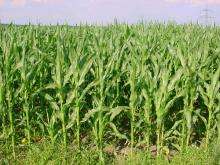
An international group of anthropologists offers a new theory about the diffusion of maize to the Southwestern United States and the impact it had.
Published the week of Dec. 7 in the Proceedings of the National Academy of Sciences, the study, co-authored by Gayle Fritz, Ph.D., professor of anthropology in Arts & Sciences at Washington University in St. Louis, and colleagues, suggests that maize was passed from group to group of Southwestern hunter-gatherers.
These people took advantage of improved moisture conditions by integrating a storable and potentially high-yielding crop into their broad-spectrum subsistence strategy.
"For decades, there have been two competing scenarios for the spread of maize and other crops into what is now the U.S. Southwest," Fritz said.
According to the first, groups of farmers migrated northward from central Mexico into northwest Mexico and from there into the Southwest, bringing their crops and associated lifeways with them.
In the second scenario, maize moved northward from central Mexico to be Southwest by being passed from one hunter-gatherer band to the next, who incorporated the crop into their subsistence economies and eventually became farmers themselves.
"The case for long-distance northward migration of Mexican farming societies received a boost about 12 years ago when British archaeologist Peter Bellwood, joined a few years later by geographer Jared Diamond and linguist Jane Hill, included the Southwest in a grand global model in which long-distance migration of agriculturalists explains the spread of many of the world's major language families," Fritz said. "In the Southwest case, Uto-Aztecan-speaking peoples, ancestors of people who speak modern languages, like Comanche and Hopi, would have been responsible for the diffusion."
In this paper, the researchers summarize the most recent archaeological evidence, and integrate what is currently known about early maize in the Southwest with genetic, paleoecological, and historical linguistic studies.
Corn from five sites in Arizona and New Mexico now predates 2,000 B.C., which makes it too early to be explained by diffusion of settled Mexican villagers, said Fritz.
"No artifacts or features of any type point to in-migrating Mesoamerican farmers; in fact, continuity of local traditions is manifested, with independent invention of low-fired ceramics and with the construction of irrigation features in the Tucson Basin dating earlier than any known south of the border," she said. "We interpret the linguistic evidence as favoring a very early (beginning shortly after 7,000 B.C.), north-to-south movement of Proto-Uto-Aztecan hunter-gatherers and subsequent division into northern and southern Uto-Aztecan-speaking groups. "
These two groups do not share words and meanings for maize because, according to the researchers' scenario, farming post-dates their separation.
"We think the Southwest stands as a region in which indigenous foragers adopted crops and made the transition to agriculture locally rather than having been joined or displaced by in-migrating farming societies," Fritz said. "Peter Bellwood may well be correct that long-distance movements account for some examples of the expansion of languages and farming technologies, but cases like that of the Southwest are very important in demonstrating that this pattern did not apply universally."
More information: Full text of the study is available at http://www.pnas.or … 3/0906075106
-
Scientists Finds Earliest Evidence of Maize Farming in Mexico
Apr 09, 2007 |
not rated yet |
0
-
Europe's first farmers replaced their Stone Age hunter-gatherer forerunners
Sep 03, 2009 |
not rated yet |
0
-
Practice of farming reaches back farther than thought
Feb 20, 2007 |
not rated yet |
0
-
Y chromosome study sheds light on Athapaskan migration to southwest US
Jul 15, 2008 |
not rated yet |
0
-
Ancient Mexican maize varieties
Jun 26, 2008 |
not rated yet |
0
-
Engineers build first sub-10-nm carbon nanotube transistor
Feb 01, 2012 |
4.9 / 5 (31) |
30
-
Something old, something new: Evolution and the structural divergence of duplicate genes
Jan 31, 2012 |
4.6 / 5 (7) |
1
-
The hidden nanoworld of ice crystals: Revealing the dynamic behavior of quasi-liquid layers
Jan 30, 2012 |
5 / 5 (3) |
1
-
Stock market network reveals investor clustering
Jan 27, 2012 |
3.9 / 5 (23) |
8
-
Of microchemistry and molecules: Electronic microfluidic device synthesizes biocompatible probes
Jan 26, 2012 |
5 / 5 (1) |
0
-
Pertubance in a model
7 hours ago
-
Cancer drugs and Alzheimer's, Oh my!
15 hours ago
-
Squishing cells
15 hours ago
-
Any books/articles for evolutionary stable strategy models in humans?
Feb 09, 2012
-
Science behind the bore feeling?
Feb 09, 2012
-
Homo Sapien vs. Chimpanzee - Divergence Timeline
Feb 09, 2012
- More from Physics Forums - Biology
More news stories
Employers feel no love for unscrupulous practice of 'service sweethearting'
A new study led by two Florida State University marketing professors finds that some frontline service employees who are rewarded for hikes in customer loyalty and satisfaction also may engage in "service ...
Other Sciences / Economics & Business
1 hour ago |
not rated yet |
0
A frank discussion of the power law and linking correlation to causation
(PhysOrg.com) -- Michael Stumpf a mathematics professor at Imperial College in London, and Mason Porter a lecturer at Oxford have teamed together to write and publish a perspective piece in Science regarding the in ...
The question of life in the ancient world
Theres a general feeling that we dont get the Greeks ancient or modern. Many, including heads of state like Angela Merkel, visibly shake their head in exasperation, rightly or wrongly, at ...
Other Sciences / Archaeology & Fossils
6 hours ago |
1 / 5 (1) |
2
Sonic Cradle lands spot in TED exhibition
A Simon Fraser University graduate student project that melds music, meditation and modern technology has landed a rare spot as an exhibit at TEDActive 2012 in Palm Springs, California this month.
3 hours ago |
not rated yet |
0
Chilean miners' rescue capsule on show in London
The capsule used to rescue Chilean miners trapped underground for two months goes on display Saturday at the Science Museum in London -- the first time it has been seen in Europe.
5 hours ago |
not rated yet |
0
Human cognitive performance suffers following natural disasters, researchers find
Not surprisingly, victims of a natural disaster can experience stress and anxiety, but a new study indicates that it might also cause them to make more errors - some serious - in their daily lives. In their upcoming Human Fa ...
"Twisted Metal" gamers get shot at real gunplay
Fans of "Twisted Metal" will get to welcome a long-awaited sequel of the car-battle videogame with a real-world bang by blasting an ice cream truck to bits with a machine gun.
Putting the squeeze on planets outside our solar system
(PhysOrg.com) -- Using high-powered lasers, scientists at Lawrence Livermore National Laboratory and collaborators discovered that molten magnesium silicate undergoes a phase change in the liquid state, abruptly ...
The power of estrogen -- male snakes attract other males
A new study has shown that boosting the estrogen levels of male garter snakes causes them to secrete the same pheromones that females use to attract suitors, and turned the males into just about the sexiest ...
Both maternal and paternal age linked to autism
Older maternal and paternal age are jointly associated with having a child with autism, according to a recently published study led by researchers at The University of Texas Health Science Center at Houston (UTHealth).
New error-correcting codes guarantee the fastest possible rate of data transmission
Error-correcting codes are one of the triumphs of the digital age. Theyre a way of encoding information so that it can be transmitted across a communication channel such as an optical fiber o ...