Disagreement Over Mammography Task Force Study
When a government-appointed panel of experts released new guidelines last month calling for fewer routine mammograms, they were met with public confusion, political outrage, and a media storm that left women and their doctors with conflicting messages.
Now mounting evidence suggests that many doctors, including those at some of the nation's leading hospitals, will ignore the new advice for most women in their fifties to get half as many screening mammograms and most women in their forties to avoid routine mammograms.
The recommendations revised those made in 2002 by the same panel -- called the U.S. Preventative Services Task Force -- which previously called for most women in their 40s and 50s get a routine screening mammogram every year. This revision has revealed deep divisions in the breast cancer world.
Some advocacy groups, such as the National Breast Cancer Coalition, applauded the new recommendations; others, such the Susan G. Komen Breast Cancer Foundation, lambasted them. Professional organizations in the medical community have also weighed in on the issue.
In the midst of the confusion, the Senate quickly passed an amendment to the health care bill under consideration ensuring that mammograms for women in the forties would be covered. Secretary of Health and Human Services Kathleen Sebelius, who heads the federal department that appoints the task force, called for women to ignore its advice make an informed decision by asking their doctors for advice.
A majority of women in a recent Gallup poll vowed to do just that.
Where do Doctors Turn for Advice?
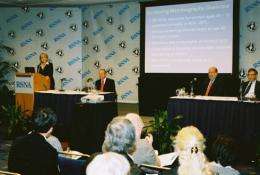
Much of the harshest criticism of the task force's advice has come from within the medical community. Last week in Chicago, a panel of leading mammography experts gathered at the annual meeting of the Radiological Society of North America claimed that the task force members were oversold on the potential harms of mammograms over the benefits.
"Thousands of women will die unnecessarily," said Harvard professor Daniel Kopans, a senior radiologist at Massachusetts General Hospital who sat on the panel last week. He said that most primary care doctors -- even those at a busy practices -- will see only a few women a year with breast cancer. He worried that in light of that, doctors will follow the task force's recommendations, and fewer women will be screened.
Kopans said that his institution has begun telling its doctors to continue recommending annual screening. Other hospitals, such as Johns Hopkins in Baltimore, and the Mayo Clinic in Rochester, Minn., are also dispensing their own advice to their doctors -- advice that largely ignores the new recommendations and follows the guidelines of the American Cancer Society, which recommend annual screening for women in their forties.
The American College of Physicians is in the process of conducting a web-based survey of doctors to see whether they are following the new recommendations, but even before the results of this survey are released, some private doctors are already signaling that they will ignore the advice of the task force.
"I read about these recommendation at the same time as many of my patients," said Jerry Levine, an internal medical practitioner in Columbia, Md. "It hits me the same way that it hits the patient, and I ask myself, 'what's the right information to focus on?'"
Levine is the director for the Maryland Primary Care Physicians group, which includes 73 providers and treats about 100,000 patients in Maryland. Levine said doctors in his group will continue recommending yearly mammograms for women in their forties and fifties.
Levine also said that discussing the issue with his patients has become a daily event for him and his colleagues.
The New Recommendations
The debate over what age women should begin receiving routine screening mammograms has been going on for more than a decade. One thing nobody disagrees with, however, is that mammography is one of the major medical advances of the 20th century. It has saved thousands of lives in the United States by helping to detect cancer early -- a fact that numerous studies have shown.
"Mammography the most studied medical procedure ever in terms of clinical trials," said Ed Hendrick, a medical physicist at the University of Colorado who helped write the modern guidelines for the procedure in the early 1990s.
Prior to the advent of widespread breast cancer screening with mammography in the 1980s, the death rate from breast cancer had remained unchanged for 50 years. In the decades since, that rate is down by 30 percent in the United States -- and even more in countries like Sweden where women are more likely to be screened. And according to Henrick, the procedure continues to improve today as more and more mammograms are done using better-quality digital units.
Members of the task force met with a Congressional committee last week to defend and clarify their new recommendations. "The decision to start regular, biennial screening before the age of 50 should be an individual one and take patient context into account," said Diane Petitti, vice chair of the task force and an epidemiologist at Arizona State University. Her statement echoed previous advice from a National Institute of Health committee in 1997 and the American College of Physicians in 2007.
Ned Calonge, chair of the task force and chief medical officer of the Colorado Department of Public Health and Environment, told committee members that the U.S. Preventative Services Task Force is an independent group of scientists that issues recommendations based purely on a review of the scientific evidence. "Politics play no part in our processes," he said. "Costs were never considered."
The task force recommendations were based on a number of different large-scale clinical trials of mammography in North America and Europe. Though mammography is one of the most-studied screening techniques in history, the task force found only one study that could be considered "good" and seven "fair" studies that include two new large-scale studies of 51,611 women in Sweden and 160,921 women in the United Kingdom. None of these studies by itself showed a statistically significant benefit to screening women in their forties.
Data from these trials were combined and fed into a model that estimated the benefit of mammography for different ages of women. Analysis of the model concluded that as women age, the benefits of mammography steadily increase, while the chance of an incorrect diagnosis decreases.
Based on modeling all the clinical data, the task force concluded that routine screening mammography has what epidemiologists consider a small benefit -- it helps to extend the life of about one out of 1,900 women in their forties.
The decision about which studies to include has also generated some controversy. Kopans attacked the claims that the task force used what he calls "selective science" in making its decision and ignored several key studies in Europe and Canada that showed what happens when you introduce mammography into populations. Had the task force incorporated these studies into their models, he said, the 1,900 women needed to save a single life would become 950 -- below the task force's reasonable threshold for screening.
Do Know Harm?
"The data on the benefits of mammography haven't changed much since the 90s," said Kay Dickerson of the Johns Hopkins University School of Public Health, who was not on the task force but supports the decision it made. "What has changed is that people are paying more attention to the harms."
They crux of the recommendation made by the task force was that one in 1,900 was a success rate too small to justify the potential harms of widespread screening of women between the ages of 40-49.
The task force analysis included several studies showing that as many as half of all women undergoing regular mammography in their forties will receive a false positive. Though cancer-free, they will be told that the results of the mammography warrant additional tests.
The task force also looked to eight European studies that highlight the problem of misdiagnosis -- the one to 10 percent of all diagnosed cases of breast cancer that may in fact be harmless, leading to unnecessary surgeries and treatments.
"Some of those women are going to lose a breast," said Dickerson, also a breast cancer survivor. "To me, there's very little to be gained and a lot to be lost, and I feel like they made the right decision."
Other experts have argued that these false positives do not deter women. A spokesman for the American College of Radiology pointed to a study in the leading medical journal JAMA that found while 40 percent of women who experience false positives find it to be a "very scary" experience or "the scariest time of my life," 96 percent say that they are glad they had that initial test.
Stephen Feig of the University of California, Irvine, a radiologist who has studied the psychological impact of worrisome diagnoses, said in Chicago last week that the stress is short-term and not major. "The real stress is in a woman who knows she is dying of breast cancer," he said, adding that women in their forties account for about 20 percent of all breast cancer deaths.
"It's a judgment call, really, and the evidence is mixed," said Heidi Nelson, a professor of surgery at the Mayo Clinic who was not part of the task force but lead the study that informed its recommendations. "I know some women who completely freak out."
Nelson highlighted the need for more studies into the harms of mammograms. "The science should be driving the use of mammography, not other things," she said.
For now, medical practitioners like Jerry Levine in Maryland are not likely to stop recommending routine mammograms for women in their forties.
"I accept the fact that we don't have enough data to absolutely say that we're doing the right thing," said Levine. "But there is nothing in what I have read so far that is going to change my direction or pattern."
MAMMOGRAPHY SIDEBAR: THE PROCEDURE, REGULATIONS & FINANCING
Mammography is the most studied procedure in medicine," said Ed Hendrick, a medical physicist at the University of Colorado who helped write the modern guidelines for the procedure.
It is also the most regulated procedure in medicine. Every machine is regularly tested by the technologists who operate them, and their work is overseen by medical physicists who work for or consult with every facility. Every state also checks mammography equipment annually and certifies the credentials of each person operating the machines or interpreting the scans every year.
When a woman goes to get a mammography, she will typically go to a clinic or hospital unit where a trained technologist takes an image by shining a beam of X-rays through her breasts. Tissues vary in how much they absorb X-rays, and cancerous masses may absorb more than the surrounding tissue. When they do, the contrast will show up on the image.
Not every spot indicates cancer, however, and it takes a trained radiologist to read the images and order additional tests if necessary.
According to Hendrick, about eight to ten percent of women who are screened will be called back for further tests. The additional tests rule out cancer in most cases, revealing the spots on the initial mammogram to be things like harmless cysts. About ten to twenty percent of the time, however, doctors will not be able to rule out cancer, and they will order a definitive test known as a biopsy -- a procedure where a thin needle is used to take a tiny piece of the tissue. Again, most of the biopsies also turn out to be false, meaning that those women do not have cancer.
The cost of screening mammograms varies by state and by facility, and can depend on insurance coverage. However, most states have laws requiring health insurance companies to reimburse all or part of the cost of screening mammograms.
Under current law, all women age 40 and older with Medicare can get a screening mammogram each year. Medicare will also pay for one baseline mammogram for a woman between the ages of 35 and 39. There is no deductible requirement for this benefit, but Medicare beneficiaries have to pay 20 percent of the Medicare-approved amount.
© 2009 Inside Science News Service