The Shoulders of Giants
America’s ambition to explore space has not come without a human cost. The decisions being made today about our future in space depend on lessons learned from past tragedies.
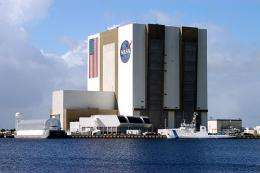
Visible from space, the Vehicle Assembly Building at Cape Canaveral rears out of the thick, moist air of the Florida swampland like a leviathan from a prehistoric age. A few miles away is the NASA Apollo/Saturn V Center, surrounded by tour buses which periodically disgorge a throng of people who stream into a mock-up of Mission Control and then into a giant auditorium where they can gaze in awe at a Saturn V - the vehicle that took men to the Moon. This is all part of the regular NASA tour of the Kennedy Space Center complex, and it is very popular. But there is another, lesser known tour that departs from the same bus station - the Canaveral Then and Now Tour.
I, with my family, was privileged to take this tour the last time we were at the Cape. Instead of heading straight to the Apollo/Saturn V Visitor’s Center, the bus trundles off the main drag and down small service roads that criss-cross the sprawling Merritt Island launch facility that is home to the Cape Canaveral Air Force Station.
This is a place where the fusion between today’s NASA and its roots in the military rockets of the Cold War are visible for all to see. One of the first stops on the tour is Launch Complex 5/6 where Alan Shepherd, the first American in space, was fired into his fifteen minute suborbital flight on May 5 1961. When asked what he was thinking as he lay in his cramped capsule waiting for lift-off he answered “The fact that every part of this ship was built by the lowest bidder…” It was a fateful thought, and one that would echo down the years as America’s Apollo Program got under way later in the 1960s.
Some of the many other highlights of the Canaveral Then and Now Tour are the lighthouse where Wernher Von Braun watched the flights of the monster boosters that he designed, Launch Complex 40 where the hugely successful Cassini-Huygens mission lifted off for Saturn, and Launch Complex 41 where the historic Voyager missions departed for the edges of the solar system - and beyond.
In amongst these treasures is a sober reminder that America’s space aspirations have not been without their price. Here, where the Atlantic breeze sighs among the stunted palmetto palms and whines mournfully through the twisted steel grid-work of abandoned skeletal launch gantries, is Launch Complex 34, site of one of the first - and worst - disasters in space history.
It was here, forty-three years ago, on January 27, 1967 that astronauts Gus Grissom, Ed White and Roger Chaffee lost their lives when fire swept through the capsule of Apollo 1. The cause was later traced to faulty insulation around a wire that sparked and ignited the contents of the capsule.
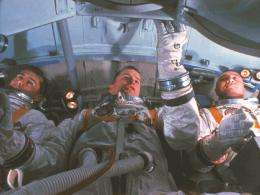
Jim Lovell, mission commander of one of the most famous near-disasters of the Apollo era - Apollo 13 - made the point to me that a lot of the problems with the Apollo 1 fire had to do with the fact that the capsule was pressurized with pure oxygen. In such an environment, ordinary materials burn with blow-torch intensity.
Another problem was the door. So nervous were the engineers about the possibility of rupture in the vacuum of space, that they clamped the door shut with no less than twelve bolts. In addition, the door was so heavy that White and the other astronauts - superfit specimens all - used it to practise their shoulder presses. It had never been made for rapid egress, and nobody at NASA had even considered the possibility of a fire on the launch pad. Bolted inside a steel capsule in such an atmosphere, Grissom, Chaffee and White never stood a chance.
The disaster paralysed NASA and the burgeoning American space industry. All work on the Apollo program was halted while the cause of the fire was determined and steps taken to prevent a repetition. There was little time though, because John F. Kennedy had mandated that America must land a man on the Moon - and return him safely to Earth - by 1970, at that point less than three years away.
But lessons were learned. Today, as Lovell points out, astronauts leave the Earth in spacecraft which are at sea-level pressure. Only the spacesuits contain pure oxygen in order to prevent the ‘bends’. In addition the door was redesigned so that it could be opened easily in the event of an emergency. NASA had taken the first steps in a process that would be on-going - learning from the sometimes high human cost of spaceflight.
By a twist of fate, the last week of January and the first week of February also sees the anniversaries of two other NASA tragedies.
On January 28, 1986, the space shuttle Challenger exploded 73 seconds after launch, killing all seven astronauts on board, including the school teacher Christa McAuliffe. The Rogers Inquiry which investigated the accident traced the source of the launch failure to the malfunction of a single ‘O’ ring that joined two segments of the solid rocket booster (SRB) together. Such ‘O’ rings worked just fine in all conditions except low temperature, and NASA managers had taken the decision to launch that cold January morning against the advice of a least some of the Morton Thiokol engineers who manufactured and maintained the boosters. Unlike the shuttle’s liquid-fuelled main engines, once the SRBs were ignited there was no way to shut them down. Jim Lovell acknowledges that the decision to launch was a mistake, pointing out that the ‘O’ rings were known to be inelastic at low temperatures and that leakage of hot gas under such conditions was considered a real possibility.
The Rogers Inquiry included some of the heaviest hitters in the American space and science community. Neil Armstrong - the first man to walk on the Moon - was on it, as was Charles ‘Chuck’ Yeager, the first man to break the sound barrier and anointed bearer of Tom Wolfe’s ‘Right Stuff’. Also on the panel was Richard Feynman, arguably the greatest physicist of his time. Feynman was incandescent at what he identified as a culture of mismanagement at the heart of NASA, where status and schedules took precedence over science and safety. Feynman demonstrated graphically what must have happened that fateful day. At the press conference where the Rogers Inquiry announced their findings, Feynman took an ‘O’ ring at room temperature and twisted it to show its superb flexibility under the right conditions. Then he dipped it into a glass of iced water and repeated the experiment. The ‘O’ ring was as rigid as cold candle wax.
There was no denying it - the immediate cause of the Challenger disaster was clear and the reasons behind it were too. NASA should have waited for warmer weather before launching but took a gamble to stay on schedule - and lost. Feynman was scathing. ‘Reality must take precedence over public relations, for nature cannot be fooled.’
The shuttle fleet was grounded while the issues were addressed and resolved, delaying for years the launch of several satellites and the development of the International Space Station.
And then there is the final tragedy. Seven years ago on February 1, 2003, NASA’s very first operational space shuttle, the venerable Columbia, broke up over Texas on approach into Cape Canaveral, having been damaged by a piece of frozen insulation that hit a wing during launch.
NASA’s own safety regulations identified very clearly the risks of debris strikes from the external fuel tank cladding, but repeatedly NASA had launched shuttles having failed to address it. Once again safety concerns were subordinate to the operational requirements of a system that was repeatedly advertised as being as routine as taking a bus - but wasn’t.
Chris Riley, author of the superbly detailed Apollo 11 Haynes Workshop Manual as well as co-producer on the highly acclaimed movie In the Shadow of the Moon, points out that a common factor with all three tragedies is ‘Go-fever’ - the desire to launch even when conditions are not optimal.
Riley highlights the fact that damage to the silica tiles that protect the shuttles from the heat of re-entry is a problem as old as the design of the orbiters. “[The reason for the Columbia tragedy] was simply because the seriousness of a breach in the silica tiles was not appreciated until Columbia. If you look back at the very first launch of the shuttle (which was also Columbia) there were damaged tiles then, too, and there was all sorts of consternation at the time but they carried on [anyway] through twenty years plus of shuttle flights. There were hundreds of incidents of tile damage on tens of missions throughout the shuttle's history, and at the time it was just an accepted aspect of the design of the shuttle. It wasn't until this random incident happened on Columbia when a very large piece of cladding fell at high velocity onto a leading edge that it actually caused the problems we suffered that day.”
A year after the Columbia tragedy, in January 2004, President Bush announced that the ailing Space Shuttle fleet would be retired and replaced. The Orion vehicles replacing the shuttles would carry between four and six astronauts into orbit atop a booster rocket - the Ares - which was partly based on the tried-and-tested Saturn V that so successfully took men to the Moon in the 1960s and 1970s. Not only was the Orion-Ares combination designed to serve the International Space Station, it also would take humans back to the Moon by 2018 and thence to Mars, by NASA’s reckoning, by 2030.
However, NASA announced last week that it wants to cancel the Constellation program that was developing the Orion-Ares, and instead turn over launch technology to the commercial space sector. The decision was based on the 2009 Augustine Commission, which reviewed the Constellation program to take humans to the Moon, Mars and beyond, and concluded the program was behind schedule, and the money and technology to achieve its goals were out of reach.
As Congress debates the proposed cancellation of the Constellation program and the commercialization of launch facilities, they will no doubt discuss what form the future US presence in space should take.
NASA has said that the future design of US spaceflight will depend on the solutions brought to them by the commercial space industry. They are hoping for fresh innovations in spaceflight, but it remains to be seen if commercial developers can create something better than the one-off capsule-and-rocket combination of Apollo, or the partially reusable space shuttle. Certainly their designs will depend on NASA’s decades of space technology development.
While the shuttle design might seem less wasteful, the capsule-and-rocket system of Apollo also had advantages. As Chris Riley points out, “the brilliant thing about all the Apollo spacecraft was that they were sitting above the boosters and that they had escape systems. With the shuttle you never really had any realistic escape system and there is a fair amount of fuel and therefore explosive capability [around you] and above you. With Challenger the shuttle itself was pretty well built to break up into intact components but because the explosion essentially immersed it in liquid fuel - propellant and oxidiser - the whole thing became a fireball because the shuttle was lower down on the fuel stack.”
Whatever the shuttle replacement turns out to be, it won’t be ready for active duty until 2016. In the meantime, NASA will use Russian space vehicles after the end of shuttle operations (projected for later this year).
Riley points out that we now stand at the hinge point of fifty years of crewed space exploration - a time that has been dominated by government-sponsored space programs. “We’re seeing the emergence now of the commercial sector in human spaceflight. Under these circumstances spaceflight will be different. You will get good value in general because commercial companies use finance more effectively than governments… these companies will have to go and create new materials and procedures to make the enterprise viable for shareholders. In theory it will be a new and economically efficient way of going into space.”
He also has a warning however, “We should never forget that it is a dangerous thing to go up into space. These are experimental vehicles which are never, ever, going to be vehicles that have the same levels of testing as commercial airliners…Even the shuttle, as it nears the end of its operational life is still really an experimental craft….”
So will the commercialisation of space reduce the risks? It is easy to point the finger at ‘Go-Fever’ and identify it as the culprit, but the truth is that NASA - along with all space agencies, including the Russians - has to occupy the real world where the pressures to adhere to a tight time-line, for example, the construction schedule of the International Space Station (as well as other missions) can be intense. Perhaps we will just have to accept fatalities as the price for humankind’s ambitions to step away from the planet that gave it birth?
The Cape Canaveral Then and Now Tour reminds us of the successes and the tragedies that have accompanied our first faltering steps into space. From Launch Complex 34 where the Apollo 1 astronauts died to the decommissioned Minuteman missile silo that houses the remains of the space shuttle Challenger, it reminds us that we must learn from the sacrifices made by the brave men and women who here ‘slipped the surly bonds of Earth to touch the face of God’.
In the future we will be taking steps along the path of our species’ next great journey - the colonization of the planets. This path is visible to us for one reason only: we see it from the shoulders of giants.
Source: Astrobio.net


