Detecting Our Martian Cousins

The iguanas of the Galapagos Islands have evolved many unique characteristics due to their isolation from mainland iguanas. Because they can't swim long distances, biologists believe that the first Galapagos iguanas arrived on natural rafts made from vegetation.
The same thing may have happened across the ocean of space. Some researchers speculate that life on Mars - if there is any - may be composed of "island species" that were carried away from Earth on interplanetary meteorites.
Or perhaps both planets were seeded by life from an even more distant "mainland."
"Earth may not be the center of the DNA-based universe," says Gary Ruvkun, professor of genetics at Harvard Medical School and Massachusetts General Hospital.
The idea isn't too crazy. We already have evidence that some biologically important molecules, such as the ingredients for amino acids, are delivered by comets. And we know that around 3.5 billion years ago, meteorite impacts often kicked up rocks from the Earth's surface and launched them into space.
Microbes and/or bio-molecules may have hitched a ride on one these cosmic "rafts."
To test this theory - called panspermia - Ruvkun and his colleagues have started a project called the Search for Extraterrestrial Genomes (SETG, as a play on SETI). They are putting together an instrument that could go to Mars and search soil or ice samples for the presence of DNA. If the device finds any, it could then analyze the genetic code to see if the "Martians" are related to us.
A SETG prototype will have its first field test this year with funding from NASA's Astrobiology Science and Technology Instrument Development program.
DNA detection
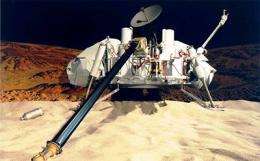
This is the first time DNA analyzing equipment has been proposed for a planetary mission. Other "life-detectors" - like those that were onboard the Viking landers - search for biological activity or organic molecules.
Some argue that it is too soon to be thinking about DNA on Mars.
"If there were other signs of life, more specifically biomass, I would applaud DNA analysis," says Norman Pace of the University of Colorado, Boulder. "Without even trace target biomass, talking about DNA sequences seems premature to me."
But Ruvkun argues that his team's technique can detect a single DNA molecule in a sample, whereas other tests for biology - such as identifying chemical constituents with mass spectrometry - are not nearly as sensitive.
"It's very hard to detect a single molecule with chemical analysis," concurs Harry Noller from the University of California at Santa Cruz. "But you can uniquely amplify DNA," so that its signal clearly stands out.
Of course, if DNA were found on Mars, the first reaction would be that we brought it there on our spacecraft. To rule out this sort of contamination, the SETG instrument would sequence part of the DNA and compare it to the genetic codes of Earth species.
Owing to their cosmic isolation, any Martians should have evolved very differently from Earthlings. However, if we do share a common ancestor as Ruvkun and others presume, then we'll have to make room for the Martians on our tree of life.
Immutable DNA
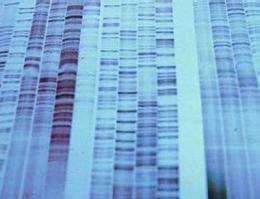
Analyzing alien DNA will require a common reference point - that is, a stretch of DNA that would likely be conserved in both Martians and Earthlings.
Ruvkun and his collaborators believe this common thread should be in the 16S ribosomal RNA gene, which is vital to the protein-making process in cells. This gene has regions of its sequence that have barely changed over billions of years of evolution.
In fact, short segments in the 16S ribosomal RNA sequence are exactly identical in more than 100,000 species that have so far had their ribosome genes analyzed.
"There's no way to have a mutation here and live to tell about it," says Noller, who is not part of the SETG team.
As a consequence, any Martians that share our genetic heritage will presumably carry the 16S ribosomal RNA gene with the same conserved pieces that all of us Earthlings have.
A primer for life
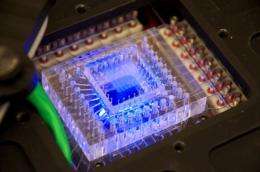
Ruvkun's group plans to use highly conserved segments of the 16S ribosomal RNA gene as "primers" for amplifying DNA.
Primers like these are commonly used by biologists to locate and replicate specific pieces of DNA. Multiple single-strand copies of the primer segment are added to a sample, where they will latch onto any DNA that has the corresponding code. It's like very selective Velcro.
The binding by the primer induces replication of the matching DNA strand by enzymes that are also added to the mix.
In the case of SETG, the proposed strategy is to add primers from the 16S ribosomal RNA to soil or ice collected from the Martian surface. If there is DNA in the sample and that DNA happens to match the primer sequence somewhere in its genetic code, a copy will be made of that portion of the sample's DNA.
This replication step can be repeated many times, leading to a million-fold amplification in Martian DNA containing the primer sequence. The amplified DNA can then be detected with fluorescent probes for abundant DNA, a simple first test of DNA amplification.
[Note: if Martians are DNA-based or RNA-based but lack the primer sequence, then the SETG device may still detect them with other tests. The problem is that without the primer as a reference point the researchers won't be able to say very much about what's been detected.]
The amplification process - called polymerase chain reaction, or PCR for short - is so commonplace now that junior high school students are using it, Ruvkun says. It should therefore be sufficiently robust for a space instrument.
If DNA is detected, the SETG device will then sequence 100 or more base pairs around the primer sequence. This adjacent code is not normally conserved - it will therefore have tiny mutations in it that can identify what sort of life-form is the owner of this DNA.
If the sample were contaminated by Earthling DNA, then the SETG researchers should be able to recognize signatures in the adjacent code that will pinpoint whether the contamination comes from a human or a bacteria or something else familiar to us.
But if nothing on Earth matches the observed sequence, Ruvkun and his colleagues will claim to have found our long-lost Martian cousins. And since DNA from fossilized life probably can't survive very long on Mars (just as it has a limited lifetime on Earth), such a detection would presumably mean that these cousins are still alive and well.
On the flip side, it's highly unlikely that extinct Martian life will have left us any DNA fossils. "If Mars was sterilized a billion years ago, then we're toast," Ruvkun says.
But he believes that if Mars was once inhabited, it still is.
"Never bet against life," he says. "We can't imagine all the environments that organisms can survive in."
Field test
Ruvkun and his colleagues have built a prototype of their DNA analyzer that is about the size of a shoe box.
To help calibrate this instrument, the team will travel to Argentina to the Copahue Volcano, which is considered to be one of the most Mars-like environments on Earth. The prototype will be used to sequence the DNA of some of the hearty microbes that live in the acidic runoff from the volcano.
If it were to get the green light to go to Mars, the SETG instrument would need to shrink down considerably. Full developmental costs might run about $30 million, according to co-investigator Maria Zuber of the Massachusetts Institute of Technology.
But long before that, Ruvkun says they'll need to go through a kind of "high school dance," in which different payload projects come together to try and pair up for a future mission that might be a decade out.
Source: Astrobio.net


