New technique offers a more detailed view of brain activity
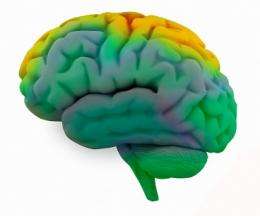
(PhysOrg.com) -- For neuroscientists, one of the best ways to study brain activity is with a scanning technique called functional magnetic resonance imaging (fMRI), which reveals blood flow in the brain.
However, although fMRI is a powerful tool for identifying brain regions that are active during a particular task, it offers only an indirect view of what’s happening. Measuring a more direct indicator of neural activity, such as concentrations of neurotransmitters (brain chemicals that carry messages between neurons) could be much more valuable.
Now, for the first time, MIT and Caltech researchers have come up with a new type of fMRI sensor that can do just that. The two sensors, described in the Feb. 28 online edition of Nature Biotechnology, detect dopamine — a neurotransmitter involved in learning, movement control and many other brain processes.
“This new tool connects molecular phenomena in the nervous system with whole-brain imaging techniques, allowing us to probe very precise processes and relate them to the overall function of the brain and of the organism,” says Alan Jasanoff, an associate professor of biological engineering at MIT and senior author of the paper.
Dopamine holds particular interest for neuroscientists because of its role in motivation, reward, addiction and several neurodegenerative conditions, including Parkinson’s disease. The new sensors could help scientists learn more about how dopamine acts in the brain and in other organs, says Andrew Alexander, co-director of the Brain Imaging Core at the University of Wisconsin at Madison.
“Previously we really haven’t had specific biomarkers for looking at things like dopamine or other chemical neurotransmitters” with MRI, says Alexander.
Designing a new sensor
Conventional fMRI measures blood flow in the brain by tracking hemoglobin, the molecule that carries oxygen. Hemoglobin has an iron atom at its core that binds to oxygen. When bound to oxygen, hemoglobin’s magnetic properties change in a way that can be detected with MRI.
“fMRI is an extremely powerful technique for studying how the brain functions, and it’s the only way to obtain spatial information and information about when things are happening,” says Jasanoff, who also has appointments in the Departments of Brain and Cognitive Sciences and Nuclear Science and Engineering, and in the McGovern Institute for Brain Research at MIT.
Alan Jasanoff discusses his research in developing new technologies for imaging the molecular and cellular phenomena that underlie brain function. Video: McGovern Institute; additional editing: Melanie Gonick
However, the spatial and temporal information is imprecise. Researchers can detect increased activity in a certain area, but they can’t see what the activity is, nor can they get a high-resolution picture of which neurons are involved.
A more detailed picture of brain activity could emerge with MRI sensors specific to particular neurotransmitters. The MIT team designed sensors specifically for dopamine, but their technique could be used to create sensors for other neurotransmitters or even unrelated molecules of biological interest.
To build the new sensors, the MIT team worked with chemical engineers at Caltech, using an approach called “directed evolution.” They started with a protein called cytochrome P450, an enzyme found in most organisms that is paramagnetic (meaning it can become weakly magnetic when exposed to a magnetic field). Using a technique called error-prone PCR, which is a faulty version of the way cells naturally replicate their genes, they generated a large collection of different mutated forms of the gene.
Each mutated gene was placed into an E. coli bacterium, which produced the mutated protein. The researchers then tested each protein for its ability to bind dopamine. At the end of each round, they took the best candidate and mutated it again for a new round of improvement. At the end of five rounds, they had two sensors that would bind strongly to dopamine but not to other neurotransmitters.
“You want it to be specific to dopamine — you don’t want it to bind to dopamine and half a dozen other things,” says Jasanoff.
In studies of rats, the researchers showed that the sensor can effectively detect dopamine in the brain. However, in its current form, the dopamine probe must be injected into the brain, and the imaging is limited to the site of injection.
Bruce Jenkins, director of neurochemical imaging at the Martinos Center for Biomedical Imaging at MGH, says the new probe is “very cleverly designed,” but points out that an important challenge is yet to come: getting the molecule to cross the layer of cells that separates the brain from circulating blood. “Trying to get a charged protein across the blood-brain barrier is very tricky,” he says.
The MIT team hopes to overcome that obstacle by applying barrier disruption techniques used historically to deliver chemotherapeutic agents to the brain. They will also try to genetically program brain cells to express the sensor, so it doesn’t have to be injected.
They plan to adapt the directed evolution strategy to look for sensors for other neurotransmitters as well. If successful, that could help researchers in Jasanoff’s lab and elsewhere create a better wiring diagram of how different brain regions and neurotransmitters work together to yield behavior such as learning, memory, addiction and movement.
“We hope to develop probes that target different parts of the mechanism, allowing us to piece these systems together in a way that’s noninvasive,” says Jasanoff.


