Revolutionizing medicine, one chip at a time
In the past several decades, microchips have transformed consumer electronics, enabling new products from digital watches and pocket-sized calculators to laptop computers and digital music players.
The next wave of this electronics revolution will involve biomedical devices, say electrical engineers in MIT’s Microsystems Technology Laboratory (MTL) who are working on tiny, low-power chips that could diagnose heart problems, monitor patients with Parkinson’s disease or predict seizures in epileptic patients. Such wearable or implantable devices could transform the way medicine is practiced and help cut the costs of expensive diagnostic tests, says Dennis Buss, former vice president of silicon technology development at Texas Instruments.
“Microelectronics have the potential to reduce the cost of health care in the same way they reduced the costs of computing in the 1980s and communications in the 1990s,” says Buss, a visiting scientist at MIT. On a limited scale, this is already taking place. For example, one of the first successful applications of microelectromechanical systems (MEMS) to medicine was the development of $10 disposable blood pressure sensors, which have been in use for over a decade and replaced sensors that cost hundreds of dollars.
Professor Charles Sodini, one of the MIT researchers involved in the effort, says the burgeoning field holds great potential for MIT and the greater Boston area because of the opportunities for collaboration between engineers, physicians and industry. “I want to see Boston become the Silicon Valley of medical electronic systems,” he says.
The market for MEMS for biomedical applications is more than $1 billion, and that could grow close to 100-fold by 2015, according to a 2006 market report from MedMarket Diligence.
Beating hearts
The key to developing small wearable and implantable medical monitors is an ultra-low-power chip for interfacing to biomedical sensors, signal processing, energy processing and communications, developed by the research group of MTL Director Anantha Chandrakasan.
Ultimately, Sodini and others at MTL hope to use that chip as the core of a device that can monitor a range of vital signs — heart rate, breathing rate, blood pressure, pulse oxygenation and temperature. For now, they’re starting with a monitor that measures and records electrocardiograms (ECGs).
An unobtrusive, comfortable ECG monitor that patients could wear as they go about their normal lives might offer a doctors a more thorough picture of heart health than the lab tests now used, says Collin Stultz, an MIT associate professor of electrical engineering and health sciences and technology and a cardiologist working on the project. Cardiologists can order up treadmill stress tests, MRIs and CT scans, among other diagnostics, but “all of these tests are done in contrived settings,” says Stultz. “Data obtained from more realistic, ‘at home’ settings may provide added information that can reveal potential problems.” Furthermore, standard tests can cost from a few hundred to a few thousand dollars.
Doctors often ask recent heart attack victims, and other patients suspected of having heart issues, to wear an ECG monitor as a Holter monitor for a few days. However, the device, which consists of several electrodes that stick to the chest, plus a bulky battery pack carried at the hip, is cumbersome and doesn’t have the memory to store much data.
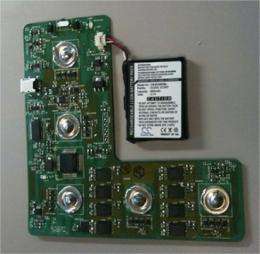
In contrast, the new MIT monitor is an L-shaped device, about 4 inches along each side, that sticks to the chest and can be worn comfortably, with no external wires protruding. It can store up to two weeks of data in flash memory, and requires just two milliwatts of power. Eventually, the researchers hope to build chips that can harvest energy from the body of the person wearing the device, eliminating the need for a battery.
Doctors can use ECG data — which provides information on the electrical health of the heart — to help spot future problems. Stultz, working with MIT Professor John Guttag and recent PhD recipient Zeeshan Syed, has designed a computer algorithm that uses ECG data to assess risk of death in heart patients. They found that higher variability in heartbeat shapes in data recorded the day after a heart attack correlates with an eightfold increase in the risk of cardiac death within 90 days in some patient populations.
Currently that analysis can only be done after the data is downloaded from the chip, but eventually Stultz hopes to incorporate the algorithm into the chip itself. He envisions that the device could be equipped with an alarm that would alert the patient and/or doctor that a heart attack is imminent. It could also serve as an early detection system for longer-term problems, letting doctors know they may need to perform additional tests, alter the patient’s medication or perform surgery.
The researchers have built a prototype and plan to start testing the device in healthy subjects this spring, followed by trials in patients with cardiovascular disease.
New directions
While Stultz and colleagues are focusing on wearable devices, other MIT engineers are working on implantable electronics for medical monitoring. To do that, they need to overcome a significant challenge: how to run the device indefinitely without a battery that needs recharging. To solve that problem, Associate Professor Joel Dawson is working on a device that stores energy in an ultracapacitor, which doesn’t wear out like batteries do. He hopes to use the device, which would be about the size of a grain of rice, to measure tremors and shaking in patients with Parkinson’s disease.
Dawson is working on that project with neurologist Seward Rutkove of Beth Israel Hospital. That kind of collaboration between engineer and physician is exactly what Sodini would like to see happen with all of MTL’s biomedical projects. “We start out working with physicians so they can help define the problem, and they can start testing the devices in the clinic early in the process,” he says.
Other projects underway at MTL include tiny ultrasound devices and “lab on a chip” devices that can perform diagnostic tests on body fluids. Engineers are also working on the best ways to wirelessly transmit data from wearable or implanted devices to a cell phone or computer.
While those applications are promising, the future of biomedical electronics likely holds even more potential than we can imagine, says Buss.
“We will be using electronics in medical ways we don’t even conceive of yet,” he says. “When we started using cell phones, we had no idea we would be playing games and watching TV and surfing the Internet the way we do now.”
Provided by Massachusetts Institute of Technology


