CDC uses shopper-card data to trace salmonella
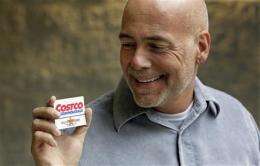
(AP) -- As they scrambled recently to trace the source of a salmonella outbreak that has sickened hundreds around the country, investigators from the Centers for Disease Control and Prevention successfully used a new tool for the first time - the shopper cards that millions of Americans swipe every time they buy groceries.
With permission from the patients, investigators followed the trail of grocery purchases to a Rhode Island company that makes salami, then zeroed in on the pepper used to season the meat.
Never before had the CDC successfully mined the mountain of data that supermarket chains compile.
"It was really exciting. It was a break in the investigation for sure," CDC epidemiologist Casey Barton Behravesh said.
At least 245 people in 44 states have been sickened in the outbreak. That includes 30 in California, 19 in Illinois, 18 in New York and 17 in Washington state.
The victims included Raymond Cirimele, a 55-year-old Chicago man. He said no one asked for his shopper-card data, but he would have provided it if someone had.
"I don't have any secrets, so I'm not worried about it," he said. "It's kind of like the whole airport security and all that. I'd rather fly on a safe plane."
Shopper cards have been around for more than a decade, offering customers discounts in exchange for letting supermarkets track their buying habits. The cards are used to build customer loyalty and help stores market their products.
The first case in this salmonella outbreak was reported last summer, and by November, CDC investigators were examining a multistate cluster of cases.
Through interviews and questionnaires, investigators suspected some kind of Italian meat was the culprit, but people couldn't remember what brand they bought, Behravesh said.
So the CDC asked supermarkets for certain buying information on seven victims in Washington state, focusing on suspect products rather than everything the customers had bought, Behravesh said. "We didn't care about the brand of toilet paper people were buying," she said.
Of those seven people, five had bought Italian meats made by the Rhode Island company, Danielle International Inc., Behravesh said.
Further investigation - including the use of data from other victims' shopper cards - pointed to salami made by Danielle and, more specifically, the imported pepper it was coated in. That came from two spice suppliers in New York and New Jersey. All three companies have since recalled some products.
The CDC would not say how many patients gave access to their accounts or were asked to do so, but Behravesh said most agreed.
"Most of the time when a person gets really sick with a food-borne pathogen, they're very happy to talk with us and try to help out with the investigation," she said.
Some privacy advocates, though, are troubled.
Longtime shopper-card critic Katherine Albrecht, director of a group called Consumers Against Supermarket Privacy Invasion and Numbering, said she worries that the practice could lead to a switch from a voluntary system to mandatory use of such cards.
"That sends chills down my spine," she said.
Some state and local health agencies have used shopper cards to trace cases of food poisoning. Before this outbreak, the CDC had tried it a few times, too, but without success, Behravesh said.
Some supermarkets have also used shopper-card information to notify customers by letter or automated telephone call that a product they bought has been recalled.
Health authorities trying to trace the source of a food-poisoning outbreak typically ask victims what they bought and what they ate. But without receipts or other hard evidence, they often find themselves at the mercy of people's memories.
Several large supermarket chains did not respond to requests for comment on health investigators' use of shopper cards, but Costco - where Cirimele bought meat that was later recalled - said it provided data to the CDC once customers gave their OK.
"In this instance, we actually worked very closely with the CDC," said Christine Summers, the Issaquah, Wash., chain's director of food safety. "They ask, `Did this member purchase products A, B or C in this time frame?' and we tell them, `Yes, they did' or `No, they didn't.'"
Supermarkets generally will supply information to health authorities if customers consent, said Jill Hollingsworth, vice president of food safety at the Food Marketing Institute, a trade group for groceries in the U.S.
Bruce Chassy, a food safety professor at the University of Illinois at Urbana-Champaign, said he is intrigued by the new means of tracing food-poisoning cases. He noted it can be extremely difficult to get to the bottom of outbreaks caused by relatively minor ingredients.
"Cantaloupes and eggs are easy," he said. "The fact that it's only an ingredient in products in other things, that makes it really hard to track."
J. Kathryn MacDonald, an epidemiologist with the Washington state Health Department who worked on the salmonella outbreak, such some advocates' privacy fears are unfounded.
"This is not being used as a tool for open-ended trawling through many records hoping to find something," MacDonald said. "The records are treated with the same level of confidentiality as would medical records."
©2010 The Associated Press. All rights reserved. This material may not be published, broadcast, rewritten or redistributed.


