Arctic Seed Vault becomes world's most diverse collection of crop diversity
Days after celebrating its second anniversary, the Svalbard "Doomsday" Global Seed Vault is receiving this week thousands of new seeds that will push its collection to more than half a million unique samples, making it the most diverse assemblage of crop diversity ever amassed anywhere in the world.
A wild bean from South America that could be critical for avoiding a crippling crop disease, a highly valuable strawberry species plucked by a collection team from the flanks of a volcano in Russia's remote Kuril Islands, and a treasure trove of soybeans from the United States, some of which have been cultivated domestically for over a century, were among the crops that arrived from Columbia, Peru, Mexico and the US for storage deep in an Arctic mountain on a remote island in the Norway's Svalbard Archipelago.
With these new deposits, the seed vault—built as a bulwark against any natural or manmade disaster that threatens global food production—now contains seeds of more than 500,000 varieties of the world's food crops.
"Reaching the half million mark brings mixed emotions, because while it shows that the vault at Svalbard is now the gold standard for diversity, it comes at a time when our agriculture systems are really sitting on a knife's edge," said Cary Fowler, Executive Director of the Global Crop Diversity Trust, which partners with the Norwegian government and the Nordic Genetic Resource Center in Sweden in operating the vault.
The array of crops protected in Svalbard and other seed banks around the world supported by the Global Crop Diversity Trust are "the keys to climate change adaptation for the world's farmers," Fowler stated. For example, he pointed to recent studies that predict maize production in Africa could drop by a quarter or more in a mere 20 years, which would destabilize much of the continent and spark a global food crisis, unless breeders quickly develop new heat and drought resistant varieties. And with recent climate talks in Copenhagen ending in stalemate over measures to slow climate change, Fowler said that we must now mobilize efforts to adapt crops to higher temperatures.
"If crops and agriculture don't adapt to climate change, neither will humanity," Fowler said. "But to help farmers adapt, plant breeders need access to as much genetic diversity as possible to keep crops vigorous and productive in shifting climates."
The shipments arriving at the vault offer timely examples of why crop experts are so eager to bank as much diversity as possible. They include a wild bean species from Costa Rica—known by its Latin name costaricensis. The bean appears resistant to white mold, a disease that is a major threat to common domesticated bean varieties that feed millions of people in Central and South America.
The mold-resistant bean was sent to the vault as part of a collection from the International Center for Tropical Agriculture (CIAT) in Colombia, one of the 15 centers supported by the Consultative Group on International Agricultural Research (CGIAR) that together have contributed the most crop varieties to the vault.
"The mold-resistant bean is particularly important because it shows why we need to collect and conserve not just domestic crops but also their wild relatives," said Daniel Debouck, Head of the Genetic Resources Unit at CIAT. "Plant breeders already are hard at work, exploring whether the wild bean can be crossed with domesticated bean varieties and thus avoid what could be a troubling interruption to food production."
Overall, CIAT's new shipment included 3,837 materials from 75 countries, mostly bean varieties but also seeds of important forage crops. Some of the forage varieties originated in South America but are now important to livestock in Africa, an example of the global sharing of crop diversity that has been underway for centuries.
Also coming into the vault are important crop varieties from the United States Department of Agriculture-Agricultural Research Service (USDA-ARS) National Center for Genetic Resources Preservation. These include a wild strawberry species discovered after a three-day trek through a bear-infested wilderness to the Atsonupuri volcano, which is located on a remote chain of islands in the Russian territory of Sakhalin.
In addition, the Center conveyed a soybean collection that contains almost the entire lineage of soybeans developed in the US over the last century and hundreds of wild soybeans. Among the samples are an array of disease-resistant varieties and soybeans with genetic traits that could be especially important for dealing with the stresses of climate change.
"We're seeing in several of the soybean varieties intriguing traits that could allow farmers to confront such problems as drought or extreme heat, shorter or longer growing seasons, or higher levels of CO2," said Dave Ellis, curator at the USDA-ARS National Center for Genetic Resources Preservation.
The Center also sent along samples of semi-dwarf wheat and rice from the early 1960s, varieties that helped provide the genetic foundation for the Green Revolution credited with saving millions from starvation.
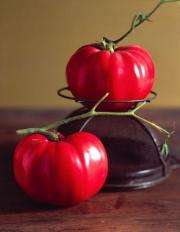
Another shipment brought to the vault contains over 400 samples from the Seed Savers Exchange in the US, an Iowa-based non-profit group that is preserving rare garden species, many of them brought to North America by immigrants from Europe, the Middle East, and Asia. Included in the shipment are seeds for the German Pink tomato, a rare variety transported to Iowa in 1883 by a Bavarian immigrant who is the grandfather of one of the co-founders of the Seed Savers Exchange. German Pink is a large, hardy sweet-flavored tomato.
Like all seeds coming to the vault, the samples are duplicates of seeds from other collections and are being sent to Svalbard for safekeeping, not for everyday use. Fowler noted that it is important to understand that the material directly acquired by plant breeders to develop disease-resistant and "climate-ready" crops, and to meet the challenge of rapidly growing populations, is maintained by national and regional crop genebanks. Many of these genebanks are threatened by neglect and lack of funds.
"Svalbard is a fail-safe backup to be used whenever a depositing seed bank loses part or all of its collection, but we should focus equally on averting the disasters in the first place," he said. "Crop genebanks are our first and best line of defense, yet something as mundane as a poorly functioning freezer could ruin a collection that 10 years from now could be critical to averting a food crisis."
Fowler and the Trust are eager to see the success of the vault encourage broader interest in preserving the crop diversity stored in genebanks around the world and expanding these collections to include the wild relatives of domesticated crops, which themselves are being lost to environmental degradation and climate change.
Provided by Global Crop Diversity Trust


