Remembering the future: Our brain saves energy by predicting what it will see
March 24, 2010
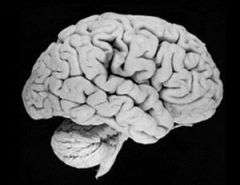
Modern human brain. Image source: Univ. of Wisconsin-Madison Brain Collection.
(PhysOrg.com) -- Researchers have discovered that the brain saves energy by predicting what it is likely to see. According to scientists in the Department of Psychology at the University of Glasgow in collaboration with the Max-Planck Institute for Brain Research, Frankfurt, Germany, the visual cortex does not simply react to visual stimuli but proactively predicts what it is likely to see in any given context - for example, within familiar environments such as your house or office.
By doing so it uses less energy to process images, but if something unexpected were to appear in that familiar environment, the visual cortex becomes more active in order to process this information.
“Imagine your desk in your office,” said lead researcher Dr Lars Muckli. ”You’ve seen it a million times so your brain knows what it looks like so it doesn’t need to spend lots of time processing the scene. It already has a mental image of it and so the brain predicts that this is what it will see before you walk into the room.
“However, if you were to walk in to your office one day and see someone totally unexpected sitting in your chair - the Prime Minister, for example, your brain would have to work harder to process the same scene.”
The findings build on a fairly new hypothesis developed by University College London neuroscientist Karl Friston called predictive coding - or free energy principle - which suggests the brain is actively predicting what input it will receive, rather than just passively processing information as it arrives.
Dr Muckli said: “By predictive coding we refer to the idea that the brain generates predictions that estimate the visual input it will most likely receive given the contextual information from the recent past. For the brain it’s really about surprise reduction.”
To test the predictive coding hypothesis, the Glasgow researchers conducted an experiment where 12 volunteer subjects were asked to view a visual stimulus while undergoing and fMRI brain scan.
The subjects had to look at a fixed point on a computer screen above and below which two dots would flash alternatively creating an illusion of motion.
For predictable/unpredictable trials, the researchers briefly presented a third dot on the screen. To test predictable stimulus the dot would appear at a point between the two other dots, timed to correlate to the illusion of smooth movement. For the unpredictable stimulus it would appear out of synch with the motion illusion.
The primary visual cortex (V1) of each subject was monitored while the tests were undertaken and the results showed that the predictable patterns resulted in less activity in V1, compared to the unpredictable stimulus.
Dr Muckli said: “The brain expects to see things and really just wants confirm it now and again - it’s almost like remembering the future.
“It might explain why sometimes you don’t notice something different in a familiar environment because your brain is seeing what it expects to see, rather than what is actually there.
“What we need to do now is extend this research to consider predictive coding in more natural environments and other aspects of sensory perception.”
The paper, ‘Stimulus Predictability Reduces Responses in Primary Visual Cortex’, was published in the Journal of Neuroscience.
More information: Stimulus Predictability Reduces Responses in Primary Visual Cortex, The Journal of Neuroscience, February 24, 2010, 30(8):2960-2966; doi:10.1523/JNEUROSCI.3730-10.2010
Provided by University of Glasgow
-
The scientific brain: Human brain processes predictable sensory input in particularly efficient manner
Mar 10, 2010 |
not rated yet |
0
-
Picower research finds unexpected activity in visual cortex
Mar 16, 2006 |
not rated yet |
0
-
Echoes discovered in early visual brain areas play role in working memory
Feb 18, 2009 |
not rated yet |
0
-
How the brain copes with shifty eyeballs
Apr 18, 2007 |
not rated yet |
0
-
How You Feel the World Impacts How You See It
Apr 03, 2009 |
not rated yet |
0
-
Engineers build first sub-10-nm carbon nanotube transistor
Feb 01, 2012 |
4.9 / 5 (30) |
30
-
Something old, something new: Evolution and the structural divergence of duplicate genes
Jan 31, 2012 |
4.6 / 5 (7) |
1
-
The hidden nanoworld of ice crystals: Revealing the dynamic behavior of quasi-liquid layers
Jan 30, 2012 |
5 / 5 (3) |
1
-
Stock market network reveals investor clustering
Jan 27, 2012 |
3.9 / 5 (23) |
8
-
Of microchemistry and molecules: Electronic microfluidic device synthesizes biocompatible probes
Jan 26, 2012 |
5 / 5 (1) |
0
-
Is Everyday Technology Killing Us?
Feb 08, 2012
-
Exercise and weight loss
Feb 08, 2012
-
Why do we have head aches? Our brains can't feel anything.
Feb 07, 2012
-
"The end of diseases" by David Agus, interview from Daily Show with Jon Stewart
Feb 04, 2012
-
Oncolytic adenovirus
Feb 04, 2012
-
Nutrition label stuffs and diets
Feb 02, 2012
- More from Physics Forums - Medical Sciences
More news stories
Cell biologists describes mechanism by which some people may be more susceptible to colon cancer
An international research team led by cell biologists at the University of California, Riverside has uncovered a new insight into colon cancer, the third leading cause of cancer-related deaths in the United ...
15 minutes ago |
5 / 5 (1) |
0
|
Further support for a role of synaptic proteins in autism spectrum disorders
A new study combines genetic and neurobiological approaches to confirm that synaptic mutations increase the risk of autism spectrum disorders (ASDs). It also highlights a role for modifier genes in these disorders. Published ...
43 minutes ago |
not rated yet |
0
|
Potential for incorrect relationship identification in new forensic familial searching techniques
New research suggests that unrelated individuals may be mistakenly identified as genetic family members due to inaccurate genetic assumptions. This is particularly relevant when considering familial searching: a new technique ...
43 minutes ago |
not rated yet |
0
Ultrasound study provides first direct evidence of effect of malaria on fetal growth
A study of almost 3,800 pregnancies has provided the most accurate and direct evidence to date that malaria infection reduces early foetal growth. Low birth weight is the most important risk factor for neonatal mortality ...
44 minutes ago |
not rated yet |
0
|
Seizures in patients with pork tapeworm caused by Substance P
A neuropeptide called Substance P is the cause of seizures in patients with brains infected by the pork tapeworm (Taenia solium), said Baylor College of Medicine researchers in a report that appears online in the open access ...
43 minutes ago |
not rated yet |
0
'Dark plasmons' transmit energy
Microscopic channels of gold nanoparticles have the ability to transmit electromagnetic energy that starts as light and propagates via "dark plasmons," according to researchers at Rice University.
Decoding the molecular machine behind E. coli and cholera
Scientists from Queen Mary, University of London have discovered the workings behind some of the bacteria that kill hundreds of thousands every year, possibly paving the way for new antibiotics that could treat infections ...
Deadly bird parasite evolves at exceptionally fast rate
A new study of a devastating bird disease that spread from poultry to house finches in the mid-1990s reveals that the bacteria responsible for the disease evolves at an exceptionally fast rate. What's more, ...
Flexible paper robots
(PhysOrg.com) -- These inexpensive robots can stretch, bend and twist under control, and lift objects up to 120 times their own weight. Being soft, they can apply gentle and even pressure, and adapt to varied ...
New method makes culture of complex tissue possible in any lab
Scientists at the University of California, San Diego have developed a new method for making scaffolds for culturing tissue in three-dimensional arrangements that mimic those in the body. This advance, published online in ...
Tell me how you are -- and I know how long you will live
The way people rate their health determines their probability of survival in the following decades. Researchers from the Institute of Social and Preventive Medicine at the University of Zurich demonstrate that for ratings ...
Mar 24, 2010
Rank: not rated yet
Mar 24, 2010
Rank: 5 / 5 (3)
Mar 24, 2010
Rank: 5 / 5 (4)
Mar 24, 2010
Rank: 5 / 5 (1)
Mar 24, 2010
Rank: not rated yet
Mar 24, 2010
Rank: 5 / 5 (1)
Mar 24, 2010
Rank: not rated yet
Mar 24, 2010
Rank: 1 / 5 (1)
Totally agree! I've seen it time and time when my employees read a text and assume the point without ever finishing the sentence. After I asked them to read it again slower, they all get it slowly, aaaaaaaa!! This article makes a point we all new for quite some time. Nothing new.
Mar 25, 2010
Rank: 4 / 5 (1)
I'm not sure, but I think this has already been proven. For language especially, our brains anticipate what we expect to see or hear before we actually do, and will often skip typos entirely. However, once you notice it, it sticks out like a sore thumb.
Mar 26, 2010
Rank: not rated yet