Microorganisms in toxic groundwater fine-tuned to survive
March 29, 2010
Microorganisms in toxic groundwater fine-tuned to survive

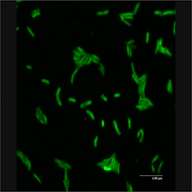
Researchers want to know more about the genetic makeup of "stressed" microbes that live in contaminated groundwater.

(PhysOrg.com) -- Microorganisms can indeed live in extreme environments, but the ones that do are highly adapted to survive and little else, according to a collaboration that includes Department of Energy's Oak Ridge National Laboratory and Joint Genome Institute (JGI) and the University of Oklahoma.

The metagenomic study of a "stressed" microbial community in groundwater near a former waste disposal pond site on DOE's Oak Ridge Reservation (ORR) revealed microbes with an overabundance of genes involved in DNA recombination and repair and other defense mechanisms for dealing with contaminants and other environmental stresses.

The studies, said ORNL researcher David Watson, are ultimately aimed at developing biologically based methods for reducing the level of the contaminants in the groundwater, which at the ORR site includes nitrates, solvents and heavy metals, including uranium.

"We are looking to better understand the evolution of microbes in the groundwater plume," Watson said. "The microbes that can break down nitrate into nitrogen can have a long-term benefit toward attenuating the plume."

Watson added that researchers particularly want to better understand the of microbes that can metabolize oxidized forms of uranium into a form that is only slightly soluble and thus easier to precipitate and remove from the environment.

ORNL's Watson was joined in the study by the University of Oklahoma's Jizhong Zhou and Christopher Hemme; Joint Genome Institute Director Eddy Rubin; and a team that included researchers from ORNL's Environmental Sciences Division, the University of Oklahoma's Institute for Environmental Genomics, Montana State University, Michigan State University and Lawrence Berkeley National Laboratory.

They found that the naturally occurring populations of microbes in the polluted groundwater--which consisted of only a few cell types-- had "very simple" genetic structures tuned primarily to overcoming the stresses presented by the toxic soup, which has a highly acidic pH level of 3.5.

The accumulation of genes involved in resistance and responses to stress appears to be a basic survival strategy that has left the with a marked loss in metabolic diversity.

The waste ponds, which are now part of the Oak Ridge Environmental Remediation Sciences Program Integrated Field Research Center, have been out of use for decades and were capped in 1983.

The research, recently published in the on-line ISME (International Society for Microbial Ecology) Journal, is sponsored by DOE's Office of Science.

Provided by Oak Ridge National Laboratory (news : web)

4.7 /5 (3 votes)  

Rank 4.7 /5 (3 votes)
Relevant PhysicsForums posts
  • Pertubance in a model
    created5 hours ago
  • Cancer drugs and Alzheimer's, Oh my!
    created13 hours ago
  • Squishing cells
    created14 hours ago
  • Any books/articles for evolutionary stable strategy models in humans?
    createdFeb 09, 2012
  • Science behind the bore feeling?
    createdFeb 09, 2012
  • Homo Sapien vs. Chimpanzee - Divergence Timeline
    createdFeb 09, 2012
  • More from Physics Forums - Biology

More news stories

Grass to gas: Researchers' genome map speeds biofuel development

Researchers at the University of Georgia have taken a major step in the ongoing effort to find sources of cleaner, renewable energy by mapping the genomes of two originator cells of Miscanthus x giganteus, a large perenn ...

Biology / Biotechnology

created 19 minutes ago | popularity 5 / 5 (1) | comments 0 | with audio podcast

The power of estrogen -- male snakes attract other males

A new study has shown that boosting the estrogen levels of male garter snakes causes them to secrete the same pheromones that females use to attract suitors, and turned the males into just about the sexiest ...

Biology / Plants & Animals

created 3 hours ago | popularity not rated yet | comments 0 | with audio podcast

Experts reveal how plants don't get sunburn

(PhysOrg.com) -- Experts at the University of Glasgow have discovered how plants survive the harmful rays of the sun.

Biology / Cell & Microbiology

created 3 hours ago | popularity 5 / 5 (2) | comments 0 | with audio podcast

Protein libraries in a snap

(PhysOrg.com) -- A Rice University undergraduate will depart with not only a degree but also a possible patent for his invention of an efficient way to create protein libraries, an important component of biomolecular ...

Biology / Cell & Microbiology

created 6 hours ago | popularity 5 / 5 (2) | comments 0 | with audio podcast

New drugs schedule makes horse racing a sure thing

What do Gai Waterhouse and Anthony Cummings have in common with Queen Elizabeth II?

Biology / Plants & Animals

created 3 hours ago | popularity not rated yet | comments 0


New understanding of DNA repair could eventually lead to cancer therapy

A research group in the Faculty of Medicine & Dentistry at the University of Alberta is hoping its latest discovery could one day be used to develop new therapies that target certain types of cancers.

Hovering not hard if you're top-heavy, researchers find

Top-heavy structures are more likely to maintain their balance while hovering in the air than are those that bear a lower center of gravity, researchers at New York University's Courant Institute of Mathematical Sciences ...

Night, weekend delivery OK for babies with birth defects

Weekday delivery is no better than night or weekend delivery for infants with birth defects, according to a new study presented today at The Pregnancy Meeting, the Society for Maternal-Fetal Medicine's annual conference. ...

Sonic Cradle lands spot in TED exhibition

A Simon Fraser University graduate student project that melds music, meditation and modern technology has landed a rare spot as an exhibit at TEDActive 2012 in Palm Springs, California this month.

Drug halts organ damage in inflammatory genetic disorder

A new study shows that Kineret (anakinra), a medication approved for the treatment of rheumatoid arthritis, is effective in stopping the progression of organ damage in people with neonatal-onset multisystem inflammatory disease ...

Cochlear implants may be safe, effective for organ transplant patients

Cochlear implants may be a safe, effective option for some organ transplant patients who've lost their hearing as an unfortunate consequence of their transplant-related drug regime, researchers report.