Project to make car fuel from thin air
March 30, 2010
Researchers from the South West are working on a £1.4 million project that could take carbon dioxide from the air and turn it into car fuel.
Scientists and engineers from the University of the West of England are collaborating with colleagues from the University of Bath, who are leading the research, and colleagues from the University of Bristol.
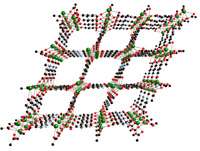
The project aims to develop porous materials that can absorb the gas that causes global warming and convert it into chemicals that can be used to make car fuel or plastics in a process powered by renewable solar energy.
The researchers hope that in the future the porous materials could be used to line factory chimneys to take carbon dioxide pollutants from the air, reducing the effects of climate change.
Dr Frank Marken, Senior Lecturer in Chemistry (University of Bath) said: “Current processes rely on using separate technology to capture and utilise the CO2, which makes the process very inefficient. By combining the processes the efficiency can be improved and the energy required to drive the CO2 reduction is minimised.
“It will be a massive challenge but we have a strong inter-disciplinary team that includes chemists, chemical engineers, biologists, and life-cycle analysts.”
Dr Petra Cameron, RCUK Fellow from the Department of Chemistry (University of Bath), said: "We hope that the use of renewable energy to recycle CO2 will be an effective way to reduce the amount of CO2 in the atmosphere.”
The Bath-Bristol collaboration brings together scientists from a range of disciplines, including researchers from Bath's Institute for Sustainable Energy and the Environment (I-SEE), the School of Chemistry at the University of Bristol, and the Bristol Robotics Laboratory (BRL) and School of Life Sciences at the University of the West of England.
Dr Ioannis Ieropoulos, (BRL), said, “One of great advantages of this project is that it will exploit the natural abilities of microorganisms to reduce CO2 in the atmosphere and at the same time produce electricity or hydrogen, as required.”
Dr David Fermin from the University of Bristol said: "Currently, there are no large-scale technologies available for capturing and processing CO2 from air. The facts are that CO2 is rather diluted in the atmosphere and its chemical reactivity is very low. By combining clever material design with heterogeneous catalysis, electrocatalysis and biocatalysis, we aim at developing an effective carbon neutral technology."
Provided by University of the West of England
-
From pollutant to profit -- nanoscience turns carbon on its head
Mar 23, 2010 |
not rated yet |
0
-
New CO2 'scrubber' from ingredient in hair conditioners
Mar 24, 2010 |
not rated yet |
0
-
Carbon study could help reduce harmful emissions
Feb 14, 2008 |
not rated yet |
0
-
Pricing can cut CO2 emissions from electric generators
Apr 28, 2008 |
not rated yet |
0
-
Coal-generated CO2 captured in Australia -- a first
Jul 09, 2008 |
not rated yet |
0
-
Engineers build first sub-10-nm carbon nanotube transistor
Feb 01, 2012 |
4.9 / 5 (31) |
30
-
Something old, something new: Evolution and the structural divergence of duplicate genes
Jan 31, 2012 |
4.6 / 5 (7) |
1
-
The hidden nanoworld of ice crystals: Revealing the dynamic behavior of quasi-liquid layers
Jan 30, 2012 |
5 / 5 (3) |
1
-
Stock market network reveals investor clustering
Jan 27, 2012 |
3.9 / 5 (23) |
8
-
Of microchemistry and molecules: Electronic microfluidic device synthesizes biocompatible probes
Jan 26, 2012 |
5 / 5 (1) |
0
-
Stoichiometry
18 hours ago
-
Boiling and melting point of impure substances
19 hours ago
-
Safe nitrogen compound to decompose a 500 deg C in a furnace?
Feb 09, 2012
-
[ask]electron inside drinking water
Feb 08, 2012
-
How to avoid formation of Lithium Chromate ???
Feb 08, 2012
-
how to choose a reduced or oxidated form in a redox
Feb 08, 2012
- More from Physics Forums - Chemistry
More news stories
Fool's gold may prove an unlikely alternative to overexploited catalytic materials
Catalytic materials, which lower the energy barriers for chemical reactions, are used in everything from the commercial production of chemicals to catalytic converters in car engines. However, with current catalytic materials ...
10 hours ago |
4.6 / 5 (5) |
2
|
Unpicking HIV’s invisibility cloak
Drug researchers hunting for alternative ways to treat human immunodeficiency virus (HIV) infections may soon have a novel targetits camouflage coat. HIV hides inside a cloak unusually rich in a sugar ...
10 hours ago |
5 / 5 (4) |
0
No entry without protein recycling: Researchers discover new coherence in enzyme transport
The group of Prof. Dr. Ralf Erdmann at the Ruhr-Universität Bochum, Germany, discovered a connection of peroxisomal protein import and receptor export. In the Journal of Biological Chemistry, they disclo ...
10 hours ago |
not rated yet |
0
Under the microscope #7
In this video Dr Ingrid Graz shows us a thin layer of gold on top of rubber. Cracks in the gold allow it to stretch and we can use this for stretchable electronics.
12 hours ago |
not rated yet |
0
Hydrogen from acidic water: Researchers develop potential low cost alternative to platinum for splitting water
A technique for creating a new molecule that structurally and chemically replicates the active part of the widely used industrial catalyst molybdenite has been developed by researchers with the Lawrence Berkeley ...
Feb 09, 2012 |
5 / 5 (12) |
13
|
Google users warned of threat to smartphone wallets
Users of Google smartphone wallets were being warned on Friday that there is a way to crack pass codes intended to thwart thieves from going on illicit shopping sprees.
Anonymous knocks CIA website offline (Update)
The website of the Central Intelligence Agency was inaccessible on Friday after the hacker group Anonymous claimed to have knocked it offline.
Complex wiring of the nervous system may rely on a just a handful of genes and proteins
Researchers at the Salk Institute have discovered a startling feature of early brain development that helps to explain how complex neuron wiring patterns are programmed using just a handful of critical genes. ...
Putting the squeeze on planets outside our solar system
(PhysOrg.com) -- Using high-powered lasers, scientists at Lawrence Livermore National Laboratory and collaborators discovered that molten magnesium silicate undergoes a phase change in the liquid state, abruptly ...
NASA sees wide-eyed cyclone Jasmine
Cyclone Jasmine's eye has opened wider on NASA satellite imagery, as it moves through the Southern Pacific Ocean.
New error-correcting codes guarantee the fastest possible rate of data transmission
Error-correcting codes are one of the triumphs of the digital age. Theyre a way of encoding information so that it can be transmitted across a communication channel such as an optical fiber o ...
Mar 30, 2010
Rank: not rated yet
Mar 31, 2010
Rank: not rated yet
Mar 31, 2010
Rank: not rated yet