Sensitive people may use their brains differently
April 8, 2010 by Lin Edwards report
Sensitive people may use their brains differently

Enlarge

(PhysOrg.com) -- An exploratory study has examined highly sensitive people and found the first evidence of neural differences between them and less sensitive people. Most studies have focused on the social implications of these traits, but the new study concentrates on the differences in how people's brains respond to stimuli.

Approximately one in five people are born with Sensory Sensitivity (SPS), a that can lead to people being highly sensitive, and sometimes inhibited, introverted, shy, or even neurotic. Children with SPS may seem to be slow to adjust to situations, or may cry easily, have unusually deep thoughts, or may ask odd questions. Until now, there has been little study of how the brain's responses may be different in highly sensitive people.

The study first examined the responses of 16 subjects who each completed the "highly sensitive person"ť questionnaire, which is used as a standard measure of SPS, to determine their level of sensitivity. The researchers then asked the subjects to compare two photographs of the same scene and to spot any differences, at the same time as their brains were being scanned by functional magnetic resonance imaging (fMRI).

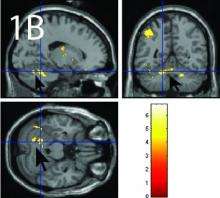
The results showed that subjects with higher SPS (the more sensitive people) had greater activation in areas of the concerned with high-order visual processing, including the bilateral temporal, medial, and posterior parietal regions, right claustrum, and left occipitotemporal regions, as well as the right cerebellum. Those with SPS spent longer looking at the photographs and paid more attention to detail.

The researchers were from Stony Brook University in New York, and from the Chinese Academy of Sciences and Southwest University in China. They found people with SPS took longer to make decisions, needed more time alone to think, were more conscientious, and became more bored with small talk than other people.

Previous studies have shown that people with SPS are also more affected by caffeine, are more easily startled, and are more uncomfortable with noise and crowded situations. The researchers said these effects could be due to an innate preference for paying more attention to experiences.

Over 100 other species are known to have individuals with the sensitivity trait, including dogs, fish, primates, and even fruit flies. Individuals exhibiting the sensitive trait are always in the minority, but they may give the species an evolutionary advantage at times, since highly sensitive individuals tend to explore with their brains first, while others rush in, and this can be advantageous when a more thoughtful approach is better or less dangerous.

The paper was published in the journal Social Cognitive and Affective Neuroscience in March.

More information: The trait of sensory processing sensitivity and neural responses to changes in visual scenes, Soc Cogn Affect Neurosci (2010), doi:10.1093/scan/nsq001

© 2010 PhysOrg.com

4.9 /5 (21 votes)  

Filter


Move the slider to adjust rank threshold, so that you can hide some of the comments.


Display comments: newest first

gunslingor1
Apr 08, 2010

Rank: not rated yet
That's me!! bet theres a connection with asburgers.
wiyosaya
Apr 08, 2010

Rank: not rated yet
That's me!! bet theres a connection with asburgers.

I agree with this, although, I imagine it extends to autism in general. It is known that people with autistic tendencies can be overwhelmed by sensory input.
BloodSpill
Apr 10, 2010

Rank: 1 / 5 (1)
I doubt there's a connection to autism.

Direct future comments here: http://www.physor...801.html
This article is just a reprint of the linked one, which has far more comments.
Rank 4.9 /5 (21 votes)
Relevant PhysicsForums posts
  • stomach not emptying
    createdFeb 16, 2012
  • White reflections in photos in one eye
    createdFeb 15, 2012
  • Is Everyday Technology Killing Us?
    createdFeb 08, 2012
  • Exercise and weight loss
    createdFeb 08, 2012
  • Why do we have head aches? Our brains can't feel anything.
    createdFeb 07, 2012
  • "The end of diseases" by David Agus, interview from Daily Show with Jon Stewart
    createdFeb 04, 2012
  • More from Physics Forums - Medical Sciences

More news stories

CT colonography shown to be comparable to standard colonoscopy

Computerized tomographic (CT) colonography (CTC), also known as virtual colonoscopy, is comparable to standard colonoscopy in its ability to accurately detect cancer and precancerous polyps in people ages 65 and older, according ...

Medicine & Health / Cancer

created 3 hours ago | popularity not rated yet | comments 0

What can animals' survival instincts tell us about understanding human emotion?

Can animals' survival instincts shed additional light on what we know about human emotion? New York University neuroscientist Joseph LeDoux poses this question in outlining a pioneering theory, drawn from two decades of research, ...

Medicine & Health / Neuroscience

created 14 hours ago | popularity 5 / 5 (3) | comments 4 | with audio podcast

Study: Virtual colonoscopy effective screening tool for adults over 65

Computed tomography (CT) colonography can be used as a primary screening tool for colorectal cancer in adults over the age of 65, according to a new study published online in the journal Radiology.

Medicine & Health / Other

created 3 hours ago | popularity not rated yet | comments 0

Injectable gel could repair tissue damaged by heart attack

(Medical Xpress) -- University of California, San Diego researchers have developed a new injectable hydrogel that could be an effective and safe treatment for tissue damage caused by heart attacks.

Medicine & Health / Cardiology

created 17 hours ago | popularity 4.7 / 5 (6) | comments 3 | with audio podcast

Mini molecules could help fight battle of aortic bulge

When aortic walls buckle, the body's main blood pipe forms an ever-growing bulge. To thwart a deadly rupture, a team of Stanford University School of Medicine researchers has found two tiny molecules that may be able to orchestrate ...

Medicine & Health / Cardiology

created 13 hours ago | popularity 5 / 5 (1) | comments 0 | with audio podcast


Researchers build first physical 'metatronic' circuit

(PhysOrg.com) -- The technological world of the 21st century owes a tremendous amount to advances in electrical engineering, specifically, the ability to finely control the flow of electrical charges using ...

Spitzer finds solid buckyballs in space

(PhysOrg.com) -- Astronomers using data from NASA's Spitzer Space Telescope have, for the first time, discovered buckyballs in a solid form in space. Prior to this discovery, the microscopic carbon spheres ...

Faster than light neutrinos? More like faulty wiring

You can shelf your designs for a warp drive engine (for now) and put the DeLorean back in the garage; it turns out neutrinos may not have broken any cosmic speed limits after all.

Physicists surprised by disappearing and reappearing superconductivity in iron selenium chalcogenides

Superconductivity is a rare physical state in which matter is able to conduct electricity -- maintain a flow of electrons -- without any resistance. This phenomenon can only be found in certain materials at low temperatures, ...

Stanford research team cracks animated NuCaptcha

(PhysOrg.com) -- The research team from Stanford University, led by Elie Bursztein, that previously had cracked regular CAPTCHAs and then audio CAPTCHAs, now has also successfully cracked the animated version called NuCapt ...

Going up: Japan builder eyes space elevator

A Japanese construction firm claimed Wednesday it could execute an out-of-this-world plan to put tourists in space within 40 years by building an elevator that stretches a quarter of the way to the moon.