Engineer to create 3D puzzle to mend broken bones
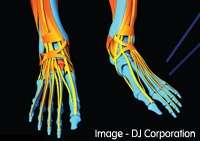
(PhysOrg.com) -- An engineer at the University of the West of England is working with an orthopaedic surgeon from the Bristol Royal Infirmary and a specialized software company to enhance the management of complex, joints' fractures by creating a robotics device that can put the fractures back together as perfectly as possible, using the state of the art of 3D imaging, pattern recognition and robotics.
Dr Sanja Dogramadzi, an engineer from Bristol Robotics Laboratory at the University of the West of England, will use CT scans of healthy and fractured joints to work out the mathematical algorithm for the exact displacement and rotation needed for each fragment to be put back together in exactly the right place. The 3D puzzle solution will be a starting point for creating a minimally invasive surgical robotic system. The work will be carried out in consultation with Professor Roger Atkins (Orthopaedic Surgeon at Bristol Royal Infirmary) using the 3D imaging software by Simpleware. (www.simpleware.com)
A further phase of the work will create a robotic device which will test the 3D puzzle by putting all the broken pieces back together on a 3D model, created with specialized print technology from UWE's Centre for Fine Print Research. Ultimately it is hoped the research will lead to a robotic device which will be able to perform the minimally invasive surgery using the information from the CT scans, under the expert control of a surgeon.
Dr Sanja Dogramadzi explains, “We were presented with this challenge by Professor Roger Atkins. In complex breaks, particularly joints, there are often many surfaces to the broken bone. Getting these to fit back together accurately (reduction) is essential for the healing process. Currently this can be solved by using open surgery, where the break is exposed and the surgeon then manipulates the bone so it fits together accurately. However, a 3D puzzle of the broken bone, made using the information from the CT scan, would give clinicians a more accurate understanding of what they need to do, before surgery needed to take place. At the moment, even in open surgery, all the surfaces of the break are not visible to the surgeon.
“Using the technology of the Centre for Fine Print Research, we have already been able to create a 3D model of a bone fracture from a CT scan. Another use of this technology may be to create models of these complex breaks which may be used in training doctors to help their understanding of bone displacement and shapes. The ultimate aim of our research will be to create a robot which can use the 3D puzzle model to carry out bone reductions using minimally invasive surgery (keyhole surgery).
“If successful we hope that this project would create better outcomes for patients. More accurate reductions without the need for open surgery means patients will heal faster with fewer complications and less need for follow up appointments. We are looking forward to developing this research with our collaborators.”
Professor Roger Atkins says, “We were impressed with the 3D model that was produced by UWE, using a CT scan and the 3D print technology. It was fascinating for me, even with all my years of experience, to see an accurate 3D model of a break. This research could be a new departure for us in the way that complex breaks are fixed. It would give us all the information - and more - that we get from open surgery, but without the risks that represents. Currently the non-invasive methods, key hole surgery, don't have the depth of information that this research will give us. We are looking forward to working with UWE to develop this research.”


