UCSF Turns to Targeted Treatments to Boost Brain Tumor Survival in Children
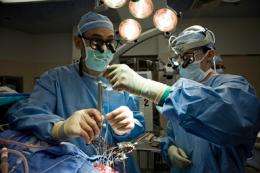
Targeted therapies tailored to the unique biology of brain tumors may offer renewed hope to children diagnosed with the number one cause of cancer death, according to faculty at UCSF Children’s Hospital.
An estimated 4,030 new cases of brain and central nervous system tumors in children are expected to be diagnosed this year, according to the Central Brain Tumor Registry of the United States. And 32 percent of children die within 10 years of diagnosis, a rate that is unacceptably high, say the doctors who treat them.
Speaking at a reception hosted by the Pediatric Brain Tumor Consortium (PBTC) Foundation in San Francisco on May 6, UCSF radiation oncologist Daphne Haas-Kogan, MD, said that a new clinical trial is pending approval to test a targeted treatment for children with low-grade glioma, slow-growing tumors arising from glial cells, which can be resistant to surgery, radiation and chemotherapy.
This new generation of cancer treatments, which offers the promise of “personalized medicine,” differs from standard chemotherapeutic agents, which have been prescribed for decades and work by indiscriminately destroying dividing cells, healthy and malignant alike. In contrast, the targeted drugs are designed to strike the pathways of aberrant genes in specific cancer cells.
The trial, which is funded by the PBTC, a network created by the National Cancer Institute in 1999 dedicated to developing advanced treatments for young patients, follows the discovery of genetic abnormalities in pediatric brain tumors. These include abnormal activation of certain pathways and a particular genetic aberration in a protein called BRAF, the focus of research carried out by Haas-Kogan, C. David James, PhD, and colleagues.
“This is the first real breakthrough in understanding the biology of this glioma,” said pediatric neuro-oncologist Anu Banerjee, MD, whose research has included the direct delivery of new drugs to tumor in patients with high-grade glioma. “Hopefully it will illuminate new treatment opportunities that would be more effective and less morbid than current treatment of radiation and chemotherapy.”
Long-term side effects of radiation and chemotherapy include hearing loss, endocrine dysfunction and infertility, learning disabilities and secondary cancers.
A study of a second targeted therapy, also sponsored by the PBTC for children with recurrent, progressive or refractory brain tumors, is ongoing at UCSF and other medical centers. The trial monitors the effects of bevacizumab (Avastin), approved to treat adult cancers including glioblastoma, a highly malignant brain tumor most commonly occurring in people over 40, together with ironotecan (Camptosar) a drug usually prescribed for colorectal cancer. The PBTC is also investigating targeted therapy for medulloblatoma, the most common childhood brain tumor. Trials for both pediatric and adult patients with recurrent medulloblastoma are open at UCSF.
But Banerjee cautions that the results of these studies may not culminate in long-awaited wonder drugs. “Most of these trials are in the very early phases of testing and there is little to no data about efficacy of any of these agents in pediatric brain tumors.”
Other pre-clinical findings by UCSF scientists that may lead to targeted therapies include the identification of abnormalities in the expression of a cancer gene likely to contribute to the development of medulloblastoma. Also notable, is the discovery of an area of dividing cells within the pons of the brain that resemble neural stem cells, a possible source of brainstem glioma, a tumor type with poor prognosis.
Brainstem glioma accounts for about 10 percent of pediatric brain tumors, typically occurring in children ages 5 to 10. Because these tumors cannot be safely surgically excised from the brainstem, patients are usually treated with radiation and chemotherapy. Most brainstem gliomas occur in the pons and survival beyond 18 months is unusual.
Progress in treatment advances is handicapped by several factors, said Nalin Gupta, MD, PhD, chief of pediatric neurological surgery at UCSF, whose lab focuses on cell-to-cell interactions that play a critical role in promoting tumor growth.
Like his colleagues, Gupta, the Dennis Bruce Dettmer Endowed Chair in Pediatric Neurosurgery, hopes to see the kind of dramatic upturn in survival witnessed by doctors treating children with acute lymphocytic leukemia (ALL), the most common childhood cancer. Figures from the Children’s Oncology Group, a worldwide clinical trial cooperative, indicate that in four decades, the survival rate has catapulted from 15 percent to 85 percent.
Hampering advances in pediatric brain tumors is the relative rarity of the condition, an “orphan” disease that gets a slither of government funding.
“Not only are brain tumors less common, they are more heterogeneous and more challenging to study,” said Gupta. “I think treatment for neuro-oncology is about 10 to 20 years behind treatment for ALL. But our understanding of how brain tumors arise and what drives their growth is far greater today than it was 10 years ago.”


