Dangerous lung worms found in people who eat raw crayfish
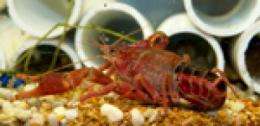
If you're headed to a freshwater stream this summer and a friend dares you to eat a raw crayfish - don't do it. You could end up in the hospital with a severe parasitic infection.
Physicians at Washington University School of Medicine in St. Louis have diagnosed a rare parasitic infection in six people who had consumed raw crayfish from streams and rivers in Missouri. The cases occurred over the past three years, but three have been diagnosed since last September; the latest in April. Before these six, only seven such cases had ever been reported in North America, where the parasite, Paragonimus kellicotti, is common in crayfish.
"The infection, called paragonimiasis, is very rare, so it's extremely unusual to see this many cases in one medical center in a relatively short period of time," says Washington University infectious diseases specialist Gary Weil, MD, professor of medicine and of molecular microbiology, who treated some of the patients. "We are almost certain there are other people out there with the infection who haven't been diagnosed. That's why we want to get the word out."
Paragonimiasis causes fever, cough, chest pain, shortness of breath and extreme fatigue. The infection is generally not fatal, and it is easily treated if properly diagnosed. But the illness is so unusual that most doctors are not aware of it. Most of the patients had received multiple treatments for pneumonia and undergone invasive procedures before they were referred to Barnes-Jewish Hospital or St. Louis Children's Hospital at Washington University Medical Center.
The half-inch, oval-shaped parasitic worms at the root of the infection primarily travel from the intestine to the lungs. They also can migrate to the brain, causing severe headaches or vision problems, or under the skin, appearing as small, moving nodules.
Some of the patients had been in and out of the hospital for months as physicians tried to diagnose their mysterious illness and treat their symptoms, which also included a buildup of fluid around the lungs and around the heart. One patient even had his gallbladder removed, to no avail.
"Some of these invasive procedures could have been avoided if the patients had received a prompt diagnosis," says Michael Lane, MD, an infectious diseases fellow at the School of Medicine who treated some of the patients. "We hope more doctors will now have this infection on their radar screens for patients with an unexplained lingering fever, cough and fatigue."
Once the diagnosis is made, paragonimiasis is easily treated with an oral drug, praziquantel, taken three times a day for only two days. Symptoms begin to improve within a few days and are typically gone within seven to 10 days. All the patients have completely recovered, even one patient who temporarily lost his vision when parasites invaded the brain.
The recent infections, which occurred in patients ages 10-32, have prompted the Missouri Department of Health & Senior Services to issue a health advisory alerting doctors across the state. The department also printed posters warning people not to eat raw crayfish and placed them in campgrounds and canoe rental businesses near popular Missouri streams. Thoroughly cooking crayfish kills the parasite and does not pose a health risk.
Paragonimiasis is far more common in East Asia, where many thousands of cases are diagnosed annually in people who consume raw or undercooked crab that contain Paragonimus westermani, a cousin to the parasite in North American crayfish.
While the U.S. Centers for Disease Control and Prevention has an antibody test to identify Paragonimus westermani infection, the test is not sensitive for patients with P. kellicotti parasite, and this makes diagnosis a real challenge. Diagnostic clues include elevated levels of white blood cells called eosinophils. These cells typically are elevated in patients with worm parasites, but they can also occur in more common illnesses, including cancer, autoimmune disease and allergy. X-rays also show excess fluid around the lungs and sometimes the heart.
"You have to be a bit of a detective and be open to all the clues," says Washington University infectious diseases specialist Thomas Bailey, MD, professor of medicine, who diagnosed and treated the first case at the School of Medicine.
As a case in point, the first patient who sought treatment at Washington University had had a fever and cough for several weeks. His chest X-ray showed fluid around the lungs, and blood tests showed elevated levels of eosinophils.
The "aha moment" for Bailey occurred when the patient's wife mentioned that his symptoms developed about a week after he ate raw crayfish from a Missouri river, and Bailey recalled that in Asia eating raw or undercooked crabs can lead to a paragonimus infection. With a quick search of the medical literature, Bailey learned that rare cases of North American paragonimiasis had been described in patients eating raw crayfish. The scenario fit perfectly with his patient.
"That's the interesting thing about being an infectious diseases doctor," Bailey says. "Every time you see a new patient you have to be open to the possibility that the diagnosis could be something highly unusual."
Crayfish are common throughout North America, where hundreds of species live in rivers, streams, lakes and ponds. The parasite P. kellicotti has a complex life cycle. It lives in snails and crayfish but only causes a dangerous infection if it ingested by mammals, including dogs, cats and humans, who eat it raw.
No one knows why more cases of paragonimiasis are being diagnosed now, but doctors and researchers at Washington University are studying the parasite and hope to develop a better diagnostic test for the infection. For now, the message for physicians is to consider paragonimiasis in patients with cough, fever and eosinophilia. The simple message for the public is: "Do not eat raw crayfish," Weil says.


