Novel therapeutic approach shows promise against multiple bacterial pathogens
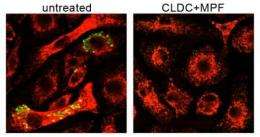
A team of scientists from government, academia and private industry has developed a novel treatment that protects mice from infection with the bacterium that causes tularemia, a highly infectious disease of rodents, sometimes transmitted to people, and also known as rabbit fever. In additional experiments with human immune cells, the treatment also demonstrated protection against three other types of disease-causing bacteria that, like the tularemia bacteria, occur naturally, can be highly virulent, and are considered possible agents of bioterrorism.
The experimental therapeutic works by stimulating the host immune system to destroy invading microbes. In contrast, antibiotics work by directly attacking invading bacteria, which often develop resistance to these medications. The therapeutic has the potential to enhance the action of antibiotics and provide an alternative to them.
"A therapeutic that protects against a wide array of bacterial pathogens would have enormous medical and public health implications for naturally occurring infections and potential agents of bioterrorism," says Anthony S. Fauci, M.D., director of the National Institute of Allergy and Infectious Diseases (NIAID) at the National Institutes of Health. "This creative approach is a prime example of public-private partnerships that can facilitate progress from a basic research finding to new, desperately needed novel therapeutics."
Catharine Bosio, Ph.D., and her colleagues at NIAID's Rocky Mountain Laboratories in Hamilton, Mont., led the study. Study collaborators are from Colorado State University in Fort Collins and Juvaris Biotherapeutics of Burlingame, Calif. The study is available online in the open-access journal PLoS Pathogens.
In the study, the researchers combined components isolated from the membrane of a weakened strain of Francisella tularensis, the agent of tularemia, with the Juvaris product CLDC (cationic liposome DNA complexes). The combination stimulated a natural antibacterial mechanism, called reactive oxygen species (ROS) and reactive nitrogen species (RNS), in immune cells that ingest bacteria. ROS and RNS attack and kill invading bacteria, preventing replication and spread of the pathogens to other cells.
Sixty percent of mice in the study survived lethal pulmonary infection with virulent F. tularensis when treated with the therapeutic intravenously three days before the bacterial challenge. No mice survived when given the bacterial components or the CLDC alone, demonstrating the importance of combining both to maximize protection in mouse and human cells. The treatment also showed broad usage, protecting human immune cells from bacteria that cause plague, melioidosis and brucellosis as well as tularemia. Melioidosis is primarily a tropical disease spread to humans and animals through contaminated soil and water. Brucellosis is a disease that primarily affects animals, including humans who come in contact with infected animals or animal products, such as contaminated milk.
According to Dr. Bosio, the three-day advance treatment appears crucial to providing enough time to stimulate the immune system. Any treatment less than three days in advance failed to protect the mice, she said.
"We are continuing to improve the versatility of this treatment as an antibacterial therapeutic with respect to timing of delivery and efficacy," she says. "Meanwhile, CLDC plus membrane protein fractions is proving to be an excellent tool to determine how to safely and successfully stimulate the body's own antibacterial army to protect itself against highly infectious invaders."
The research team will continue to study the precise role that membrane protein fractions play in combination with CLDC, and how the combination affects the production of RNS and ROS in cells from mice and from humans.
More information: R Ireland et al. Effective, broad spectrum control of virulent bacterial infections using cationic DNA liposome complexes combined with bacterial antigens. PLoS Pathogens 6(5): e1000921. DOI:10.1371/journal.ppat.1000921 (2010).


