San Fran: Mobile Phones Need Warning Attached
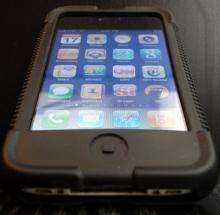
San Francisco is set to be the first place in the nation to require that retailers tell consumers how much radiation their brain will absorb from new phones. The ordinance -- approved on Tuesday and now awaiting Mayor Gavin Newsom's signature -- is an attempt to err on the side of caution in the debate over whether or not cell phones can cause brain cancer.
Despite numerous studies, medical researchers haven't found conclusive evidence that cell phones increase the risk of brain cancer, and many physicists say that there's no need to investigate a possible link between mobile phones and cancer because the radiation emitted by the phones theoretically can’t affect brain tissue. California politicians, however, have moved to act preemptively in response to public concerns over the often contradictory reports.
"The science is in, if there were no concern there would be no limit," said state Sen. Mark Leno, D-San Francisco, in a floor debate on similar statewide legislation. "The federal government did determine it was an issue of concern because in 1996 it set a maximum limit on the amount of this radiation that can be emitted."
In early June, Sen. Leno introduced a nearly identical bill in Sacramento. The bill made it out of committee, but died on the senate floor and even a revised version that only required online retailers to list the numbers was voted down. While there were more ayes than nays, eight members refused to vote on the measure and it failed to meet the necessary 21 votes.
When the new legislation was introduced during last week’s San Francisco Board of Supervisors meeting, members voted to delay considering the ordinance until Tuesday amid accusations from other board members that they were caving to industry and retailer lobbying. According to the National Institute on Money in State Politics -- a nonprofit that tracks the influence of money on public policy in all 50 states -- the wireless phone industry donates millions to California politicians, with much of the California state Senate receiving donations varying from $1,000 to as much as $27,000 from AT&T Inc. every election year.
Manufacturers are already required to report to the Federal Communications Commission the maximum amount of radiation -- called the specific absorption rate, or SAR -- that each phone emits. According to University of California, Berkeley researcher Joel Moskowitz, this current maximum allowable amount is based on the amount of radiation that the brain of a 200 pound man would receive if he talked on a cell phone for six minutes.
Leno's argument, as well the Board of Supervisors' and other politicians supporting the new laws, is that the information should be provided to consumers directly until a scientific consensus can be reached. They say that finding the absorption rate associated with a particular phone is currently too difficult for consumers. However, many scientists and industry officials believe the new requirement amounts to misleading the public into thinking there’s a reason to be concerned.
"What this implies is that we should just ignore the fundamental laws, because there just isn’t any mechanism," said Robert Park, a University of Maryland - College Park physicist. "This is an announcement that something is wrong and when you haven’t found anything wrong this just erodes public confidence in warnings."
In an editorial featured in the Journal of the National Cancer Institute, Park explained that most physicists don't believe there could be such a link because there is no known mechanism for a cell phone to damage the body. Electromagnetic-fields produce two types of radiation, ionizing and non-ionizing. The first type comes from high-energy waves like X-rays or ultraviolet light that can damage DNA. Ionizing radiation is what causes things like skin-cancer and is the reason why we wear lead blankets when getting X-rays taken at the dentist’s or doctor’s office.
Cell phones transmit information over a radio frequency that sits somewhere between AM radio and the average microwave. This non-ionizing radiation packs a much weaker punch than ionizing radiation and while it can be absorbed by body tissues, the low-frequency can’t generate enough heat to damage them.
"Everyone knows that cancer agents act by creating mutant strands of DNA which then grow as a cancer," Park said. "Without creating a mutant strand of DNA there’s no way this could cause cancer."
However, some medical researchers believe there is strong evidence for a link between certain types of brain tumors and cell phone use, even though they haven’t yet established a mechanism to explain the connection.
Moskowitz examined a collection of studies that explored this link and was troubled by his findings. In the Journal of Clinical Oncology, Moskowitz reported significant discrepancies between studies his team identified as being higher-quality independent studies and studies that were either low-quality or done by the cell phone industry.
While the independent studies showed a significant risk of brain cancer in heavy, long-term cell phone users, Moskowitz said the industry-funded research tended to show a reduced risk of brain cancer associated with heavy use.
"It's almost a 'darned if you do, darned if you don't' situation," said John Walls, vice president of public affairs for the cell phone industry group CTIA. "If you do the research, you’re criticized for industry doing the research and if you don’t you’re criticized for not having studied it."
Walls says that while the industry has funded studies for years, many of the largest studies have been carried out by the government on the industry’s dime with what he calls a "stringent firewall" between the research and the money. Walls also points out the most recently released study, the World Health Organization’s Interphone report, examined more than 10 years of data from 13 nations and showed nothing conclusive. However, several researchers, including Moskowitz, have pointed out several pieces of the report they claim the team misinterpreted to underestimate the risks. The Interphone report was funded in part by a European cell phone industry group.
"I don't see how SAR labels will mislead consumers as the cellular industry claims," Moskowitz said. "The industry is being disingenuous. They issue safety warnings in their instruction manuals, but often hide them or try to get consumers to ignore them."
While cell phone companies have never publicly agreed that there is a risk, cell phone user manuals can paint a contradictory image. The Blackberry Pearl manual recommends keeping the cell phone at least an inch away from the body, including the abdomen of pregnant women and also claims that using a non-certified belt-holster might present a risk of serious harm. The same manual also suggests turning the phone off when in a breast or pants pocket, using a hands-free device, text messaging whenever possible and "limiting the amount of time spent on the phone."
Walls says that the cell phone industry isn't aware of any health risks associated with using cell phones and these kinds of warnings in cell manuals are just a way of avoiding liability. "There’s no difference in one device versus another as long as they both comply to the stringent standards of the FCC," Walls said.
Some companies have sought to capitalize on the public confusion by creating devices that supposedly limit radiation exposure. One such company, Belly Armor, makes t-shirts and stomach bands designed to shield pregnant mothers from "everyday radiation." The company also makes blankets designed to be placed between a pregnant mother's stomach and a laptop, citing unconfirmed health risks like autism, leukemia, cancer and even miscarriage.
"I've got constituents that are dealing with very serious health concerns and they are 100-percent convinced that it's because they had (a cell phone) to their brain for 20 years," Leno said in the same floor debate. "I'm not here to confirm that correlation, but with all the questions here why would we not want to require that … the SAR be shared?"
Source: Inside Science News Service


