Enzyme Trio for Biosynthesis of Hydrocarbon Fuels
(PhysOrg.com) -- Scientists with the Joint BioEnergy Institute have identified a trio of bacterial enzymes that can catalyze key steps in the conversion of plant sugars into hydrocarbon compounds for the production of green transportation fuels.
If concerns for global climate change and ever-increasing costs weren't enough, the disastrous Gulf oil spill makes an even more compelling case for the development of transportation fuels that are renewable, can be produced in a sustainable fashion, and do not put the environment at risk. Liquid fuels derived from plant biomass have the potential to be used as direct replacements for gasoline, diesel and jet fuels if cost-effective means of commercial production can be found.
Researchers with the U.S. Department of Energy (DOE)’s Joint BioEnergy Institute (JBEI) have identified a trio of bacterial enzymes that can catalyze key steps in the conversion of plant sugars into hydrocarbon compounds for the production of green transportation fuels.
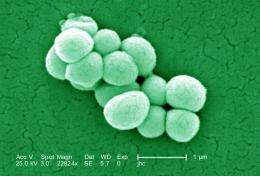
Harry Beller, an environmental microbiologist who directs the Biofuels Pathways department for JBEI’s Fuels Synthesis Division, led a study in which a three-gene cluster from the bacterium Micrococcus luteus was introduced into the bacterium Escherichia coli. The enzymes produced by this trio of genes enabled the E. coli to synthesize from glucose long-chain alkene hydrocarbons. These long-chain alkenes can then be reduced in size - a process called “cracking” - to obtain shorter hydrocarbons that are compatible with today’s engines and favored for the production of advanced lignocellulosic biofuels.
“In order to engineer microorganisms to make biofuels efficiently, we need to know the applicable gene sequences and specific metabolic steps involved in the biosynthesis pathway,” Beller says. “We have now identified three genes encoding enzymes that are essential for the bacterial synthesis of alkenes. With this information we were able to convert an E. coli strain that normally cannot make long-chain alkenes into an alkene producer.”
Working with Beller on this study were Ee-Been Goh and Jay Keasling. The three were the co-authors of a paper that appeared earlier this year in the journal Applied and Environmental Microbiology, titled “Genes Involved in Long-Chain Alkene Biosynthesis in Micrococcus luteus.”
It has long been known that certain types of bacteria are able to synthesize aliphatic hydrocarbons, which makes them promising sources of the enzymes needed to convert lignocellulose into advanced biofuels. However, until recently, little was known about the bacterial biosynthesis of non-isoprenoid hydrocarbons beyond a hypothesis that fatty acids are precursors. JBEI researchers in the Fuels Synthesis Division, which is headed by co-author Keasling, are using the tools of synthetic biology, and mathematical models of metabolism and gene regulation to engineer new microbes that can quickly and efficiently produce advanced biofuel molecules. E.coli is one of the model organisms being used in this effort because it is a well-studied microbe that is exceptionally amenable to genetic manipulation.
“We chose to work with M. luteus because a close bacterial relative was well-documented to synthesize alkenes and because a draft genome sequence of M. luteus was available,” Beller says. “The first thing we did was to confirm that M. luteus also produces alkenes.”
Beller and his colleagues worked from a hypothesis that known enzymes capable of catalyzing both decarboxylation and condensation should be good models for the kind of enzymes that might catalyze alkene synthesis from fatty acids. Using condensing enzymes as models, the scientists identified several candidate genes in M. luteus, including Mlut_13230. When expressed in E. coli together with the two adjacent genes - Mlut_13240 and 13250 - this trio of enzymes catalyzed the synthesis of alkenes from glucose. Observations were made both in vivo and in vitro.
“This group of enzymes can be used to make aliphatic hydrocarbons in an appropriate microbial host but the resulting alkenes are too long to be used directly as liquid fuels,” Beller says. “However, these long-chain alkenes can be cracked - a technique routinely used in oil refineries - to create hydrocarbons of an appropriate length for diesel fuel.”
The next step Beller says is to learn more about how these three enzymes work, particularly Mlut_13230 (also called OleA), which catalyzes the key step in the alkene biosynthesis pathway - the condensation of fatty acids.
“We’re also studying other pathways that can produce aliphatic hydrocarbons of an appropriate length for diesel fuels without the need for cracking,” Beller says. “Nature has devised a number of biocatalysts to produce hydrocarbons, and our goal is to learn more about them for the production of green transportation fuels.”
More information: For more information about JBEI, visit the Website at www.jbei.org
Provided by Lawrence Berkeley National Laboratory


