Can money buy happiness? Gallup poll asks, and the world answers
July 1, 2010
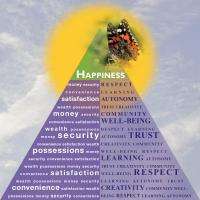
Life satisfaction and enjoyment of life are two components of happiness. Life satisfaction is more closely associated with income, while positive feelings also depend on other factors, such as feeling respected and connected to others, researchers report. Credit: Debra Bolgla
A worldwide survey of more than 136,000 people in 132 countries included questions about happiness and income, and the results reveal that while life satisfaction usually rises with income, positive feelings don't necessarily follow, researchers report.
The findings, from an analysis of data gathered in the first Gallup World Poll, appear this month in the Journal of Personality and Social Psychology.
"The public always wonders: Does money make you happy?" said University of Illinois professor emeritus of psychology Ed Diener, a senior scientist with the Gallup Organization. "This study shows that it all depends on how you define happiness, because if you look at life satisfaction, how you evaluate your life as a whole, you see a pretty strong correlation around the world between income and happiness," he said. "On the other hand it's pretty shocking how small the correlation is with positive feelings and enjoying yourself."
The Gallup World Poll conducted surveys on a wide range of subjects in a representative sample of people from 132 countries from 2005 to 2006. The poll used telephone surveys in more affluent areas, and door-to-door interviews in rural or less-developed regions.
The countries surveyed represent about 96 percent of the world's population, the researchers report, and reflect the diversity of cultural, economic and political realities around the globe.
This "first representative sample of planet earth," the authors wrote, "was used to explore the reasons why 'happiness' is associated with higher income." The researchers were able to look at a long list of attributes of respondents, including their income and standard of living, whether their basic needs for food and shelter were met, what kinds of conveniences they owned and whether they felt their psychological needs were satisfied.
The surveys included a global life evaluation, which asked respondents to rate their lives on a scale that ranged from zero (worst possible life) to 10 (best possible life). Participants also answered questions about positive or negative emotions experienced the previous day. And the poll asked respondents whether they felt respected, whether they had family and friends they could count on in an emergency, and how free they felt to choose their daily activities, learn new things or do "what one does best."
Like previous studies, the new analysis found that life evaluation, or life satisfaction, rises with personal and national income. But positive feelings, which also increase somewhat as income rises, are much more strongly associated with other factors, such as feeling respected, having autonomy and social support, and working at a fulfilling job.
This is the first "happiness" study of the world to differentiate between life satisfaction, the philosophical belief that your life is going well, and the day-to-day positive or negative feelings that one experiences, Diener said.
"Everybody has been looking at just life satisfaction and income," he said. "And while it is true that getting richer will make you more satisfied with your life, it may not have the big impact we thought on enjoying life."
More information: "Wealth and Happiness Across the World: Material Prosperity Predicts Life Evaluation, Whereas Psychosocial Prosperity Predicts Positive Feeling," Journal of Personality and Social Psychology.
Provided by University of Illinois at Urbana-Champaign (news : web)
-
Father-son team says positive gains can be made in 'psychological wealth'
Aug 08, 2009 |
not rated yet |
0
-
Poll: Marriage + money = happiness
Jan 12, 2007 |
not rated yet |
0
-
Research finds human emotions hold sway over physical health worldwide
Mar 04, 2009 |
not rated yet |
0
-
Study says money only makes you happy if it makes you richer than your neighbors
Mar 22, 2010 |
not rated yet |
0
-
Buying experiences, not possessions, leads to greater happiness
Feb 08, 2009 |
not rated yet |
0
-
Engineers build first sub-10-nm carbon nanotube transistor
Feb 01, 2012 |
4.9 / 5 (30) |
30
-
Something old, something new: Evolution and the structural divergence of duplicate genes
Jan 31, 2012 |
4.6 / 5 (7) |
1
-
The hidden nanoworld of ice crystals: Revealing the dynamic behavior of quasi-liquid layers
Jan 30, 2012 |
5 / 5 (3) |
1
-
Stock market network reveals investor clustering
Jan 27, 2012 |
3.9 / 5 (23) |
8
-
Of microchemistry and molecules: Electronic microfluidic device synthesizes biocompatible probes
Jan 26, 2012 |
5 / 5 (1) |
0
-
Can I forget a language?
2 hours ago
-
Is Everyday Technology Killing Us?
Feb 08, 2012
-
Exercise and weight loss
Feb 08, 2012
-
Why do we have head aches? Our brains can't feel anything.
Feb 07, 2012
-
"The end of diseases" by David Agus, interview from Daily Show with Jon Stewart
Feb 04, 2012
-
Oncolytic adenovirus
Feb 04, 2012
- More from Physics Forums - Medical Sciences
More news stories
New understanding of DNA repair could eventually lead to cancer therapy
A research group in the Faculty of Medicine & Dentistry at the University of Alberta is hoping its latest discovery could one day be used to develop new therapies that target certain types of cancers.
55 minutes ago |
5 / 5 (3) |
0
|
Researchers develop new method for creating tissue engineering scaffolds
Researchers at Northwestern University have developed a new method for creating scaffolds for tissue engineering applications, providing an alternative that is more flexible and less time-intensive than current technology.
8 minutes ago |
not rated yet |
0
|
Drug halts organ damage in inflammatory genetic disorder
A new study shows that Kineret (anakinra), a medication approved for the treatment of rheumatoid arthritis, is effective in stopping the progression of organ damage in people with neonatal-onset multisystem inflammatory disease ...
Medicine & Health / Medications
19 minutes ago |
not rated yet |
0
Molecular profiling reveals differences between primary and recurrent ovarian cancers
There is a need to analyze tumor specimens at the time of ovarian cancer recurrence, according to a new study published in Molecular Cancer Therapeutics. Researchers used a diagnostic technology called molecular profiling to examine ...
8 minutes ago |
not rated yet |
0
|
Both maternal and paternal age linked to autism
Older maternal and paternal age are jointly associated with having a child with autism, according to a recently published study led by researchers at The University of Texas Health Science Center at Houston (UTHealth).
Medicine & Health / Psychology & Psychiatry
1 hour ago |
not rated yet |
0
|
Hovering not hard if you're top-heavy, researchers find
Top-heavy structures are more likely to maintain their balance while hovering in the air than are those that bear a lower center of gravity, researchers at New York University's Courant Institute of Mathematical Sciences ...
Grass to gas: Researchers' genome map speeds biofuel development
Researchers at the University of Georgia have taken a major step in the ongoing effort to find sources of cleaner, renewable energy by mapping the genomes of two originator cells of Miscanthus x giganteus, a large perenn ...
Zuckerberg's focus drives Facebook's ascent
When Mark Zuckerberg showed up to rent Judy Fusco's Los Altos, Calif., house in the fall of 2004, soon after he'd arrived in Silicon Valley, the landlord was immediately struck by his confidence.
Night, weekend delivery OK for babies with birth defects
Weekday delivery is no better than night or weekend delivery for infants with birth defects, according to a new study presented today at The Pregnancy Meeting, the Society for Maternal-Fetal Medicine's annual conference. ...
Sonic Cradle lands spot in TED exhibition
A Simon Fraser University graduate student project that melds music, meditation and modern technology has landed a rare spot as an exhibit at TEDActive 2012 in Palm Springs, California this month.
Cochlear implants may be safe, effective for organ transplant patients
Cochlear implants may be a safe, effective option for some organ transplant patients who've lost their hearing as an unfortunate consequence of their transplant-related drug regime, researchers report.
Jul 01, 2010
Rank: 4.3 / 5 (6)
Jul 01, 2010
Rank: 5 / 5 (2)
Daniel Tosh reference. Well played.
Jul 01, 2010
Rank: 5 / 5 (3)
Jul 01, 2010
Rank: 5 / 5 (5)
Jul 01, 2010
Rank: 5 / 5 (1)
M = Amount of money you need to consider it 'living comfortable'
P = Amount of Positive_Feeling (family, friendship, health, religion etc...) you need to consider it 'living comfortable'
x = (a scale of where you are relative to M)
y = (a scale of where you are relative to P)
H = f(Mx, Py)
Jul 01, 2010
Rank: 5 / 5 (3)
Jul 01, 2010
Rank: 1 / 5 (2)
Jul 01, 2010
Rank: not rated yet
Jul 01, 2010
Rank: not rated yet
Jul 02, 2010
Rank: not rated yet
Jul 02, 2010
Rank: not rated yet
Good Luck!
Jul 04, 2010
Rank: not rated yet
Jet skis appear to be the preferred toy of inconsiderate show-offs, much like the 4WD morons who like to destroy pristine environments.
The way to stop them is to insist upon an IQ test before they can buy or ride/drive one.
Jul 04, 2010
Rank: not rated yet
And then the ones who drive those big overfat environmentally disguisting wide 4wd's cause they just cannot seem to stop showing everyone saying look i'm rich...
While pretending not to see the poor beggar next to the road struggling to get a few pennies for a slice of bread, Pathetic doesn't even come close to describe it !!!
Jul 04, 2010
Rank: not rated yet
Why is this shocking?
People earn positive feelings by accomplishments which are most likely not very enjoyable to accomplish.
If the correlation was high, we would never know as people would not accomplish and spend all their time in hedonistic activities.
Jul 04, 2010
Rank: not rated yet
http://tinyurl.com/39ljysb
You can play with the MS IE applet linked above to understand both your happiness, both Schroedinger equation at the same moment. You can think the red line (quantum function) is your power level and the blue line (probability function i.e. sum of potential and kinetic energy) illustrates the level of your happiness.
This explanation enables us to understand, why every luxury becomes boring soon or later and why our wives tend to rearrange furniture in our houses occasionally.
Jul 04, 2010
Rank: not rated yet
I would suggest people are adapted to change and have difficulty appreciating absolutes.
Billions of people today live better than the most wealthy monarchs 500 years ago or even 200 years ago. But they are still not satisfied.
Such adaptability is a successful survival trait enabling many to survive when the thin veil of civilization and technology has been peeled away.
Jul 05, 2010
Rank: not rated yet
Jul 05, 2010
Rank: not rated yet
How do you know?
Money provides the means to help people. Bill Gates and Warren Buffet are 'greedy' and are donating their billions to help others. That seems to be making them happy.
Jul 05, 2010
Rank: not rated yet
Jul 05, 2010
Rank: not rated yet
If you had the cash to pay all your bills and not need to worry about health or housing, wouldn't you enjoy spending a massive amount of free time, eating, drinking, and playing with friends in whatever activity you deem to enjoy? Of course.
Money doesn't do this, it simply allows a manner by which to procure things that do make you happy. Secondary reinforcement of Maslowe's Hierarchy.