Reports detail global investment and other trends in green energy
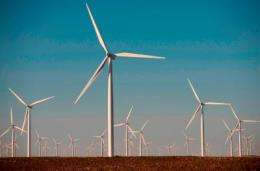
In 2009, for the second year in a row, both the US and Europe added more power capacity from renewable sources such as wind and solar than conventional sources like coal, gas and nuclear, according to twin reports launched today by the United Nations Environment Programme and the Renewable Energy Policy Network for the 21st Century (REN21).
Renewables accounted for 60 per cent of newly installed capacity in Europe and more than 50 per cent in the USA in 2009. This year or next, experts predict, the world as a whole will add more capacity to the electricity supply from renewable than non-renewable sources.
The reports detail trends in the global green energy sector, including which sources attracted the greatest attention from investors and governments in different world regions.
They say investment in core clean energy (new renewables, biofuels and energy efficiency) decreased by 7% in 2009, to $162 billion. Many sub-sectors declined significantly in money invested, including large (utility) scale solar power and biofuels. However, there was record investment in wind power. If spending on solar water heaters, as well as total installation costs for rooftop solar PV, were included, total investment in 2009 actually increased in 2009, bucking the economic trend.
New private and public sector investments in core clean energy leapt 53 per cent in China in 2009. China added 37 gigawatts (GW) of renewable power capacity, more than any other country.
Globally, nearly 80 GW of renewable power capacity was added, including 31 GW of hydro and 48 GW of non-hydro capacity.
China surpassed the US in 2009 as the country with the greatest investment in clean energy. China's wind farm development was the strongest investment feature of the year by far, although there were other areas of strength worldwide in 2009, notably North Sea offshore wind investment and the financing of power storage and electric vehicle technology companies.
Wind power and solar PV additions reached a record high of 38 GW and 7 GW, respectively. Investment totals in utility-scale solar PV declined relative to 2008, partly a result of large drops in the costs of solar PV. However, this decline was offset by record investment in small-scale (rooftop) solar PV projects.
The reports also show that countries with policies encouraging renewable energy have roughly doubled from 55 in 2005 to more than 100 today - half of them in the developing world - and have played a critically important role in the sector's rapid growth.
The sister reports, UNEP's Global Trends in Sustainable Energy Investment 2010 and the REN21's Renewables 2010 Global Status Report, were released by UN Under-Secretary-General Achim Steiner, UNEP's Executive Director, and Mohamed El-Ashry, Chair of REN21. The UNEP report was prepared by London-based Bloomberg New Energy Finance. The REN21 report was produced by a team of authors in collaboration with a global network of research partners.
The UNEP report focuses on the global trends in sustainable energy investment, covering both the renewable energy and energy efficiency sectors. The REN21 report offers a broad look at the status of renewable energy worldwide today, covering power regeneration, heating and cooling and transport fuels, and paints the landscape of policies and targets introduced around the world to promote renewable energy.
Says Mr. Steiner: "The sustainable energy investment story of 2009 was one of resilience, frustration and determination. Resilience to the financial downturn that was hitting all sectors of the global economy and frustration that, while the UN climate convention meeting in Copenhagen was not the big breakdown that might have occurred, neither was it the big breakthrough so many had hoped for. Yet there was determination on the part of many industry actors and governments, especially in rapidly developing economies, to transform the financial and economic crisis into an opportunity for greener growth.
"There remains however a serious gap between the ambition and the science in terms of where the world needs to be in 2020 to avoid dangerous climate change. But what this five years of research underlines is that this gap is not unbridgeable. Indeed, renewable energy is consistently and persistently bucking the trends and can play its part in realizing a low carbon, resource efficient Green Economy if government policy sends ever harder market signals to investors," he added.
Says Mr El-Ashry: "Favorable policies now in place in more than 100 countries have played a critical role in the strength of global renewable energy investments recently. For the upward trend of renewable energy growth to continue, policy efforts now need to be taken to the next level and encourage a massive scale up of renewable technologies."
Says Michael Liebreich, chief executive of Bloomberg New Energy Finance: "The relatively resilient performance of the sector during the current economic downturn shows that clean energy was not a bubble created by the late stages of the credit boom, but is instead an investment theme that will remain important for the years ahead."
By the numbers:
In 2009 renewable sources represented:
- 25 per cent of global power (electricity) capacity (1,230 gigawatts (GW) out of 4,800 GW total all sources, including coal, gas, nuclear)
- 18 per cent of global power production
- 60 per cent of newly installed power capacity in Europe and more than 50 per cent in the US; the world as a whole should reach 50 per cent or more in newly-installed power capacity from renewables in 2010 or 2011.
Provided by UNEP Division of Technology Industry and Economics


