The first malaria-proof mosquito
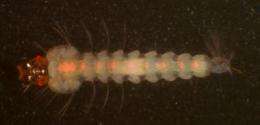
For years, researchers worldwide have attempted to create genetically altered mosquitoes that cannot infect humans with malaria. Those efforts fell short because the mosquitoes still were capable of transmitting the disease-causing pathogen, only in lower numbers.
Now for the first time, University of Arizona entomologists have succeeded in genetically altering mosquitoes in a way that renders them completely immune to the parasite, a single-celled organism called Plasmodium. Someday researchers hope to replace wild mosquitoes with lab-bred populations unable to act as vectors, i.e. transmit the malaria-causing parasite.
"If you want to effectively stop the spreading of the malaria parasite, you need mosquitoes that are no less than 100 percent resistant to it. If a single parasite slips through and infects a human, the whole approach will be doomed to fail," said Michael Riehle, who led the research effort, the results of which will be published July 15 in the journal Public Library of Science Pathogens. Riehle is a professor of entomology in the UA's College of Agriculture and Life Sciences and is a member of the BIO5 Institute.
Riehle's team used molecular biology techniques to design a piece of genetic information capable of inserting itself into a mosquito's genome. This construct was then injected into the eggs of the mosquitoes. The emerging generation carries the altered genetic information and passes it on to future generations. For their experiments, the scientists used Anopheles stephensi, a mosquito species that is an important malaria vector throughout the Indian subcontinent.
The researchers targeted one of the many biochemical pathways inside the mosquito's cells. Specifically, they engineered a piece of genetic code acting as a molecular switch in the complex control of metabolic functions inside the cell. The genetic construct acts like a switch that is always set to "on," leading to the permanent activity of a signaling enzyme called Akt. Akt functions as a messenger molecule in several metabolic functions, including larval development, immune response and lifespan.
When Riehle and his co-workers studied the genetically modified mosquitoes after feeding them malaria-infested blood, they noticed that the Plasmodium parasites did not infect a single study animal.
"We were surprised how well this works," said Riehle. "We were just hoping to see some effect on the mosquitoes' growth rate, lifespan or their susceptibility to the parasite, but it was great to see that our construct blocked the infection process completely."
Of the estimated 250 million people who contract malaria each year, 1 million - mostly children - do not survive. Ninety percent of the number of fatalities, which Riehle suspects to be underreported, occur in Sub-Saharan Africa.
Each new malaria case starts with a bite from a vector - a mosquito belonging to the genus Anopheles. About 25 species of Anopheles are significant vectors of the disease.
Only the female Anopheles mosquitoes feed on blood, which they need to produce eggs. When they bite an infected human or animal, they ingest the malaria parasite.
Once the Plasmodium cells find themselves in the insect's midgut, they spring into action. They leave the insect's digestive tract by squeezing through the midgut lining. The vast majority of Plasmodium cells do not survive this journey and are eliminated by the mosquito's immune cells. A tiny fraction of parasite cells, usually not more than a handful, make it and attach themselves on the outside of the midgut wall where they develop into brooding cells called oocysts.
Within 10-12 days, thousands of new Plasmodium cells, so-called sporozoites, sprout inside the oocyst. After hatching from the oocyst, the sporozoites make their way into the insect's salivary glands where they lie in wait until the mosquito finds a victim for a blood meal. When the mosquito bites, some sporozoites are flushed into the victim's bloodstream.
"The average mosquito transmits about 40 sporozoites when it bites," said Riehle, "but it takes only one to infect a human and make a new malaria victim."
Several species of Plasmodium exist in different parts of the world, all of which are microscopically small single-celled organisms that live in their hosts' red blood cells. Each time the parasites undergo a round of multiplication, their host cells burst and release the progeny into the bloodstream, causing the painful bouts of fever that malaria is known and feared for.
Malaria killed more soldiers in the Civil War than the fighting, according to Riehle. In fact, malaria was prevalent in most parts of the U.S. until the late 1940s and early 1950, when DDT spraying campaigns wiped the vectors off the map. Today, a new case of malaria occurs in the U.S. only on rare occasions.
The severity of the disease depends very largely on the species of the Plasmodium parasite the patient happens to contract.
"Only two species of Plasmodium cause the dreaded relapses of the disease," said Riehle. "One of them, Plasmodium vivax, can lie dormant in the liver for 10 to 15 years, but now drugs have become available that target the parasites in the liver as well as those in the blood cells."
That said, there are no effective or approved malaria vaccines. A few vaccine candidates have gone to clinical trials but they were shown to either be ineffective or provide only short-term protection. If an effective vaccine were to be developed, distribution would be a major problem, Riehle said.
Researchers and health officials put higher hopes into eradication programs, which aim at the disease-transmitting mosquitoes rather than the pathogens that cause it.
"The question is 'What can we do to turn a good vector into a bad vector?'" Riehle said.
"The eradication scenario requires three things: A gene that disrupts the development of the parasite inside the mosquito, a genetic technique to bring that gene into the mosquito genome and a mechanism that gives the modified mosquito an edge over the natural populations so they can displace them over time."
"The third requirement is going to be the most difficult of the three to realize," he added, which is why his team decided to tackle the other two first.
"It was known that the Akt enzyme is involved in the mosquito's growth rate and immune response, among other things," Riehle said. "So we went ahead with this genetic construct to see if we can ramp up Akt function and help the insects' immune system fight off the malaria parasite."
The second rationale behind this approach was to use Akt signaling to stunt the mosquitoes' growth and cut down on its lifespan.
"In the wild, a mosquito lives for an average of two weeks," Riehle explained. "Only the oldest mosquitoes are able to transmit the parasite. If we can reduce the lifespan of the mosquitoes, we can reduce the number of infections."
His research team discovered that mosquitoes carrying two copies of the altered gene had lost their ability to act as malaria vectors altogether.
"In that group of mosquitoes, not a single Plasmodium oocyst managed to form."
At this point, the modified mosquitoes exist in a highly secured lab environment with no chance of escape. Once researchers find a way to replace wild mosquito populations with lab-bred ones, breakthroughs like the one achieved by Riehle's group could pave the way toward a world in which malaria is all but history.
More information: Corby-Harris et al. Activation of Akt Signaling Reduces the Prevalence and Intensity of Malaria Parasite Infection and Lifespan in Anopheles stephensi Mosquitoes. Public Library of Science (PLoS) Pathogens, July 2010 issue: www.plospathogens.org
Provided by University of Arizona


