Discovery of possible earliest animal life pushes back fossil record
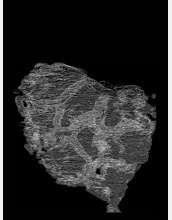
Scientists may have discovered in Australia the oldest fossils of animal bodies. These findings push back the clock on the scientific world's thinking regarding when animal life appeared on Earth. The results suggest that primitive sponge-like creatures lived in ocean reefs about 650 million years ago.
The shelly fossils, found beneath a 635 million-year-old glacial deposit in South Australia, represent the earliest evidence of animal body forms in the current fossil record, predating other evidence by at least 70 million years.
"These scientists have found that animals may have appeared on Earth 90 million years earlier than previously known," said H. Richard Lane of the National Science Foundation (NSF)'s Division of Earth Sciences, which funded the research.
"This is comparable to resetting modern times to begin during the late Cretaceous."
Previously, the oldest known fossils of hard-bodied animals were from two reef-dwelling organisms that lived around 550 million years ago.
There are also controversial fossils of soft-bodied animals that date to the latter part of the Ediacaran period between 577 and 542 million years ago.
Princeton University geoscientists Adam Maloof and Catherine Rose happened upon the new fossils while working on a project focused on the severe ice age that marked the end of the Cryogenian period 635 million years ago.
Their findings, published in the August 17 issue of the journal Nature Geoscience, provide the first direct evidence that animal life existed before--and probably survived--the severe "snowball Earth" event known as the Marinoan glaciation that left much of the globe covered in ice at the end of the Cryogenian.
"We were accustomed to finding rocks with embedded mud chips, and at first this is what we thought we were seeing," Maloof said.
"But then we noticed these repeated shapes that we were finding everywhere--wishbones, rings, perforated slabs and anvils. We realized we had stumbled upon some sort of organism, and we decided to analyze the fossils.
"No one was expecting that we would find animals that lived before the ice age, and since animals probably did not evolve twice, we are suddenly confronted with the question of how a relative of these reef-dwelling animals survived the ‘snowball Earth.'"
Analyzing the fossils turned out to be easier said than done, as the composition and location of the fossils made it such that they could not be removed from the surrounding rock using conventional techniques, nor could they be imaged using X-ray scanning techniques.
X-rays are only able to distinguish between materials with different densities, which is why they can be used to image bones that are inside the human body or buried within a rock.
But the most ancient skeletal fossils are made not of bone, but of calcite--the same material that makes up the rock matrix in which they are embedded.
Therefore X-rays could not be used to "illuminate" the newly discovered fossils and the researchers had to develop and refine another method.
Maloof, Rose and their collaborators teamed up with professionals at Situ Studio, a Brooklyn-based design and digital fabrication studio, to create three-dimensional digital models of two individual fossils that were embedded in the surrounding rock.
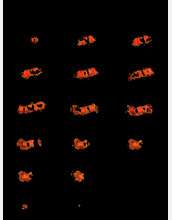
As part of the process, team members shaved off 50 microns of sample at a time--about half the width of a human hair--and photographed the polished rock surface each time. The team ground and imaged nearly 500 slices of the rock.
Using specialized software techniques developed specifically for this project, the researchers then "stacked" the outlines on top of one another to create a complete three-dimensional model of the creature.
The technique is similar to the way CAT scan technology combines a series of two-dimensional X-rays to create a three-dimensional image of the inside of the body.
The technique that was developed served to automate the process--turning a prohibitively time-consuming task into an efficient and effective method for fossil reconstruction.
"For Situ Studio, the most exciting aspect of this collaboration is that we were able to successfully employ knowledge developed within an architectural practice to help solve problems in an entirely different field--applying design tools to spatial problems on a completely different scale," said Bradley Samuels, a founding partner of Situ Studio.
"It became an exercise in marrying disparate bodies of knowledge to address pressing questions in the geosciences."
When they began the digital reconstruction process, the shape of some of the two-dimensional slices made the researchers suspect they might be dealing with the previously discovered Namacalathus, a goblet-shaped creature featuring a long body stalk topped with a hollow ball.
But their model revealed irregularly shaped, centimeter-scale animals with a network of internal canals. The creatures looked nothing like Namacalathus.
After considering a variety of alternatives, the scientists decided that the fossil organisms most closely resembled sponges--simple filter-feeding animals that extract food from water as it flows through specialized body channels.
Previously, the oldest known undisputed fossilized sponges were around 520 million years old, dating to the Cambrian Period.
In future research, Maloof and his collaborators intend to refine the three-dimensional digital reconstruction technique to automate and increase the speed of the process.
This could have a significant impact on paleontology, Maloof said, enabling the analysis of myriad early fossils that are currently inaccessible to the tools of modern science.
Provided by National Science Foundation


