Wild porcupines under threat due to illegal hunting
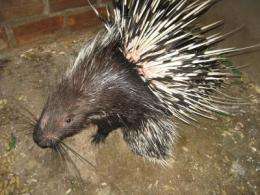
Wild porcupine might be a tasty treat in countries around the world, but populations of the spiky rodent are coming under threat in Vietnam due to illegal hunting.
Research from the University of East Anglia, published in Biological Conservation, has shown that the consumption of the Southeast Asian porcupine (Hystrix brachyura) as a speciality food is having a devastating effect on wild populations.
Overhunting has been cited as the porcupine's greatest threat, and the 1990s saw a reported population decline of at least 20 per cent.
While commercial farming of porcupines has become more popular, and is actively encouraged by Southeast Asian governments, illegal hunting still goes on.
Led by Emma Brooks, a team of researchers carried out an evidence-based case study to quantify the impact of commercial farming on the local wild population in Son La province in northwest Vietnam.
They found that commercial porcupine farming is driving hunting, and is thought to be, at least in part, responsible for the decline of wild porcupines in the region. Under current management, farming could potentially destroy local, even relatively common and fast-breeding species like porcupines.
They interviewed 67 porcupine farmers as well as restaurant owners in the region, which lies within the Hoang Lien Mountains.
They found that the farming industry was booming, with half having set up their farm in the last three years (2005-2008). During this time the cost of juvenile founder stock doubled. And due to the high prices paid for meat, the sale of just two pairs far exceeds Vietnam's gross national income (US$890).
But the high price of farmed porcupines has encouraged hunting of wild populations - with wild meat being sold to restaurants at around half the price of farmed animals.
Only half of the farmers interviewed were registered. Further admissions included illegally using wild porcupines as founder stock, laundering wild animals to sell across the country, capturing wild porcupines and registering them as births, and replacing sick and injured animals with those from the wild.
Lead author Emma Brooks said: "Four farms which were willing to talk openly, reported trading almost 1000 wild porcupines each year, predominantly to other farms as founder stock. With the increase in demand for founder stock, the incentives to continue the illegal trade are considerable."
Because the research comes from anecdotal evidence, it is feared these reports of illegally procuring and trading wild animals could be just the tip of the ice berg.
"We suspected at least two further farms of laundering animals, but because it is illegal, it is more likely that farm owners would hide this information. Figures reported should be considered a conservative estimate of the true scale of the illegal trade of porcupines through farms.
"There is opportunity for illegal traders to make extra profit from wild sales with continued demand and favour for the wild porcupines from restaurant owners due to lower price and consumers preference.
"Wild meat in Vietnam supplies a luxury urban market and as such commands a high value. It is likely that these species will continue to be hunted from the wild as long as populations do not diminish so much as to become unprofitable to the hunters."
"However well the farms are managed, as long as there is consumer demand for porcupine products, without serious disincentives for hunters, hunting of the wild populations will continue.
"Monitoring and enforcement of these farms and the restaurants is inadequate and needs to be addressed to ensure the protection of wild porcupine populations.
"While commercial farming of the porcupine is having a detrimental effect, it is still quite a common species. It would be very valuable to research the implications for more threatened species that are also commercially farmed." she added.
Provided by University of East Anglia


