A versatile, clean and efficient way to enhance widespread application of carbon nanotubes
August 26, 2010
(PhysOrg.com) -- Researchers at Imperial College London have developed a versatile, practical and efficient method for activating sites on the surface of carbon nanotubes (CNTs) and subsequently binding a wide range of molecules to them. This new method will enable large-scale manufacture of modified CNTs.
The new method, reported this month in the journal Chemical Science, overcomes a major hurdle in the development of industrial scale applications for CNTs. It provides manufacturers with a method that, in principle, can be used to modify the surface chemistry of the underlying nanotube structure, on a large scale. Surface modification can provide new properties or enable subsequent processing steps: for example, molecules grafted to the CNTs may introduce catalytic activity or provide compatibility with particular solvents.
Our approach is potentially a very significant step towards manufacturing carbon nanotubes with specific chemical characteristics, so-called functionalisation, at an industrial scale," said Professor Milo Shaffer, lead author of the study from the Department Chemistry at Imperial College London. "Our method is extremely practical because, in principle, it can exploit existing infrastructure and yet it remains extremely versatile; the huge range of molecules that can be bound to the CNTs makes the technology adaptable to almost any application."
"Our technique is intrinsically scalable and, for the first time, it should be feasible to functionalise CNTs on the same scale as they are produced. This change is significant as industry's current capacity to manufacture CNTs is hundreds, if not thousands, of times greater than its capacity to add complex surface chemistry. This technique should increase the availability of functionalised CNTs, enable new applications that require manufacturing in bulk, and hence enhance the growth of the market," added Professor Shaffer.
The method that Professor Shaffer and his colleagues have developed should allow CNTs to be readily tailored to potential applications such as sensor networks, filters, electrodes for electrochemical devices, advanced catalysts and to improve CNT compatibility in, for example, composite materials, solvents, and electrolytes.
The key step in the new method involves activating CNTs at high temperatures under an inert atmosphere or vacuum. The high temperature treatment drives desorption of surface oxides on the CNT surface, producing reactive radicals that can subsequently bind a wide range of functional molecules to modify CNT physico-chemical properties. The radicals can also initiate the polymerisation of monomers, so that oligomers of functional molecules are bound to CNTs. The treatment does not cause any significant damage to the CNT structure, because the surface sites that it activates are already present on nanotubes manufactured using standard industrial methods. The number of reactive sites, and hence degree of functionalisation, can be increased by additional oxidation steps.
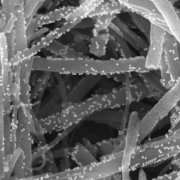
Professor Shaffer's team has demonstrated that the functional molecules are bound to, and uniformly distributed over, the surface of the CNTs. While the molecules are bound at relatively low densities, the degree of functionalisation is sufficient to offer benefits in industrial applications. The team has already demonstrated the attachment of catalytic metal particles, enhanced solubilities, and improved wetting with polymer matrices.
Professor Shaffer said: "The heat treatment to activate CNTs is compatible with some existing production technologies and can be easily adopted to work with others. Where the functional molecules to be added are volatile, the method can be carried out in the gas phase without the need for solvents, at any stage. The absence of solvent simplifies purification of the functionalised CNTs and, as many solvents used in wet-activation methods are corrosive and toxic, this option has environmental and hazard control benefits. It also has the advantage of being less damaging, less wasteful, and less time consuming than existing methods."
More information: A versatile, solvent-free methodology for the functionalisation of carbon nanotubes. Chemical Science 2010 DOI:10.1039/C0SC00287A
-
Carbon Nanotubes heralded as ideal candidates for next generation Nanoelectronics
Jul 14, 2008 |
not rated yet |
0
-
Reinforced racquets and heated wallpaper
May 18, 2006 |
not rated yet |
0
-
Honey, I shrunk the carbon nanotubes
Nov 14, 2006 |
not rated yet |
0
-
Study on cytotoxicity of carbon nanotubes
Dec 22, 2008 |
not rated yet |
0
-
Researchers enlist DNA to bring carbon nanotubes' promise closer to reality
Jul 08, 2009 |
not rated yet |
0
-
Engineers build first sub-10-nm carbon nanotube transistor
Feb 01, 2012 |
4.9 / 5 (31) |
30
-
Something old, something new: Evolution and the structural divergence of duplicate genes
Jan 31, 2012 |
4.6 / 5 (7) |
1
-
The hidden nanoworld of ice crystals: Revealing the dynamic behavior of quasi-liquid layers
Jan 30, 2012 |
5 / 5 (3) |
1
-
Stock market network reveals investor clustering
Jan 27, 2012 |
3.9 / 5 (23) |
8
-
Of microchemistry and molecules: Electronic microfluidic device synthesizes biocompatible probes
Jan 26, 2012 |
5 / 5 (1) |
0
-
polymer nanocomposites
15 hours ago
-
Corrosion Tests on Magnesium
Feb 09, 2012
-
polyethylene copper nanocomposite
Feb 09, 2012
-
Output of xrd analysis
Feb 08, 2012
-
Transport phenomena problem based on problems 18.B11 and 19B.6 from Bird, stewart, lw
Feb 06, 2012
-
Help with material selection - Car Piston
Feb 05, 2012
- More from Physics Forums - Materials & Chemical Engineering
More news stories
'Dark plasmons' transmit energy
Microscopic channels of gold nanoparticles have the ability to transmit electromagnetic energy that starts as light and propagates via "dark plasmons," according to researchers at Rice University.
23 hours ago |
5 / 5 (6) |
1
|
What lies beneath: Mapping hidden nanostructures
The ability to diagnose and predict the properties of materials is vital, particularly in the expanding field of nanotechnology. Electron and atom-probe microscopy can categorize atoms in thin sheets of material, ...
7 hours ago |
5 / 5 (1) |
1
New kind of solar cell could capture significantly more energy than current cells
New solar cells could increase the maximum efficiency of solar panels by over 25%, according to scientists from the University of Cambridge.
Feb 08, 2012 |
4.5 / 5 (12) |
14
|
Nanoshell whispering galleries improve thin solar panels
Visitors to Statuary Hall in the U.S. Capitol Building may have experienced a curious acoustic feature that allows a person to whisper softly at one side of the cavernous, half-domed room and for another on ...
Nanotechnology / Nanomaterials
Feb 07, 2012 |
4.3 / 5 (6) |
6
|
Nanotube therapy takes aim at breast cancer stem cells
Wake Forest Baptist Medical Center researchers have again proven that injecting multiwalled carbon nanotubes (MWCNTs) into tumors and heating them with a quick, 30-second laser treatment can kill them.
Nanotechnology / Bio & Medicine
Feb 09, 2012 |
5 / 5 (1) |
0
|
CIA website offline, Anonymous takes credit
The website of the Central Intelligence Agency was unresponsive on Friday after the hacker group Anonymous claimed to have knocked it offline.
Q&A: Obama and the birth control controversy
(AP) -- What birth control debate? A half-century after the introduction of the pill, acceptance of birth control by American women is virtually universal.
Complex wiring of the nervous system may rely on a just a handful of genes and proteins
Researchers at the Salk Institute have discovered a startling feature of early brain development that helps to explain how complex neuron wiring patterns are programmed using just a handful of critical genes. ...
The power of estrogen -- male snakes attract other males
A new study has shown that boosting the estrogen levels of male garter snakes causes them to secrete the same pheromones that females use to attract suitors, and turned the males into just about the sexiest ...
New error-correcting codes guarantee the fastest possible rate of data transmission
Error-correcting codes are one of the triumphs of the digital age. Theyre a way of encoding information so that it can be transmitted across a communication channel such as an optical fiber o ...
Humans may have helped the decline of African rainforests 3000 years ago
(PhysOrg.com) -- Large areas of rainforests in Central Africa mysteriously disappeared over three thousand years ago, to be replaced by savannas. The prevailing theory has been that the cause was a change ...
Aug 29, 2010
Rank: not rated yet
Aug 29, 2010
Rank: not rated yet
Aug 30, 2010
Rank: not rated yet
Some technologies involving nanotubes have begun deployment, but most are still in the research stage. I'd like to be able to buy a spool of nanotube thread, stronger than steel, but much lighter. However, last time I checked at the fabric shop, they didn't have any in stock. ;-) Seriously such thread is about ten years of research away, then another 14 years to spread into all the places it is useful.