Research on resting brains finds there's a lot going on even when 'idle'
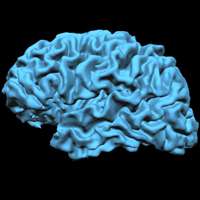
The resting brain is anything but idle -- that simple proposition would be clear if you could peer into Mike Mrazek's noggin as he putters around his kitchen preparing his daily morning feast of scrambled eggs, oatmeal and fresh fruit.
As he plods through his quotidian ritual of gathering ingredients, cutting, chopping, bringing the pan to the correct temperature and boiling water for tea, Mrazek's thoughts, too, are something of a scrambled feast, as he later recounts.
Childhood memories jostle against thoughts of his girlfriend's progress on a cross-country journey.
Reflections on the tomatoes in his garden give way to a rehearsal of a meeting he's having later on at the university.
A flashback to his sister teasing him about his breakfast routine turns into an observation he could make while leading a meditation session in the evening.
Until recently, scientists would have found little of interest in the purposeless, mind-wandering spaces between Mrazek's conscious breakfast-making tasks -- they were just the brain idling between meaningful activity.
But in the span of a few short years, they have instead come to view mental leisure as important, purposeful work -- work that relies on a powerful and far-flung network of brain cells firing in unison.
Neuroscientists call it the "default mode network."
Individually, the brain regions that make up that network have long been recognized as active when people recall their pasts, project themselves into future scenarios, impute motives and feelings to other people, and weigh their personal values.
But when these structures hum in unison and scientists have found that when we daydream, they do just that they function as our brain's "neutral" setting. Understanding that setting may do more than lend respectability to the universal practice of zoning out: It may one day help diagnose and treat psychiatric conditions as diverse as Alzheimer's disease, autism, depression and schizophrenia all of which disrupt operations in the default mode network.
Beyond that lies an even loftier promise. As neuroscientists study the idle brain, some believe they are exploring a central mystery in human psychology: where and how our concept of "self" is created, maintained, altered and renewed.
After all, though our minds may wander when in this mode, they rarely wander far from ourselves, as Mrazek's mealtime introspection makes plain.
That's in sharp contrast to the pattern struck by the brain when hard at work: In this mode, introspection is suppressed while we attend to pressing business -- we "lose ourselves" in work. As we do so, scientists see the default mode network go quiet and other networks come alive.
Neuroscientists have long resisted discussions of "self" as either hopelessly woolly headed or just too difficult to tackle, says Jonathan Schooler, a psychologist at the University of California-Santa Barbara who studies the wandering mind (with the assistance of Mrazek, a graduate student he advises).
But now, he says, research on the default mode network and mind-wandering has helped focus neuroscientists' attention on our rich inner world and raises the prospect that our sense of self, our existence as a separate being, can be observed, measured and discussed with rigor.
The idea that there may be a physical structure in the brain in which we unconsciously define who we are "would warm Freud's heart," says Dr. Marcus E. Raichle, a neurologist at Washington University in St. Louis who has pioneered work in this fledgling field. Sigmund Freud, the Austrian father of modern psychiatry, spoke exhaustively of the power of the unconscious mind in shaping our behavior and often surmised that the workings of that force would someday be revealed by scientists.
"People talk about the self and ask how it achieves some realization in the brain," Raichle says. The default mode network, he adds, "seems to be a critical element of that organization. It captures many of the features of how we think of ourselves as the self."
In the last two decades, neuroscientists have identified many regions of the brain that are activated during purposeful tasks -- when we count, navigate our environment, process input from our senses or perform complex motor skills.
But until very recently, the ebb and flow of thoughts -- the stream of consciousness that makes Mrazek human and whose content is unique to him among humans -- was the dead zone. Like geneticists who for years dismissed genetic material with no known function as "junk DNA," neuroscientists spent years dismissing the "idle" brain as just that: idle, its content just so much meaningless filler.
But in 2001, Raichle and his team began publishing neuroimaging studies that suggest something different.
During tasks requiring focused attention, regions specialized to the tasks at hand became active in the subjects whose brains were being scanned. But as those men and women mentally relaxed between tasks inside the scanners, Raichle saw that the specialized regions went quiet -- and a large and different cluster of brain structures consistently lighted up.
Raichle was particularly interested in a portion of the brain called the medial parietal cortex as a sort of central hub of this activity. He knew the area tended to become active when a person recalled his past.
And his work uncovered another key node in this curious circuit: the medial prefrontal cortex, a uniquely human structure that comes alive when we try to imagine what others are thinking.
Each region, Raichle realized, had a feature in common -- it was focused on the self, and on the personal history and relationships by which we define ourselves as individuals.
As studies continued, scientists noticed some interesting facts.
They saw that the brain parts constituting the default mode network are uniquely vulnerable to the tangles, plaques and metabolic disturbances of Alzheimer's disease -- an illness that starts by stealing one's memory and eventually robs its victims of their sense of self.
This, Raichle and colleagues would argue, suggests how important the default mode network is in making us who we are.
They saw that when operating, this network guzzles fuel at least as voraciously as do the networks that are at work when we engage in hard mental labor. That, along with other evidence, suggests to Raichle that when the default mode network is engaged, there's more than a mental vacation taking place.
So what is it doing?
Raichle suspects that during these moments of errant thought, the brain is forming a set of mental rules about our world, particularly our social world, that help us navigate human interactions and quickly make sense of and react to information -- about a stranger's intentions, a child's next move, a choice before us -- without having to run a complex and conscious calculation of all our values, expectations and beliefs.
Raichle says such mental shortcuts are necessary because the brain cannot possibly take in all the detail available to our senses at any given moment. The default mode network, he proposes, keeps a template handy that lets us assume a lot about ourselves and the people and environment we interact with.
Raichle points to another odd distinction of the default mode network -- one that suggests it plays a central role in our functioning. Its central hub has two separate sources of blood supply, making it far less vulnerable than most other regions of the brain to damage from a stroke.
"That's an insurance policy: This area is critically important," he says.
Neuroscientists suspect that the default mode network may speak volumes about our mental health, based on studies in the last three years that suggest it is working slightly differently in people with depression, autism and other disorders.
That fact underscores a point: Just as sleep appears to play an important role in learning, memory consolidation and maintaining the body's metabolic function, some scientists wonder whether unstructured mental time -- time to zone out and daydream -- might also play a key role in our mental well-being. If so, that's a cautionary tale for a society that prizes productivity and takes a dim view of mind-wandering.
Such social pressure, Schooler says, overlooks the lessons from studies on the resting brain -- that zoning out and daydreaming, indulged in at appropriate times, might serve a larger purpose in keeping us healthy and happy.
"People have this fear of being inadequately engaged, and as a consequence they overlook how engaging their own minds can be," Schooler says. "Each one of us can be pretty good company to ourselves if we allow our minds to go there."
MALFUNCTIONING BRAIN ACTIVITY CAN BE DIFFERENTIATED IN PEOPLE WITH DEPRESSION, AUTISM, SCHIZOPHRENIA AND PTSD, STUDIES SHOW
A series of studies published in recent years suggests that in people with depression, autism, schizophrenia and post-traumatic stress disorder, the default mode network, that curious pattern of brain activity that ramps up when we daydream, works differently than it does in healthy control subjects.
And in each condition, the malfunctions look slightly different, holding out the prospect of better psychiatric diagnoses down the line.
In the case of schizophrenia, researchers from Harvard University and MIT found that the default mode network is overactive and faultily wired. Writing in the Proceedings of the National Academy of Sciences in 2009, they surmised that the ability of schizophrenics to focus on and respond to external realities was being overwhelmed by their inner stream of consciousness.
In depression, the default mode network also appears to be overactive: Several brain-scan studies have shown a pattern in depression of balky transitions from introspective thought to work that requires conscious effort and frequent slippage into the default mode during cognitive tasks.
Studies show plenty of poor wiring as well. In one paper published last year, brain scans of subjects seeking first-time treatment for depression showed especially weak links between the default mode network and a region involved in motivation and reward-seeking behavior.
Wiring abnormalities also were reported in June by a group led by Dr. Marcus E. Raichle, a neurologist at Washington University in St. Louis and a pioneer in research on the default mode network. The study, in people with depression, found the default mode network to be "hot-wired" to brain regions that process emotions or help focus attention on demanding mental tasks and that connections over-fire or fire unreliably.
The excessive crosstalk among those regions might account for the common symptoms of emotional hypersensitivity and lack of concentration in depression, the authors wrote. In healthy people, attending to mental labor will suppress the default mode network, letting a person "lose himself in his work," Raichle says. But in those with depression, he adds, the network is not so easily suppressed. There is no escape from the self.
The idea that there may be a powerful link between the brain at rest and psychiatric illness doesn't tell us which comes first. Does too little (or too much) downtime predispose us, say, to depression? Or does corrosive depression strip our brain's gears so that instead of engaging in more productive activities, we keep getting "stuck" in neutral?
But whichever way it is, observations like these point to a future in which psychiatrists may be able to diagnose and treat developing and full-blown mental illness by looking at how the brain idles.
"Five minutes in an fMRI scanner can yield very interesting information" on a patient, says Yale psychiatrist Godfrey Pearlson, author of a study on schizophrenia and the brain's resting state. Pearlson speculates that for a patient impaired by delusions but not yet fully psychotic, a peek at the function of his brain in neutral could help a psychiatrist see he's in need of early intervention.
For a patient whose ability to communicate is hampered, say, by autism, a scan of the resting brain could reveal whether a treatment already underway is working.
(c) 2010, Los Angeles Times.
Distributed by McClatchy-Tribune Information Services.


