Cockroach brains could be rich stores of new antibiotics
September 6, 2010
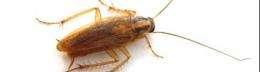
(PhysOrg.com) -- Cockroaches could be more of a health benefit than a health hazard according to scientists from The University of Nottingham.
Experts from the School of Veterinary Medicine and Science have discovered powerful antibiotic properties in the brains of cockroaches and locusts which could lead to novel treatments for multi-drug resistant bacterial infections. They found that the tissues of the brain and nervous system of the insects were able to kill more than 90 per cent of MRSA and pathogenic Escherichia coli, without harming human cells.
Simon Lee, a postgraduate researcher presented their work at the Society for General Microbiology’s autumn meeting which is being held at The University of Nottingham between the 6 and 9 September 2010. The research has identified up to nine different molecules in the insect tissues that were toxic to bacteria.
Simon Lee said: “We hope that these molecules could eventually be developed into treatments for E. coli and MRSA infections that are increasingly resistant to current drugs. These new antibiotics could potentially provide alternatives to currently available drugs that may be effective but have serious and unwanted side effects.”
Dr Naveed Khan, an Associate Professor of Molecular Microbiology who is supervising Simon Lee’s work said: “Superbugs such as MRSA have developed resistance against the chemotherapeutic artillery that we throw at them. They have shown the ability to cause untreatable infections, and have become a major threat in our fight against bacterial diseases. Thus, there is a continuous need to find additional sources of novel antimicrobials to confront this menace.”
Using state-of-the-art analytical tools, Dr Khan and his team are studying the specific properties of the antibacterial molecules. Research is currently underway to test the potency of these molecules against a variety of emerging superbugs such as Acinetobacter, Pseudomonas and Burkholderia.
Mr Lee explained why it is unsurprising that insects secrete their own antimicrobials. He said: “Insects often live in unsanitary and unhygienic environments where they encounter many different types of bacteria. It is therefore logical that they have developed ways of protecting themselves against micro-organisms.”
-
Running out of treatments: The problem superbugs resistant to everything
Apr 01, 2008 |
not rated yet |
0
-
'Healing clays' show promise for fighting deadly MRSA superbug infections, other diseases
Apr 07, 2008 |
not rated yet |
0
-
Marijuana ingredients show promise in battling superbugs
Sep 08, 2008 |
not rated yet |
0
-
Backstabbing bacteria: A new treatment for infection?
Sep 06, 2010 |
not rated yet |
0
-
New antibiotic beats superbugs at their own game
Jul 03, 2008 |
not rated yet |
0
-
Engineers build first sub-10-nm carbon nanotube transistor
Feb 01, 2012 |
4.9 / 5 (29) |
30
-
Something old, something new: Evolution and the structural divergence of duplicate genes
Jan 31, 2012 |
4.6 / 5 (7) |
1
-
The hidden nanoworld of ice crystals: Revealing the dynamic behavior of quasi-liquid layers
Jan 30, 2012 |
5 / 5 (3) |
1
-
Stock market network reveals investor clustering
Jan 27, 2012 |
3.9 / 5 (23) |
8
-
Of microchemistry and molecules: Electronic microfluidic device synthesizes biocompatible probes
Jan 26, 2012 |
5 / 5 (1) |
0
-
Science behind the bore feeling?
3 hours ago
-
Homo Sapien vs. Chimpanzee - Divergence Timeline
8 hours ago
-
a single mRNA strand is attached to sevaral ribosomes?
Feb 08, 2012
-
Oestrogen and FSH
Feb 07, 2012
-
Linear Blood Vessel Network Examples in Animals or Plants
Feb 07, 2012
-
Neuroscientists: What is a Principal Cell Layer?
Feb 06, 2012
- More from Physics Forums - Biology
More news stories
Deciding to go left or right: Researchers use device to determine that lower animals can navigate too
For decades, scientists have associated binary decision making opting to go left or right with higher-ranking animals, including humans. A team of Harvard researchers, however, is rewriting that ...
21 minutes ago |
not rated yet |
0
|
New Zealand team finds early plant arrivers dominated landscape
(PhysOrg.com) -- It seems intuitive that not all plant species could have taken a foothold on land at the same time all those millions of years ago as conditions on Earth evolved to the point where they could survive; some ...
Midges 'actively spread' bluetongue epidemic
The midges that spread bluetongue, a devastating livestock disease, across Europe in 2006 werent passengers on the wind but actively transported the disease, Oxford University scientists ...
1 hour ago |
not rated yet |
0
Hunting could hurt genetic diversity of sandhill cranes, research suggests
(PhysOrg.com) -- As Wisconsin lawmakers debate whether to establish a hunting season for sandhill cranes, they may want to consider more than just the sheer number of birds, suggests a University of Wisconsin-Madison ...
21 minutes ago |
not rated yet |
0
Life in Antarctic lake? It's everywhere else
If scientists find microbes in a frigid lake two miles beneath the thick ice of Antarctica, it will illustrate once again that somehow life finds a way to survive in the strangest and harshest places.
4 hours ago |
1 / 5 (1) |
0
Black holes and star formation
(PhysOrg.com) -- It has long been recognized that galaxy mergers or even close interactions can play a vital role in shaping the morphology of galaxies. One way they can do so, it is thought, is by triggering ...
New target for Alzheimer's drugs
(Medical Xpress) -- Biomedical scientists at the University of California, Riverside have identified a new link between a protein called beta-arrestin and short-term memory that could open new doors for the ...
Chemists harvest light to create 'green' tool for pharmaceuticals
(PhysOrg.com) -- A team of University of Arkansas researchers, including an Honors College undergraduate student, has created a new, "green" method for developing medicines. The researchers used energy from ...
Researchers develop gene therapy to boost brain repair for demyelinating diseases
(Medical Xpress) -- Our bodies are full of tiny superheroesantibodies that fight foreign invaders, cells that regenerate, and structures that ensure our systems run smoothly. One such structure is myelina ...
Distorting the lens
(PhysOrg.com) -- One of the most bizarre predictions of Einstein's Theory of General Relativity is the existence of back holes, objects that are so dense that not even light can escape from their gravitational ...
Why staying warm in winter is a bit more complicated if you're a lizard
Recent studies at the ISIS neutron source, the Science and Technology Facilities Councils (STFC) world leading research centre, have given a new insight into the mysterious anti-freeze capabilities ...
Sep 06, 2010
Rank: 5 / 5 (1)
Sep 06, 2010
Rank: not rated yet