Stanford land-use expert brings satellite data down to Earth
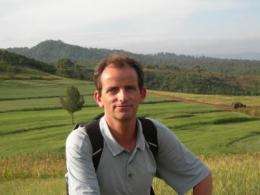
By integrating remote satellite imagery with revelations from door-to-door interviews, Stanford University geographer Eric Lambin and his colleagues are exploring the complex conditions that give rise to a broad range of land-use challenges - from the reforestation of Vietnam to the spread of Lyme disease in Belgium.
For decades, orbiting satellites have peered downward to gather information about the surface of the Earth, giving scientists an unprecedented view of the planet. Using this data, researchers have created maps of deforestation and other land-use changes over time.
Satellites are precise tools, able to measure the rate of photosynthesis in a tiny clump of trees in the heart of the Amazon Basin. But satellite technology reveals little about the people living beneath the canopy who decide the fate of the trees around them. For a deeper understanding of how and why humans alter their environment, researchers need to talk face-to-face with the people who live there.
"We really need a meeting between land-use studies and these new sources of information, like digital satellites," said Lambin, a professor of environmental Earth system science and a senior fellow at Stanford's Woods Institute for the Environment.
Through surveys and interviews, Lambin has uncovered the political, economic and social forces that contribute to the protection or destruction of forests and deserts across the globe.
"I develop integrated approaches to study land-use change by linking remote sensing and socioeconomic data," said Lambin, who divides his time between Stanford and the University of Louvain in Belgium, where he is a professor of geography. "To what extent do people have the technology or the knowledge to make the right land-use decisions? You can only answer that sort of question by interviewing people on the ground. You can't see that by satellite."
Reforestation and the secret furniture trade
Lambin has recently focused on land-use success stories - countries that have fostered the growth of forests or other wild spaces within their borders. "As you focus on the good news, you can find some political lessons that can be really useful for other countries," he said.
He first cast his magnifying glass on Vietnam. In the early 1990s, after an intense period of deforestation, a net reforestation occurred in the mountains that cover two-thirds of the country.
At the local level, the return of woodlands often stems from environmental awareness, Lambin said. "Farmers clear a watershed, then their fields get flooded, so they quickly understand the need to maintain forest cover," he explained. "Interviews with farmers in several Vietnamese villages revealed that land scarcity provided a strong incentive for the sound management of forests on hillsides."
On a larger scale, a suite of economic and social variables - not conservation ethics - gives rise to reforestation, he said. For example, when a country undergoes industrialization, farmers leave their paddies to find work in city factories. Soon, trees return to the abandoned farms.
While studying reforestation trends in Vietnam, Lambin read in a newspaper article that the country's furniture exports had quintupled from 1987 to 2006. He was mystified how a country with so little logging could produce so many couches and chairs.
He soon discovered that Vietnam wasn't using less wood overall, just less native wood. It turned out that most Vietnamese timber was coming from neighboring countries, such as Laos or Cambodia, where environmental laws are more lax. And nearly half of Vietnam's lumber imports were illegal, making them difficult to track and regulate, he said.
Global warming tools
The results of the Vietnam forestry study could have a significant impact on international efforts to combat global warming, Lambin said. The United Nations has proposed using "forest credits" as a tool to curb greenhouse gas emissions. The program would allow industries to emit carbon dioxide if they agree to fund the protection of woodlands in the developing world.
The ability to understand subtle land-use complexities, such as Vietnam's illegal lumber trade, may determine whether such programs succeed, Lambin said. "Land- use change is increasingly controlled by global forces, which are not completely controlled by individual countries," he added.
Even if two countries adopt the same environmental policies, they don't necessarily get the same results, he said. Differences in ecology, economic trends or even the motivation of individual farmers can mean that one country's forests flourish while the other's dwindle.
"Policymakers like simple, neat solutions," he said. "They tend to assume that one issue is caused by one set of factors, and, therefore, you need to apply the same remedies in all situations."
Disease in a changing world
Lambin has taken his research a step further by exploring the relationship among land, humans and disease-carrying parasites, such as ticks and mosquitoes.
In Belgium, Lyme disease is common among the urban middle class but rare among the rural poor, Lambin said. The ticks that carry Lyme disease run free in parks and forests where people jog or bike but not in farmlands. However, Belgian farmers are more likely to contract a type of Hantavirus that lies in wait in soil dust, he added.
In northern Thailand, when loggers chop down trees, the forest opens and the puddles that breed malaria-causing mosquitoes evaporate, he said. When the deforested areas are converted into fruit orchards, the malarial mosquitoes are replaced by a different species that carries dengue fever - the leading cause of hospitalization and death among Thai children.
Using satellite land-cover maps, epidemiological data and surveys of farming households, Lambin and his colleagues concluded that the shift from malaria to dengue fever was in large part caused by the presence of fruit workers in what had been a remote forest. "As you change land use, you're changing the habitat of the mosquito," he explained. "But most importantly, you're changing where people go and at what time of the day."
For Lambin, diseases are one more example of the complexities hidden within the static pixels of satellite images. "When you have so many variables interacting, the outcome is always contextual," he said. "The time is ripe for an overarching theory of land change that explains the behavior of people as well as land use."
Provided by Stanford University


