In order to save biodiversity, society’s behaviour must change
September 9, 2010
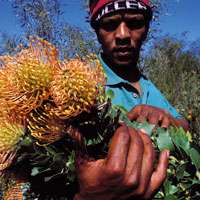
Photo credit: Juan Pablo Moreiras of Fauna & Flora International
(PhysOrg.com) -- Leading conservationists warn that in order to save biodiversity, society's behaviour must change.
An innovative grouping of conservation scientists and practitioners have come together to advocate a fundamental shift in the way we view biodiversity. In their paper, which was published today in the journal Science, they argue that unless people recognise the link between their consumption choices and biodiversity loss, the diversity of life on Earth will continue to decline.
Dr Mike Rands, Director of the Cambridge Conservation Initiative and lead author of the paper, said: "Despite increasing worldwide conservation efforts, biodiversity continues to decline. If we are to make any kind of impact, it is critical that that we begin to view biodiversity as a global public good which provides such benefits as clean air and fresh water, and that this view is integrated not just into policies but also into society and individuals' day-to-day decisions."
The conservationists, from conservation organisations as well as academia, recognise that biodiversity loss is typically the result of unintended human actions and therefore raises unique difficulties. They state, "The impacts of a particular action are often distant in space and time. This makes effective regulation difficult, as no single body has jurisdiction over the world's biodiversity."
As part of a solution, the authors advocate managing biodiversity as a global public good. They argue that an appreciation of biodiversity as a public good with economic and societal value, providing benefits that far outweigh the cost of conserving ecosystems, should be central to all policy making that impacts on the environment.
They believe it is essential that biodiversity not be considered in isolation as part of the nation's environmental agenda, but must extend across all sectors of government from treasury to defence. This is especially important as some of the policies that most damage biodiversity, such as agricultural, transport and energy subsidies, are not overseen by most governments' environmental regulators.
Internationally, they stress the need for greater support to conservation efforts in developing countries that are rich in biodiversity, including the crucial task of building institutional capacity (the strengthening of the institution through improved regulations, governance and organisational support)
They advocate for economists and conservationists to work more closely together with policy makers to develop strategies that use incentives and regulations to shift individuals, governments, businesses and civil society toward more biodiversity-friendly behaviour.
Dr Rands continued: "Valuing biodiversity is vital to changing the way we view this important resource. Because we have received the benefits of biodiversity for free, we take it for granted. The costs of conserving biodiversity are massively outweighed by the benefits. As the United Nations General Assembly meets for a special session to discuss biodiversity, this is an especially timely and important message for world leaders to take on board.
"It is critical we incorporate the view of biodiversity as natural capital into management decisions and, more importantly, public policies which reward positive individual actions and penalize negative ones."
The paper emphasises this point, stating, "The value of biodiversity must be made an integral element of social, economic and political decision-making, as is starting to happen with carbon and climate change. Government, businesses, and civil society all have crucial roles in this transition."
Currently, the key pressures driving biodiversity loss are the degradation, fragmentation and destruction of habitats, pollution, overexploitation of species, invasive species and climate change.
As these pressures on biodiversity increase, the number of species faced with extinction continues to rise, with 21 per cent of all known mammals, 30 per cent of all known amphibians, and 12 per cent of all known birds under threat. Additionally, nearly a quarter of plant species are believed to be at risk.
More information: The paper 'Biodiversity Conservation: Challenges Beyond 2010' by Rands MRW, Adams WM, Bennun L, Butchart SHM, Clements A, Coomes D, Entwistle A, Hodge I, Kapos V, Scharlemann JPW, Sutherland WJ & Vira B will be published in the 10 September 2010 edition of Science.
-
The broken biodiversity promise
Apr 29, 2010 |
not rated yet |
0
-
Study: World governments fail to deliver on 2010 biodiversity target
May 07, 2010 |
not rated yet |
0
-
Making protected areas pay biodiversity dividends
Mar 18, 2008 |
not rated yet |
0
-
Study finds future 'battlegrounds' for conservation very different to those in past
Feb 28, 2008 |
not rated yet |
0
-
Global warming may bring mass species loss
Apr 11, 2006 |
not rated yet |
0
-
Engineers build first sub-10-nm carbon nanotube transistor
Feb 01, 2012 |
4.9 / 5 (31) |
30
-
Something old, something new: Evolution and the structural divergence of duplicate genes
Jan 31, 2012 |
4.6 / 5 (7) |
1
-
The hidden nanoworld of ice crystals: Revealing the dynamic behavior of quasi-liquid layers
Jan 30, 2012 |
5 / 5 (3) |
1
-
Stock market network reveals investor clustering
Jan 27, 2012 |
3.9 / 5 (23) |
8
-
Of microchemistry and molecules: Electronic microfluidic device synthesizes biocompatible probes
Jan 26, 2012 |
5 / 5 (1) |
0
-
Protease cleavage
2 hours ago
-
Pertubance in a model
9 hours ago
-
Cancer drugs and Alzheimer's, Oh my!
17 hours ago
-
Squishing cells
17 hours ago
-
Any books/articles for evolutionary stable strategy models in humans?
Feb 09, 2012
-
Science behind the bore feeling?
Feb 09, 2012
- More from Physics Forums - Biology
More news stories
The power of estrogen -- male snakes attract other males
A new study has shown that boosting the estrogen levels of male garter snakes causes them to secrete the same pheromones that females use to attract suitors, and turned the males into just about the sexiest ...
7 hours ago |
5 / 5 (3) |
0
|
Experts reveal how plants don't get sunburn
(PhysOrg.com) -- Experts at the University of Glasgow have discovered how plants survive the harmful rays of the sun.
7 hours ago |
5 / 5 (2) |
0
|
Protein libraries in a snap
(PhysOrg.com) -- A Rice University undergraduate will depart with not only a degree but also a possible patent for his invention of an efficient way to create protein libraries, an important component of biomolecular ...
10 hours ago |
5 / 5 (2) |
0
|
Grass to gas: Researchers' genome map speeds biofuel development
Researchers at the University of Georgia have taken a major step in the ongoing effort to find sources of cleaner, renewable energy by mapping the genomes of two originator cells of Miscanthus x giganteus, a large perenn ...
4 hours ago |
3.7 / 5 (3) |
0
|
Miami battling invasion of giant African snails
No one knows how they got there. But an invasion of African giant snails has southern Florida in a panic over potential crop damage, disease and general yuckiness surrounding the slimy gastropods.
11 hours ago |
not rated yet |
2
CIA website offline, Anonymous takes credit
The website of the Central Intelligence Agency was unresponsive on Friday after the hacker group Anonymous claimed to have knocked it offline.
Q&A: Obama and the birth control controversy
(AP) -- What birth control debate? A half-century after the introduction of the pill, acceptance of birth control by American women is virtually universal.
Complex wiring of the nervous system may rely on a just a handful of genes and proteins
Researchers at the Salk Institute have discovered a startling feature of early brain development that helps to explain how complex neuron wiring patterns are programmed using just a handful of critical genes. ...
New error-correcting codes guarantee the fastest possible rate of data transmission
Error-correcting codes are one of the triumphs of the digital age. Theyre a way of encoding information so that it can be transmitted across a communication channel such as an optical fiber o ...
Humans may have helped the decline of African rainforests 3000 years ago
(PhysOrg.com) -- Large areas of rainforests in Central Africa mysteriously disappeared over three thousand years ago, to be replaced by savannas. The prevailing theory has been that the cause was a change ...
Curry spice component may help slow prostate tumor growth
Curcumin, an active component of the Indian curry spice turmeric, may help slow down tumor growth in castration-resistant prostate cancer patients on androgen deprivation therapy (ADT), a study from researchers ...
Sep 09, 2010
Rank: 1 / 5 (3)
stagnation is not conservation...
but it IS a wonderful way to bankrupt and make jobs over a futility
Sep 09, 2010
Rank: not rated yet
Not everything is economics.
Sep 09, 2010
Rank: 1 / 5 (2)
Sep 10, 2010
Rank: 1 / 5 (1)
This is the exact same situation. Right now we are driving without a seatbelt when it comes to our environmental impact on the planet. We do not know what the impacts will be one way or another. Probably nothing terrible will come of it, but do you know for sure? The fact is we don't know the impacts we are having in the long term yet.
It would be better to be safe then sorry, as being safe does NOT require dramatic social and civilizational restructuring or change as some people may claim. It simply requires us to be more aware of the day to day impacts our actions and decisions have on the world around us.
To say that these issues are definitively non-issues is to forget to wear your seatbelt.
Sep 10, 2010
Rank: not rated yet
Sep 10, 2010
Rank: 1 / 5 (1)
Hard to fill up with it on! :)