CeBIT 2005: Sound Added to Text Messages for Talking Images
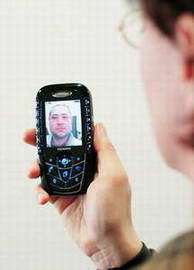
Soon it may be possible to send short messages as audio documents with animations created by the sender. As a supplement to text messaging and MMS, Siemens has developed the Animated Instant Voice Message, which is being introduced at CeBIT in Hanover.
To create one of these messages, users photograph themselves with a cell phone camera and record their message with the dictation function. When the message is sent, the audio document is transmitted along with the image.
In conjunction with the text to which sound has been added, the person receiving the message is presented with the illusion of a live video broadcast, because the program automatically recognizes the lips in the image and moves them in sync with the text.
Alternatively, the user can select one of a number of fantasy characters to convey the message.
The messages are sent via the standardized multimedia transmission technology IMS (IP Multimedia Subsystem). With IMS, operators of cell phone networks can offer a large number of voice, multimedia, and data services on the basis of the Internet protocol (IP). This technology is already being used in the well-known walkie-talkie service "Push to Talk."


