The chemistry of popcorn: It's all about 'pop-ability'
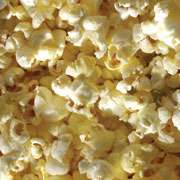
If you took a survey of life’s small annoyances, surely those unpopped kernels at the bottom of the popcorn bag would rank high on the list. But perhaps not for long.
“We think the secret to maximizing ‘pop-ability’ is found in the special chemistry of the corn kernel,” says food chemist Bruce Hamaker, Ph.D., of Purdue University in West Lafayette, Ind. Hamaker is part of a team of scientists at the school who have identified a key crystalline structure in popcorn that appears to determine its popping quality. The finding could lead to a better microwave popcorn variety with fewer or no unpopped kernels, they say.
The study is scheduled to appear in the July 11 print version of the American Chemical Society’s BioMacromolecules, a peer-reviewed journal, and was published in the online version of the journal April 7. ACS is the world’s largest scientific society.
Besides being a nuisance, unpopped kernels, also called “old maids,” can break teeth, destroy fillings and cause choking. Manufacturers have tried to reduce the number of unpopped kernels through trial and error breeding of the better performing corn kernels, but the problem persists, especially in microwave popcorn. Now, science has come to the rescue.
“Through this study, we now have a better understanding of the science behind why unpopped kernels occur and how we can use this knowledge to go about reducing their number,” says Hamaker, who is director of Purdue’s Whistler Center for Carbohydrate Research.
Hamaker and his associates analyzed 14 different genetic varieties of yellow popcorn and compared their microwave popping performance. Using the same experimental conditions, they determined that the number of unpopped kernels ranged from 4 percent (best) to 47 percent (worst), depending on the variety. The researchers then analyzed the properties of the better performing kernels to determine which factors contributed to their outcome.
They found that the key factor that appears to influence popping quality is the chemical structure of the pericarp, or outer hull, which is composed partly of cellulose (a polymer of glucose). During heating, the corn pericarp acts like a pressure cooker that locks moisture inside the corn kernel. The heated moisture leads to a pressure buildup until the kernel eventually ruptures and pops, essentially turning the kernel inside out and producing the fluffy white product that we eat.
In the best popping kernels, the pericarp is composed of a stronger, more highly ordered crystalline arrangement of the cellulose molecules than the pericarp of the poorer performing varieties, according to Hamaker and crystallographer Rengaswami Chandrasekaran, one of the team members. In laboratory studies, the researchers demonstrated that these stronger crystalline structures tend to maximize moisture retention, leading to a more complete rupture and fewer unpopped kernels.
“We believe that the amount and location of the cellulose component of the kernel are critical for crystallinity and think that this property can be transferred to corn kernels to improve their popping performance,” Hamaker says. “We’re not sure yet exactly how this will be achieved, but we’re optimistic that enterprising researchers will be able to do this in the near future.”
Possible techniques include selective breeding of those kernel varieties that best exhibit this optimal crystalline structure, chemical modification of corn kernels to produce the desired structure and even genetic engineering of the corn plant. If researchers are successful, the new microwave popcorn could be available to consumers in 3 to 5 years, Hamaker predicts.
Although the new popcorn will be slightly different chemically than conventional microwave popcorn, mainly from the presence of more cellulose, it will look and taste just like any other popcorn, he says. [h1]Although this study focused on microwave popcorn, the modified kernels will likely show improvements in popping quality using hot oil and hot air popping techniques, he says.
Popcorn manufacturers have already expressed strong interest in this research, which was funded by Purdue’s Whistler Center for Carbohydrate Research.
Source: American Chemical Society


