The airbag listens too
May 3, 2005 The airbag listens too

New airbag sensor recognizes the seriousness of a crash from the noise

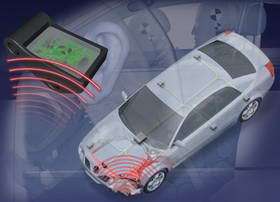
From 2007, airbags in our cars will start to listen: The automotive supplier Siemens VDO Automotive AG has developed a sensor that monitors the vibrations in the vehicle’s chassis. Thus an accident is heard early on and the seriousness of the accident can be assessed in just a few milliseconds. The airbag control unit then triggers the seatbelt tensioner and the necessary airbags in order to protect the passengers as well as possible.

As long as our cars are not in a position to avoid accidents completely, the electronics at least reduce the consequences of the accident to a minimum for the vehicle’s passengers. Seatbelt tensioners, and now a number of different airbags, are used in the interior. To enable the protective functions to be activated quickly, however, the first step is for the vehicle electronics to recognize the accident. Siemens VDO has been supplying crash sensors to almost all car manufacturers worldwide since 1996. At the moment, acceleration sensors are used to recognize an accident and pressure sensors are built into the automobiles for a quick reaction to side impact.

From 2007 onwards, a new sensor, which can also hear the accident, will be introduced to supplement the current options that have been tried and tested millions of times. With the Crash Impact Sound Sensor - CISS for short - working together with the airbag control unit, an accident can be recognized and the seriousness of the accident assessed even more quickly. Engineers exploit the fact that vehicle deformation depends on the seriousness and type of accident and leads to different impact sound waves. Together with the acceleration signals, these deformation noises produce a precise image of the accident and allow restraint systems to be triggered individually.

CISS will be fitted as additional sensors for the first time in 2007. For the future, Siemens VDO is planning to integrate the sensor in the airbag control unit so that the transmission of information within the vehicle and the installation of the safety system can progress even more quickly. At the same time, Siemens VDO is working on enhancing the vision of the “seeing automobile” and thus preventing accidents in advance.


Rate this story - 3 /5 (2 votes)


May 3, 2005 all stories

Comments: 0

3 /5 (2 votes)

  • hide
  • Related Stories

  • Accidental wireless: Wireless-based sensor system could SAVE lives
    created Feb 09, 2009 | popularity not rated yet | comments 0
  • Infineon Introduces Three New Automotive Electronics Sensors
    created Jun 11, 2004 | popularity not rated yet | comments 0
  • Artificial muscles restore ability to blink, save eyesight
    created Jan 18, 2010 | popularity not rated yet | comments 0
  • Car horns warn against natural disasters
    created Jul 20, 2009 | popularity not rated yet | comments 0
  • New way to make sensors that detect toxic chemicals
    created Jul 08, 2009 | popularity not rated yet | comments 0


Other News

The power of 'random'

The power of 'random': 'Seemingly loopy' technique could dramatically improve communications networks

Technology / Computer Sciences

created 14 hours ago | popularity 4.8 / 5 (8) | comments 5 | with audio podcast

A radical new approach to the design of communications networks, called "network coding," promises to make Internet file sharing faster, streaming video more reliable, and cell-phone reception better -- among ...


'Revolutionary' water treatment units on their way to Afghanistan

Technology / Engineering

created 9 hours ago | popularity 4.2 / 5 (5) | comments 3 | with audio podcast

The United States Army has taken delivery of the first two units of a "revolutionary" waste-water treatment system that will clean putrid water within 24 hours and leave no toxic by-products, according to scientists at Sam ...


Imec and Holst Centre achieve breakthrough in battery-less radios

Imec achieves breakthrough in battery-less radios

Technology / Semiconductors

created 9 hours ago | popularity 4.9 / 5 (9) | comments 0 | with audio podcast

At today's International Solid State Circuit Conference, Imec and Holst Centre report a 2.4GHz/915MHz wake-up receiver which consumes only 51µW power. This record low power achievement opens the door to battery-less ...


Android

Google developing a translator for smartphones

Technology / Software

created 15 hours ago | popularity 4.7 / 5 (7) | comments 3 | with audio podcast report

(PhysOrg.com) -- Google is developing a translator for its Android smartphones that aims to almost instantly translate from one spoken language to another during phone calls.


A general view of the arrival area of the Whistler Creek Alpine Skiing venue

Google Maps climbs to Olympic peaks

Technology / Internet

created 5 hours ago | popularity not rated yet | comments 0

Google sent snowmobiles rigged with cameras into Canadian mountains so folks snug and warm at home will get views of slopes at the Winter Olympic Games kicking off on Friday.