Smoothing Out Kinks in Electromagnetic Propulsion Will Bring Technology From Research to Practical Use
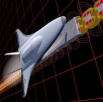
When electromagnetic propulsion was first demonstrated more than a century ago, it inspired science fiction dreams of rocket-less space launches, magnetic levitation (maglev) vehicles and super guns.
Many years later, electromagnetic propulsion, powered by electricity and magnetism rather than fiery chemical reaction, is a reality though not yet ready for government or commercial production. However, with a $5 million grant from the Department of Defense, scientists at the Georgia Institute of Technology and several partnering institutions are helping to bring the technology from research to practical use.
Electromagnetic propulsion, which can send an aircraft, satellite, shuttle, bullet or train zooming through the air or along a track, produces extreme temperatures and wear that create quite a challenge for researchers working to make devices that can be used consistently without becoming seriously damaged.
In other words, electromagnetic propulsion is so intense that it severely damages the guns and launchers that use it.
The heat and friction caused by electromagnetic propulsion is much different than traditional chemical acceleration (such as the explosion that propels a bullet from a gun) and is not yet fully understood. In fact, electromagnetic propulsion produces certain effects that currently defy scientific explanation.
To help solve this problem, researchers at Georgia Tech, Cornell University, North Carolina State University and Rensselaer Polytechnic Institute will collaborate on a joint research program, based at Georgia Tech, dedicated to studying the effects that very high electromagnetic stress can have on electromagnetic launchers. The diverse research group of 10 faculty members comes from the disciplines of tribology (the study of friction, wear and lubrication in surfaces in motion), physics, materials science, electrical engineering and mechanical engineering.
The program has received a $5 million, five-year grant to begin research to understand what materials, lubricants and designs are needed to reduce the damage caused by electromagnetic propulsion, specifically in a railgun — a gun with the potential to be more powerful than existing guns that use electromagnetic propulsion to fire a projectile. The grant was provided by the Department of Defense’s Multidisciplinary University Research Initiative and will be administered by Dr. Peter Schmidt of the Office of Naval Research.
Dr. Steven Danyluk, professor and Morris M. Bryan Jr. chair in Mechanical Engineering for Advanced Manufacturing Systems and director of the Manufacturing Research Center at Georgia Tech, is the principal investigator on the project. Dr. Richard Cowan, engineering manager at the Manufacturing Research Center, is a co-principal investigator and program manager on the project.
The research findings will be used to help the Navy develop powerful, yet reliable railguns that will be able to fire a projectile at six times the speed of sound, or up to 2.5 kilometers per second, for its next generation of electric battleships.
But the project’s findings can be applied to any electromagnetic device, including launchers and vehicles.
“This particular project, though it includes technology that the U.S. Navy and Army would like to have, can be used not only for guns, but also in electromagnetic launchers for satellites or the sliding of maglev vehicles,” Danyluk said.
Source: Georgia Institute of Technology


