Free-electron laser targets fat
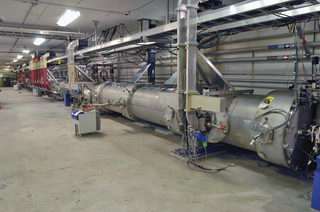
Fat may have finally met its match: laser light. Researchers at the Wellman Center for Photomedicine at Massachusetts General Hospital, Harvard Medical School and the Department of Energy's Thomas Jefferson National Accelerator Facility (Jefferson Lab) have shown, for the first time, that a laser can preferentially heat lipid-rich tissues, or fat, in the body without harming the overlying skin. Laser therapies based on the new research could treat a variety of health conditions, including severe acne, atherosclerotic plaque, and unwanted cellulite.
The result will be presented at the American Society for Laser Medicine and Surgery (ASLMS) 26th Annual Meeting in Boston, Mass.
In the first part of the study, the researchers used human fat obtained from surgically discarded normal tissue. Based on a fat absorption spectrum, tissue was exposed to a range of wavelengths of infrared laser light (800-2600 nanometers) using the Free-Electron Laser facility at Jefferson Lab. The researchers measured how selected wavelengths heated the fat and compared the result to a similar experiment conducted with pure water. At most infrared wavelengths, water is more efficiently heated by infrared light; however, the researchers found three wavelengths – 915, 1210 and 1720 nm – where fat was more efficiently heated than water.
The researchers then exposed fresh, intact pig skin-and-fat tissue samples, about two inches thick, to free-electron laser infrared light centered around the two most promising wavelengths, 1210 and 1720 nm. To imitate potential surgical conditions, the pig skin was placed next to a cold window, which mimicked the application of a cold compress to the skin prior to laser exposure. The researchers zapped samples with beams of infrared laser light ranging from eight to 17 mm wide for about 16 seconds. They found that the 1210 nm wavelength preferentially heated pig fat up to 1 cm deep, without damaging the overlying skin. At 1210 nm, laser-induced heating of fat was more than twice that of the overlying skin; at 1720 nm, it was about 1.7 times that of skin.
Rox Anderson, lead author on the study and a practicing dermatologist at Massachusetts General Hospital (MGH), says the results provide a proof of principle for the use of selective photothermolysis, selectively heating tissues with light, for several potential medical applications. Dr. Anderson is most excited about the potential for using lasers to target sebaceous glands. "The root cause of acne is a lipid-rich gland, the sebaceous gland, which sits a few millimeters below the surface of the skin," Anderson says, "We want to be able to selectively target the sebaceous gland, and this research shows that if we can build lasers at this region of the spectrum, we may be able to do that."
He says a selective laser treatment for acne could potentially replace the best acne drug, which is isotretinoin (commonly known as Accutane®). The drug has major side effects and has been linked to severe birth defects in children whose mothers have used it while pregnant. Just last month, the FDA initiated the iPledge program in an attempt to reduce the number of pregnancies in female patients on the drug. These patients cannot obtain or fill their prescription unless they pass an initial screening and two negative pregnancy tests. The program also requires patients to promise to use two forms of contraception and submit a negative pregnancy test result each month while on the drug.
Dr. Anderson also envisions that laser treatments could emerge for other medical conditions involving lipid-rich tissues, such as atherosclerosis, which causes heart disease and stroke. Fatty plaques form in arteries, rupture, and kill millions of people each year. A selective treatment that stabilizes lipid plaques could be much better than previous attempts at laser treatment for heart disease.
"We can envision a fat-seeking laser, and we're heading down that path now," Anderson says. The next step is to specifically develop these potential applications. If successful, new lasers capable of producing the appropriate wavelengths can be commissioned to target fat, sebaceous glands or plaques in patients. Dr. Anderson and other researchers at the MGH's Wellman Center in Boston have already contributed many laser therapies, including non-scarring skin treatments for birthmarks.
Anderson says this study was made possible by the physics knowledge that built the Free-Electron Laser (FEL) at Jefferson Lab and a grant from the Department of Defense for the exploration of medical uses for FELs. "The Jefferson Lab FEL is an energy-recovering machine that produces laser light at the right wavelengths and right power that we need to do this research. This is a bit of a plug for the value of these very high-energy, accelerator-based lasers for physics. Because, in fact, they allow us to do experiments we couldn't do otherwise," he explains.
Fred Dylla, FEL project manager, agrees. "The FEL has opened up a wide variety of research opportunities in all the sciences and is leading to great strides in applied research, such as defense technologies, medicine, and nanomaterials," Dylla says, "Every day, we're discovering new applications for the FEL."
The Jefferson Lab FEL is built on the same technology -- superconducting radiofrequency accelerator technology -- that drives the lab's CEBAF accelerator. CEBAF provides a nearly continuous beam of electrons for nuclear physics experiments. "The superconducting radiofrequency accelerator technology that the FEL is built on allows us to tune laser light through a wide range of frequencies, including the infrared, terahertz, and soon, ultraviolet. Traditional lasers don't have that capability; they can only provide light at one frequency."
Source: Thomas Jefferson National Accelerator Facility


