Japan eyes moon colonized by robots
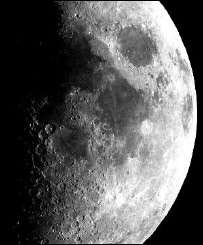
April 13, 2006 Earth\'s Moon

Japan plans to send robots to explore and set up a base on the moon, possibly within the next 10 years, officials said.

The Japan Aerospace Exploration Agency has formed a team of researchers to promote the exploration of the moon and planets in the solar system using robots. The agency also established a team specializing in the development of technology for the lunar-based robots, the Asahi Shimbun reported Thursday.

Japan will develop advanced robots which can operate exploration vehicles and make decisions on their own to build a base on the moon.

The exploration vehicles will be sent to the moon within 10 years, and the base completed within 20 years, officials said.

The agency also plans to launch the satellite Selene next year to orbit the moon.

Copyright 2006 by United Press International


print this article email this article download pdf blog this article bookmark this article     Stumble it Digg this share on Facebook retweet share on Reddit add to delicious
Rate this story - 4.4 /5 (17 votes)


April 13, 2006 all stories

Comments: 0

4.4 /5 (17 votes)
  • Stumble this up

  • Digg this

  • share this

  • hide
  • Related Stories

  • Robot Armada Might Scale New Worlds
    created Oct 28, 2009 | popularity not rated yet | comments 0
  • UBC engineering students unveil moon dust-shoveling robot
    created Oct 12, 2009 | popularity not rated yet | comments 0
  • Apollo 12 and Surveyor 3
    created Sep 03, 2009 | popularity not rated yet | comments 0
  • Beyond Apollo: Moon Tech Takes a Giant Leap
    created Apr 09, 2009 | popularity not rated yet | comments 0
  • NASA Tests Lunar Robots and Spacesuits on Earthly Moonscape
    created Jun 16, 2008 | popularity not rated yet | comments 0


Other News

Deep creep means milder, more frequent earthquakes along Southern California's San Jacinto fault

Deep creep means milder, more frequent earthquakes along Southern California's San Jacinto fault

Space & Earth / Earth Sciences

created 4 hours ago | popularity 4.7 / 5 (3) | comments 0

With an average of four mini-earthquakes per day, Southern California's San Jacinto fault constantly adjusts to make it a less likely candidate for a major earthquake than its quiet neighbor to the east, the ...


Success in 'space elevator' competition (AP)

Success in 'space elevator' competition (Update 3)

Space & Earth / Space Exploration

created Nov 05, 2009 | popularity 4.3 / 5 (33) | comments 50

(AP) -- A robot powered by a ground-based laser beam climbed a long cable dangling from a helicopter on Wednesday to qualify for prize money in a $2 million competition to test the potential reality of the ...


'Dropouts' pinpoint earliest galaxies

'Dropouts' pinpoint earliest galaxies

Space & Earth / Astronomy

created Nov 06, 2009 | popularity 4.2 / 5 (10) | comments 12

Astronomers, conducting the broadest survey to date of galaxies from about 800 million years after the Big Bang, have found 22 early galaxies and confirmed the age of one by its characteristic hydrogen signature ...


Space hotel taking bookings for 2012 opening

Space hotel taking bookings for 2012 opening

Space & Earth / Space Exploration

created Nov 05, 2009 | popularity 4.4 / 5 (20) | comments 11

(PhysOrg.com) -- The first orbiting space hotel is on track to open for its first customers in 2012, but hurry, as bookings are filling fast.


In a Galaxy Far, Far Away...

In a Galaxy Far, Far Away...

Space & Earth / Astronomy

created Nov 06, 2009 | popularity 4.8 / 5 (4) | comments 12

(PhysOrg.com) -- Astronomers have published the discovery of the farthest known object in the cosmos: a star that exploded when the universe was only 630 million years old -- only 4.6% of its current age. ...