Antarctic’s signature dish under threat
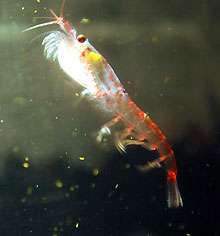
April 20, 2006 Antarctic waters teem with life thanks largely to krill. Photo: Rob King

Antarctic waters teem with life thanks largely to krill. Photo: Rob King

Scientists have begun work to help explain the population decline of the Southern Ocean's most important species — Antarctic krill. The small shrimp-like creatures underpin the Antarctic marine world as the staple diet for predators from penguins to whales.

Antarctic krill are found in great abundance throughout the Southern Ocean but their numbers have decreased by up to 70 percent since the 1970s.

Environmental toxicologist Dr Susan Bengtson Nash from the National Research Centre of Environmental Toxicology (EnTox), part of The University of Queensland's Faculty of Health Sciences, wants to find out why.

Dr Bengtson Nash has gone to the Norwegian Institute of Air Research to examine 10 kilograms of Antarctic krill to see if they've absorbed man-made pollutants.

She is testing for a variety of persistent organic pollutants (POPs) which are harmful chemicals that resist degradation and accumulate in the environment and in organisms.

"I'm looking at krill as the keystone species in Antarctic food webs," Dr Bengtson Nash said.

"Most larger species feed either opportunistically or solely on the krill swarms that form during summer months.

"If you remove that species then you'll also remove a lot of other species."

Once Dr Bengtson Nash identifies what chemicals are accumulating in the krill, she will conduct toxicity tests with live krill at the Australian Antarctica Division in Hobart.

She said many POPs were moving towards colder and colder climates such as the Earth's poles.

"Polar environments essentially act as sinks for these chemicals," Dr Bengtson Nash said.

"The Artic has proportionally higher concentrations of POPs than the Antarctic because historically these chemicals were primarily produced in the northern hemisphere."

Dr Bengtson Nash is four months into her three-year Australian Research Council Discovery project.

Source: University of Queensland


print this article email this article download pdf blog this article bookmark this article     Stumble it Digg this share on Facebook retweet share on Reddit add to delicious
Rate this story - 4.2 /5 (10 votes)


April 20, 2006 all stories

Comments: 0

4.2 /5 (10 votes)
  • Stumble this up

  • Digg this

  • share this

  • hide
  • Related Stories


Other News

Maya

New insights into the life of the Maya

Other Sciences / Archaeology & Fossils

created 7 hours ago | popularity 4.3 / 5 (3) | comments 6

(PhysOrg.com) -- Ancient artifacts are almost always concerned with rich and powerful religious and political leaders, but new excavations of an ancient Maya site have unearthed a pyramid decorated with murals ...


Study Pits Man v Machine in Piecing Together 425-Million Years Old Jigsaw

Study Pits Man v Machine in Piecing Together 425-Million Years Old Jigsaw

Other Sciences / Archaeology & Fossils

created 9 hours ago | popularity 4.3 / 5 (3) | comments 0

(PhysOrg.com) -- A new study pitting academic expertise against a computer in recreating a 425 million-year old jigsaw puzzle has discovered that there is no substitute for wisdom born out of experience.


Don't be happy, be worried: Sports fans need dose of negative

Other Sciences / Social Sciences

created 5 hours ago | popularity not rated yet | comments 0

For sports fans watching their favorite team play, the greatest enjoyment comes only with a strong dollop of fear and maybe even near-despair, a new study suggests.


Walking hazard: Cell-phone use -- but not music -- reduces pedestrian safety

Walking hazard: Cell-phone use -- but not music -- reduces pedestrian safety

Other Sciences / Social Sciences

created 6 hours ago | popularity not rated yet | comments 0

Two new studies of pedestrian safety found that using a cell phone while hoofing it can endanger one's health. Older pedestrians, in particular, are impaired when crossing a busy (simulated) street while speaking ...


The evolving manager stereotype: Gender a factor in measuring a team's performance

Other Sciences / Economics

created 5 hours ago | popularity not rated yet | comments 0

Although women have made strides in the business world, they still occupy less than two percent of CEO leadership positions in the Fortune 500. Not surprisingly therefore leaders still tend to be thought of as men and most ...