Missing lab mice infected with plague
September 15, 2005 Mouse

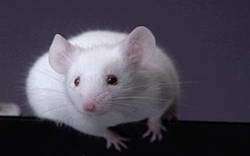
The FBI and New Jersey officials have started a hushed but intensive search for three missing lab mice reportedly infected with deadly strains of plague.

The mice were discovered missing from separate cages at a bioterrorism research facility in Newark more than two weeks ago, but the incident was only confirmed Wednesday by the Newark (N.J.) Star-Ledger.

The research lab, located at the University of Medicine and Dentistry of New Jersey, is operated by the Public Health Research Institute, a center for infectious disease research.

The mice reportedly were infected with the bacterium Yersinia pestis that causes bubonic and other forms of plague.

Scientists, however, said with modern antibiotics, plague can be treated if quickly diagnosed and is not the scourge that wiped out a third of Europe during the 14th century.

Richard Ebright, a Rutgers University microbiologist and a critic of the government's rapid expansion of bio-terrorism labs, said federal guidelines call for only minimal security at such laboratories -- a lock on the lab door and a lock on the sample container and cage.

"You have more security at a McDonald's than at some of these facilities," Ebright told the newspaper.

Copyright 2005 by United Press International


Rate this story - 3.8 /5 (16 votes)


September 15, 2005 all stories

Comments: 0

3.8 /5 (16 votes)

  • hide
  • Related Stories

  • Loss of epigenetic regulators causes mental retardation (w/ Video)
    created Jan 11, 2010 | popularity not rated yet | comments 0
  • Scientists discover a controller of brain circuitry
    created Dec 28, 2009 | popularity not rated yet | comments 0
  • Researchers identify drug candidate for treating spinal muscular atrophy
    created Nov 04, 2009 | popularity not rated yet | comments 0
  • Back to (brain) basics
    created Nov 03, 2009 | popularity not rated yet | comments 0
  • Stress-induced changes in brain circuitry linked to cocaine relapse
    created Oct 30, 2009 | popularity not rated yet | comments 0


Other News

Study challenges bird-from-dinosaur theory of evolution - was it the other way around?

Study challenges bird-from-dinosaur theory of evolution - was it the other way around?

Other Sciences / Archaeology & Fossils

created 9 hours ago | popularity 4.3 / 5 (8) | comments 4 | with audio podcast

(PhysOrg.com) -- A new study just published in the Proceedings of the National Academy of Sciences provides yet more evidence that birds did not descend from ground-dwelling theropod dinosaurs, experts say, a ...


'Counterfactual' thinkers are more motivated and analytical, study suggests

Other Sciences / Social Sciences

created 12 hours ago | popularity 4.4 / 5 (5) | comments 4 | with audio podcast

(PhysOrg.com) -- "If only I had..." Almost everyone has said those four words at some time. Rather than intensifying regret, '"what if" reflection about pivotal moments in the past helps people to weave a coherent life story, ...


The Glass Cliff: Female representation in politics and business

Other Sciences / Social Sciences

created 3 hours ago | popularity not rated yet | comments 0

Leadership positions in business have proven to be precarious for women. Female business leaders are more likely to be appointed to powerful leadership positions when an organization is in crisis or high-risk circumstances. ...


Office romance? Not a problem most of time: study

Office romance? Not a problem most of time: study

Other Sciences / Social Sciences

created 10 hours ago | popularity not rated yet | comments 1

(PhysOrg.com) -- Pam and Jim on The Office. Meredith and McDreamy on Grey's Anatomy. Television shows depict many workplace romances, but in the real world how do co-workers view love on the job? According ...


Women on board: Does forced diversity hurt firm performance?

Other Sciences / Social Sciences

created 10 hours ago | popularity 1 / 5 (1) | comments 1

(PhysOrg.com) -- New SEC rules will require public firms to disclose what role, if any, diversity plays in appointing members to their corporate boards, but University of Michigan researchers say any forced restructuring ...