More Intense Heat Waves Could Slam California's Energy Grid
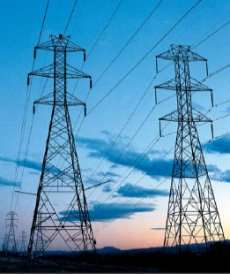
Climate change and rolling blackouts may be a package deal. More frequent and intense heat waves expected in California over the next 100 years could overburden the state’s electric utility grid, according to a study led by scientists in the U.S. Department of Energy’s Lawrence Berkeley National Laboratory.
“If a large area of California is hot and there is also demand on the energy grid throughout the western U.S., these conditions will likely lead to blackouts,” says Norm Miller, a Berkeley Lab climatologist who examined the impacts heat extremes will have on the Golden State’s energy demands.
Miller presented the study Sept. 15 at the 2nd Annual Climate Change Research Conference and the First Scientific Conference of the West Coast Governors’ Global Warming Initiative, which was held in Sacramento Sept. 14-16. The research is funded by the California Energy Commission and the California Environmental Protection Agency as part of the West Coast Governors’ Global Warming Initiative. In addition, Miller and colleagues are working on two other studies as part of the Governors’ Global Warming Initiative: an analysis of long-term, multi-decade droughts in California, and the likelihood of storm surges and flooding in Northern California's Sacramento-San Joaquin Delta region, where the Sacramento and San Joaquin rivers drain into the San Francisco Bay.
In the energy demand analysis — which was also conducted by Jiming Jin and Alan Sanstad of Berkeley Lab, Katharine Hayhoe of AtmosResearch Consulting, and Maxmilian Auffhammer of UC Berkeley — Miller’s team analyzed several greenhouse gas emission scenarios adopted by the Intergovernmental Panel on Climate Change, a United Nations-formed organization that informs the world's policymakers on climate change and impacts. They coupled these emission scenarios with observed heat wave trends in California, and determined that the onset of heat waves will come earlier each summer, and there will be more and longer lasting heat waves during future summers. In one scenario, for example, Los Angeles may experience up to six times more heat wave days each summer toward the end of this century.
This, in turn, will force people to crank up air conditioners and other residential cooling appliances, which could impose too much demand on the state’s electric utility grid. Miller’s analysis of projected heat extremes and energy demand indicates that in Los Angeles, there may be 7 times more occurrences when temperatures reach or exceed the threshold at which people turn on air conditioners. He found similar sharp increases in several other California cities including Sacramento, Modesto, and San Diego.
There’s no question that energy demand is on the rise. At present, world demand for energy is approximately equivalent to a continuous power consumption of 13 trillion watts (13 TW). An expected global population of 9 billion people and rapid technology growth is projected to more than double energy demand to 30 TW by 2050, and to more than triple demand to 46 TW by 2099 — even with aggressive conservation and energy efficiency.
Energy demand is also booming in the western U.S., where California, Nevada, and Arizona experienced record high temperatures in July of this year. In California, future electricity demand due to extreme temperatures during the summer is expected to approach 65,000 megawatts by 2010 from a demand of approximately 55,000 megawatts in the summer of 2004. This surge is due in part to a growing population statewide, and a housing boom in California’s Central Valley, which experiences hot summers. In fact, the residential sector is one of the fastest growing energy consumers in the state.
“Once it gets to about 80 degrees, there is an almost linear relationship between temperature and energy load,” says Miller. “The question then becomes how will the energy grid sustain all this.”
The answer lies in how the energy grid is managed. When California’s operating reserves fall below 7 percent, a stage 1 alert ensues. A stage 2 alert kicks in if operating reserves fall below 5 percent. And a stage 3 alert with rolling blackouts occurs when operating reserves dip below 3 percent. Miller cautions that if the western U.S. experiences a summer of widespread and prolonged heat extremes, then California’s operating reserves may very likely drop below 3 percent, leading to blackouts and adverse economic impacts.
But he also believes the future doesn’t have to be rife with rolling blackouts. Not included in his predictions are the adoption of energy efficient technologies and cultural adaptations that make people less reliant on the energy grid during warm spells, such as using fans instead of air conditioners.
“I have an optimistic view of the future,” says Miller. “We can offset energy demand by changing social behaviors and incorporating new technologies.”
Source: Lawrence Berkeley National Laboratory


