Ancient human fossils find modern virtual home
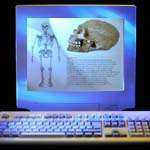
First discovered 150 years ago, Neanderthals have been studied more widely than any other form of human. Thanks to a new interactive inventory and online catalogue developed in Europe, scientists worldwide can now probe the secrets of this primitive relative from the comfort of their computer.
Neanderthal humans (Homo neanderthalensis) was once common throughout Europe, but died out some 30,000 years ago. Since the discovery of Neanderthal remains in Düsseldorf, Germany in 1856, archaeologists have unearthed its fossils at dozens of different excavation sites, including those in Croatia, Belgium, France and Germany.
“These extensive finds explain why most of the scientific analysis of human evolution has been done on Neanderthals,” says Heinz Cordes, coordinator of the IST project TNT, which stands for The Neanderthal Tools.
After 24 months of work, the project partners have set up the world’s leading scientific network on Neanderthal research. Called the Neanderthal Studies Professional Online Service (NESPOS), it contains an impressive and growing collection of texts and digitised Neanderthal remains such as skulls, teeth and tools.
“Our database now includes 60 per cent of the major excavation sites, 800 human fossil items from 35 archaeological sites and 200 specimens provided by third parties cooperating with the project,” says Cordes of TNT’s core application.
The recently created NESPOS Society is taking over all of the project results and will run the project-developed software and offer it to others. All scientists joining NESPOS can use this professional Wiki-based collaboration platform that allows users to add and edit content collectively. Students and universities are offered free access, though only members of the society can visit every part of the platform.
High-tech scanning
Before the project started, the partners had to convince scientists and museum curators to share all their knowledge of Neanderthals. Once this was done and formats for the database were agreed, digitisation could begin. This meant scanning artefacts at the highest resolution possible, using portable devices and CT (computerised tomography) machines of the kind found in hospitals.
“For example, some 300 pieces were scanned at the famous Croatian excavation site in Krapina. This was done at high resolution in STL and X3D [format] for the polygonal scans, as well as DICOM, TIFF and PNG [format ] for the CT scans,” says Cordes.
The partners then created virtual-archaeology software tailored for Neanderthal scientists. VISICORE, as it is known, is separate from the database. The suite allows users to visualise and analyse the scans in numerous ways, in both two and three dimensions.
“With our software, the sliced images created by the CT scanner can be twisted and turned in any direction on screen,” says Cordes. Scientists may explore bones and other artefacts in tremendous detail, paving the way for new discoveries – yet without touching or damaging the original items.
The suite has two main components. ArteCore enables the visualisation of scans, while GeoCore lets researchers see and explore the Neanderthal excavation sites in three dimensions. The Metadata Exchange Manager (METEX) between the suite and the database speeds up access to all the software.
“VISICORE could also interest scientists outside of the Neanderthal community,” notes Cordes. “The NESPOS Society is already offering it to dinosaur, archaeology and medicine professionals. The suite’s sophisticated tools could be of use to anyone who has to measure and compare high-tech scans.”
Virtual exhibitions
NESPOS has opened a new area of scientific work, believes Cordes. “Older scientists working in the fields of palaeoanthropology and archaeology tend to be excavation specialists and focus on the physical side of their work,” he says. “But they too are beginning to realise the value of this new database, such as when examining artefacts in detail on a computer screen.” The virtual-exhibition features of NESPOS also demonstrate how museums can manage and display their scientific collections to the public.
Dissemination partner National Geographic has featured the project on ArchChannel, its cultural-heritage publications and internet portal. To date, ArchChannel has presented the TNT’s scientific results in its German-language monthly magazine and produced a linked special edition on mankind’s evolution.
Looking ahead, Cordes highlights the importance of offering free access to the project’s tools: “Young scientists in the Neanderthal field benefit, since this access saves money on travel and opens up what was once a fairly closed community.”
Some of project partners are currently working with the Max Planck Institute in Leipzig, Germany – not originally a project partner but now a NESPOS member – on mobile scans. Moreover, the NESPOS Society is working with the European Virtual Anthropology Network (EVAN) to spawn a new generation of researchers familiar with virtual scientific-collaboration tools.
Tested extensively in workshops across Europe, the open-source VISICORE suite is to be commercialised through NESPOS. The database may also generate spin-offs, since the creator, PXP Software, intends to market its expertise on creating such an application.
Source: IST Results


