A space station view on giant lightning
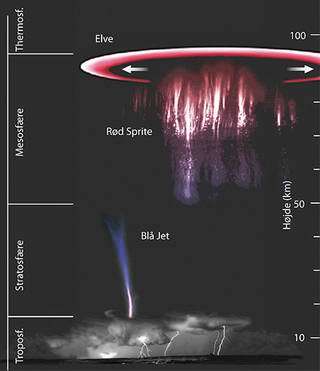
Do giant flashes of lightning striking upwards from thunder clouds merely pose an extraordinarily spectacular view? Or do they actually alter the chemical composition of the atmosphere, playing a role in ozone depletion and the climate on Earth? This is the key question that may be answered by specially designed cameras, which ESA proposes to place on board the International Space Station.
The International Space Station (ISS) is the ideal setting for studies of spectacular natural phenomena well hidden from us on Earth - so-called red sprites, blue jets and elves: vast flashes of lightning striking not from clouds to the ground, but from clouds towards space.
Normally the word lightning makes us think of sharp zigzag lines striking from the clouds to the ground. Above the clouds however a quite different type of lightning can be seen. There lightning is colourful - mainly red and blue - and covers large areas of the upper atmosphere. Sometimes it can even reach the border between the atmosphere and space.
Over the last few years scientists from the Danish National Space Centre have studied these flashes with cameras placed on mountain tops. Every so often the cameras would catch a flash of lightning striking up from a thunder cloud at a lower altitude.
Placing cameras and other instruments on the Space Station would, however, dramatically improve the chances of seeing the giant flashes and study their effect on the atmosphere. The Danish National Space Centre is currently studying a package of instruments for just that purpose, known as the Atmosphere-Space Interactions Monitor (ASIM). ESA has now selected ASIM for a feasibility study (known as Phase A).
"The question is how are these giant flashes of lightning created and how often do they take place", says senior scientist Torben Neubert, head of the project at Danish National Space Centre.
It may well be that the large electrical bursts remove ozone from the atmosphere, and in so doing influence the climate. "We need to understand the natural processes which influence the atmosphere and this can help us decide which changes in the climate are man-made", Torben Neubert states.
It is still too early to say when the cameras will actually enter into service in space.
Source: ESA


