Researchers Create New Organic Gel Nanomaterials
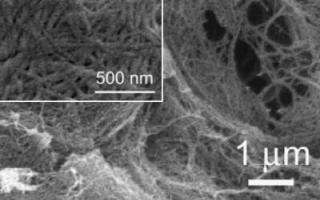
Researchers have created organic gel nanomaterials that could be used to encapsulate pharmaceutical, food, and cosmetic products and to build 3-D biological scaffolds for tissue engineering. Using olive oil and six other liquid solvents, the scientists added a simple enzyme to chemically activate a sugar that changed the liquids to organic gels.
"We are using the building blocks provided by nature to create new nanomaterials that are completely reversible and environmentally benign," said Jonathan Dordick, the Howard P. Isermann '42 Professor of Chemical and Biological Engineering at Rensselaer Polytechnic Institute. "The importance of this finding is the ability to use the same naturally occurring enzyme both to create chemically functional organogels and to reverse the process and break down these gels into their biologically compatible building blocks."
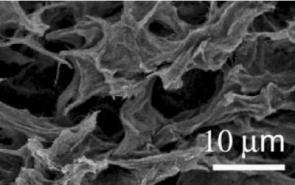
In the experiments, researchers activated a sugar using a simple enzyme, which generated a compound that self-assembles into 3-D fibers measuring approximately 50 nanometers in diameter. As the fibers entangle, a large amount of solvent gets packed together, trapping some 10,000 molecules.
The resulting organogel materials could be used as biocompatible scaffolds for tissue engineering and designing membranes, according to Dordick. Other possible applications include delivery systems for pharmaceuticals and preservatives for food and cosmetics.
"The development of new materials that are molecularly defined and chemically functional at the nanoscale is of critical importance to biological applications such as drug delivery," said Dordick. "We are finding the natural world has provided tools to create these materials without the need to generate new compounds that may be harmful to the body or environment."
The findings are currently available online in advance of print publication July 17 by the journal Angewandte Chemie.
Dordick's research involves using enzyme technology to produce unique chemical structures with applications in drug discovery, materials science, and chemical technology.
Source: Rensselaer Polytechnic Institute


