New process makes diesel fuel and industrial chemicals from simple sugar
The soaring prices of oil and natural gas have sparked a race to make transportation fuels from plant matter instead of petroleum. Both biodiesel and gasoline containing ethanol are starting to make an impact on the market.
But the oil price hike has also fueled a race to find new sources for chemical intermediates - compounds that are the raw material for many modern plastics, drugs and fuels. Behind the scenes, American industry uses millions of tons of chemical intermediates, which are largely sourced from petroleum or natural gas.
James Dumesic, a University of Wisconsin-Madison chemical and biological engineering professor, reports in the June 30 issue of the journal Science on a better way to make a chemical intermediate called HMF (hydroxymethylfurfural) from fructose - fruit sugar. HMF can be converted into plastics, diesel-fuel additive, or even diesel fuel itself, but is seldom used because it is costly to make.
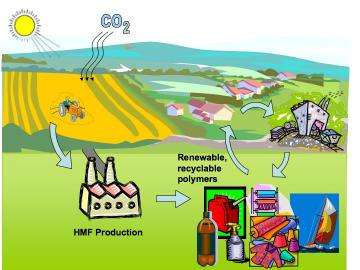
The new process goes beyond making fuel from plants to make industrial chemicals from plants. "Trying to understand how to use catalytic processes to make chemicals and fuel from biomass is a growing area," says Dumesic, who directed the HMF research. "Instead of using the ancient solar energy locked up in fossil fuels, we are trying to take advantage of the carbon dioxide and modern solar energy that crop plants pick up."
The new, patent-pending method for making HMF is a balancing act of chemistry, pressure, temperature and reactor design. After a catalyst converts fructose into HMF, the HMF moves to a solvent that carries it to a separate location, where the HMF is extracted. Although other researchers had previously converted fructose into HMF, Dumesic's research group made a series of improvements that raised the HMF output, and also made the HMF easier to extract.
Once made, HMF is fairly easy to convert into plastics or diesel fuel. Although the biodiesel that has made headlines lately is made from a fat (even used cooking oil), not a sugar, both processes have similar environmental and economic benefits, Dumesic says. Instead of buying petroleum from abroad, the raw material would come from domestic agriculture. Expanding the source of raw material should also depress the price of petroleum.
Using biomass-waste products of agriculture and forestry-can also cut global warming caused by carbon dioxide emissions from fossil fuels, says graduate student Yuriy Roman-Leshkov, first author on the Science paper. "The nice thing about using biomass as a replacement for all these petroleum products is that it is greenhouse-neutral," he says. While burning and otherwise using fossil fuels moves an enormous amount of carbon from the Earth into the atmosphere, the carbon released when a biofuel burns is eventually taken up by growing plants. "This process is really important," Roman-Leshkov says, "because it does not introduce additional carbon dioxide into the atmosphere."
Juben N. Chheda, a second graduate student working on the HMF project, sees the work as part of an explosion of interest in finding alternative sources for petroleum-based chemicals. "We need to develop new process technologies, and HMF is a building block that can replace products like PET, a plastic used for soda bottles," he notes. "This is a first step for a range of chemical products that can be obtained from biomass resources, replacing those that come from petroleum sources."
Dumesic is also exploring methods to convert other sugars and even more complex carbohydrates into HMF and other chemical intermediates. "Solar energy and biology created the stored hydrocarbons in the fossil fuels we have used for so long. Our interest in biomass is driven by the belief that if we learn to use solar energy and biology in a different way, we can address problems related to price, supply, and the environmental impact of industrial activity."
Source: University of Wisconsin-Madison


