Viral invasion of the koala genome
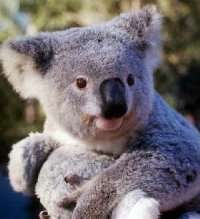
University of Queensland researchers have made a startling discovery that may explain why the koala, one of the world's most loved marsupials, is susceptible to certain infections and cancers.
Researchers found the koala genome is currently being invaded by a virus called koala retrovirus (KoRV). Their findings have been published in this week`s issue of Nature.
Rachael Tarlinton, a PhD student from UQ's School of Molecular and Microbial Sciences, and supervisors Associate Professor Paul Young and Dr Joanne Meers studied the presence of the virus in captive and wild koala populations throughout Australia.
Retroviruses are a group of RNA viruses that insert a DNA copy of their genome into the chromosomes of a host cell as part of their natural life cycle. Some retroviruses become permanently integrated into the host genome and are passed on from one generation to the next, being gradually inactivated over time such that they no longer produce harmful infections.
These are referred to as endogenous retroviruses and are widespread in the animal kingdom with most having invaded their hosts many thousands to millions of years ago.
Retroviral elements make up as much as eight percent of the human genome. KoRV is still an active virus that appears to have entered the koala genome relatively recently, perhaps within the past 100-200 years.
Dr Young said what surprised researchers was, unlike other endogenous retroviruses of other species which are fairly stable and ancient inserts in the host genome of all members of the species, they found some koala populations were either free of this virus or showed a mixed prevalence.
This finding, combined with high levels of viral activity and variability between individual koalas, suggested the virus was in transition between infectious and endogenous forms.
The work has important implications for the conservation of Australia`s koala populations as the research has also shown an association between this virus and a high incidence of cancer in both captive and wild koalas.
The discovery of this virus-host interaction in the wild has additional significance.
“While many endogenous retroviruses appear to simply be inactive passengers or constitute ‘junk' within their host genome, some can be disruptive, with several human cancers being linked to the activity of selected retroviral elements,” Dr Young said.
“On the other hand, some have turned out to be highly beneficial having been co-opted through evolution to be essential genetic partners in our own life cycle.”
“Coming to grips with how the koala handles this initial viral onslaught may give us insights into the dynamic events that occurred millions of years ago when retroviruses first invaded the human genome.”
Source: University of Queensland


